
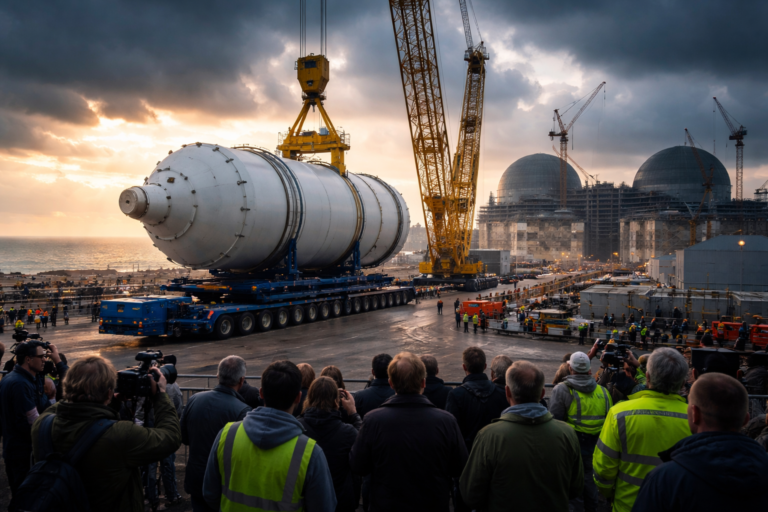
An epic 1 000 km journey ends with a 500 tonne giant for Hinkley Point C’s nuclear reactor — a dramatic moment that stitched together engineering spectacle, logistical muscle and a very public debate. The arrival of a mammoth component at the site has captured imaginations and ignited sharp disagreements: is this the kind of bold progress Britain needs for energy security and decarbonisation, or a risky, expensive gamble with long-term consequences?
The journey: engineering on the move
Moving a single 500-tonne component is not simply hauling heavy steel from A to B. It is a coordinated operation involving specialist barges, multi-axle self-propelled modular transporters (SPMTs), temporary road adaptations, and teams of engineers, police and logistics experts. Each kilometre of the roughly 1,000 km route required careful planning: bridge load assessments, overhead line adjustments, and timing to avoid traffic and tidal constraints on waterways.
Short paragraphs, constant checks and bespoke lifting jigs describe the choreography. Weather windows were monitored, crane lift plans validated, and independent inspectors signed off on each phase. To many onlookers, watching a 500-tonne “giant” negotiate roundabouts and river bends felt like witnessing modern engineering theatre.
Route and logistics highlights
- Use of waterways to move the heaviest sections and reduce road disruption.
- Temporary works on roads and bridges to cope with concentrated loads.
- Escorts, night-time moves and utility adjustments to clear the way.
- Redundant safety systems and staged lifts to minimize risk.
Why the component matters
This 500-tonne piece is more than a headline-grabbing object; it’s a critical element in the assembly of a new nuclear reactor. Vessels, steam generators or heavy shielding structures play essential roles in containing radiation, transferring heat, and ensuring the plant runs safely and efficiently for decades.
Supporters point out that deliverables like this are concrete milestones — visible signs of progress after years of planning. For the UK’s long-term low-carbon ambitions, nuclear capacity is framed as a stable complement to renewables, capable of supplying baseload power and reducing reliance on imported fossil fuels.
The fierce debate: progress or dangerous mistake?
The component’s arrival reopened familiar fault lines in public discussion about nuclear power. Opinions fall broadly into two camps.
Arguments for progress
- Energy security: Advocates emphasize the need for reliable, domestic generation to reduce exposure to geopolitical shocks.
- Decarbonisation: Nuclear is presented as a low-carbon source that can help meet emissions targets while renewables scale up.
- Jobs and investment: Large projects create skilled employment and supply-chain work across regions.
- Engineering achievement: Successfully moving and installing such components demonstrates national capability and logistical expertise.
Arguments against — and the concerns
- Cost and overruns: Critics warn of spiralling budgets and the opportunity cost of investing in nuclear instead of cheaper, faster renewables and storage.
- Safety anxieties: Even with rigorous standards, opponents worry about long-term waste management, accident risks, and the consequences of any failure.
- Local impact: Roadworks, heavy traffic and industrialisation of rural coasts provoke community unease.
- Centralisation of risk: Large, complex installations concentrate financial and technical risk in a way that some argue is avoidable.
Safety, oversight and what comes next
For the sceptical and the supportive alike, one reassurance is the layered regulatory framework around nuclear construction. Independent regulators, routine inspections, and incremental testing aim to catch problems before they escalate. Yet technical oversight cannot fully quell political and social debate: questions about transparency, accountability and long-term waste policies persist.
In the immediate months ahead, the component will undergo final positioning, alignment and integration checks. Commissioning phases will test systems gradually, with extensive documentation and third-party verification.
Conclusion: a symbol of modern engineering — and a test for public trust
The arrival after an epic 1 000 km journey of a 500 tonne giant for Hinkley Point C is emblematic. It shows what human ingenuity can accomplish: moving mountains, or at least a 500-tonne piece of them. But it also raises deeper questions about priorities, risk tolerance and how the nation chooses to power its future.
Whether you see this as progress or a dangerous mistake depends on how you weigh immediate engineering triumphs against long-term policy, cost and safety considerations. Either way, the conversation this delivery provoked is useful — because major infrastructure projects succeed not only through cranes and barges, but through public legitimacy and robust oversight.