
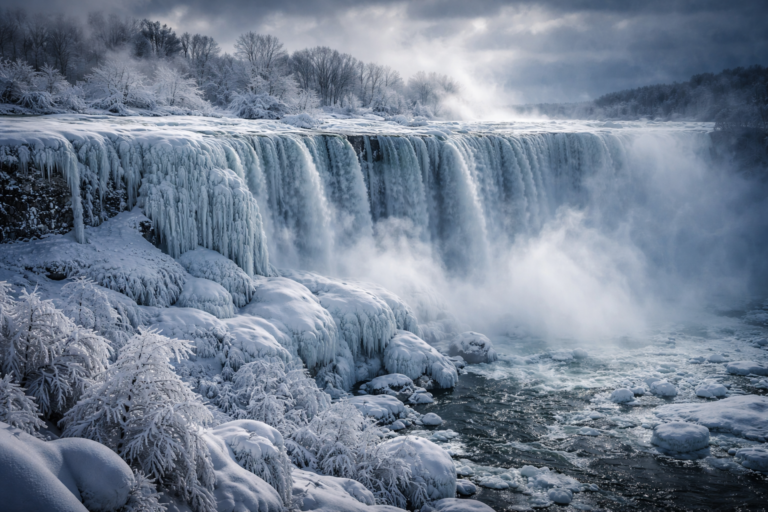
When temperatures plunged to unprecedented lows this winter, the scenery around Niagara Falls transformed into something out of a dream — and a warning. At minus 55 degrees, Niagara Falls have nearly frozen solid, creating a rare and extreme winter spectacle that some hail as nature’s beauty while others fear as a climate catastrophe. The sight of towering ice formations, suspended spray, and glassy cascades has drawn photographers and onlookers, even as scientists and local residents weigh the broader implications.
What actually happened
A prolonged cold snap gripped the region, driven by a strong polar vortex and atmospheric patterns that funneled Arctic air deep into North America. Overnight and daytime lows stayed far below seasonal averages for weeks. The Falls, which normally keep flowing due to immense volume and heat from turbulence, saw large sections develop thick ice buildup.
Icicles the size of columns formed along cliffs. The mist that always rises from the cataracts froze in midair, creating ghostly, crystalline curtains. While the main flow continued in deeper channels, many smaller cascades and shoreline features were nearly immobilized by ice.
How such freezing occurs
Several factors combine to create near-freeze conditions around a major waterfall:
- Extremely low air temperatures, sustained over days or weeks.
- Continuous spray and mist that capture and accumulate layer upon layer of rime ice.
- Wind patterns that drive freezing mist into surrounding trees, railings, and rock faces.
- Reduced water volume from upstream controls or seasonal drawdowns, which can lower flow speed and make freezing easier.
In short, the Falls don’t “freeze” like a pond; they build a living sculpture of ice around surviving currents.
Beauty — why people are captivated
It’s hard to overstate the visual power of the spectacle. Photographers line viewing platforms at dawn and dusk to capture shimmering blue ice and sunlit, frosted silhouettes. The interplay of motion and stillness — liquid water pouring through frozen frames — creates compositions unlike any other season.
- Ethereal ice formations along the gorge
- Snow-dusted viewing parks and silent boardwalks
- Uncommon angles revealed by snow-cleared vantage points
For many, the scene is a poetic reminder of nature’s artistry and the transient magic of winter.
Alarm — why others are worried
At the same time, extremes of temperature raise alarm bells. Some of the concerns voiced include:
- Ecological stress: Aquatic life adapted to seasonal cycles can face shocks from sudden, extreme temperature swings.
- Infrastructure strain: Icy spray and freeze-thaw cycles can damage bridges, pipes, and tourism facilities.
- Climate signals: While a single cold event doesn’t prove anything on its own, growing volatility in weather patterns — extreme cold in one region, heat in another — fits predictions tied to a warming climate and disrupted atmospheric circulation.
Scientists caution that while local freezing can result from natural variability, the broader trend toward more frequent and intense weather extremes merits serious attention.
Local impacts and safety
Tourism spikes during dramatic natural events, but safety must come first. Authorities often:
- Close hazardous viewing areas when ice makes railings slippery or unstable.
- Warn about thin ice on shoreline surfaces and dangerous hypothermia risks.
- Limit access to fragile ice formations to prevent accidents and preserve the scene.
Residents contend with increased heating demands, icy roads, and potential damage to municipal systems. Emergency services remain on heightened alert during such prolonged cold.
What experts say
Meteorologists emphasize that cold snaps are part of climatic variability. Climate scientists note that a warming planet can alter jet stream patterns and increase the amplitude of polar vortex disruptions, sometimes allowing frigid air to spill southward. The connection between a single event and long-term climate change is complex; the responsible conversation is to document, research, and prepare.
Visiting responsibly
If you plan to see the frozen spectacle:
- Check official closures and weather advisories.
- Dress in layers with windproof outerwear, insulated boots, and traction aids.
- Stay on marked paths and heed barriers — ice can be deceptively unstable.
- Respect wildlife and avoid trampling vegetation or fragile ice features.
Final thoughts
The near-freezing of Niagara Falls is at once an awe-inspiring display and a sober reminder. The visual drama invites wonder, but it also challenges us to think about the changing behavior of Earth’s systems. Whether you see nature’s beauty or a climate catastrophe, the moment calls for both appreciation and reflection — and for better stewardship of the planet that creates such powerful scenes.