
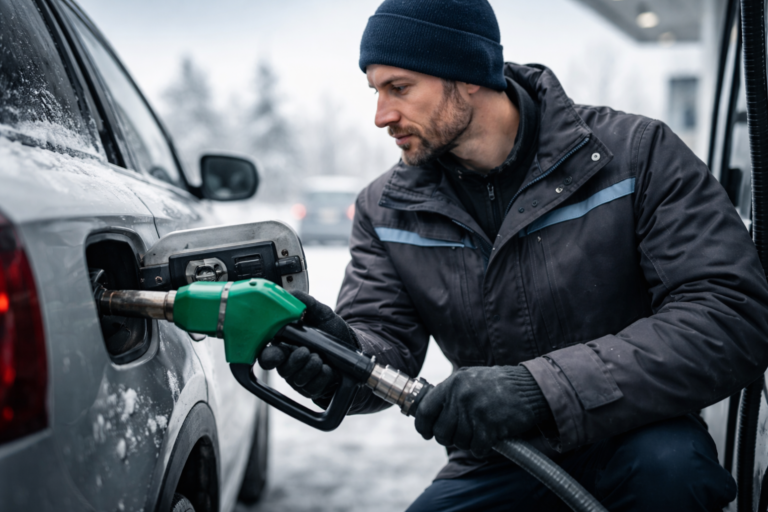
Winter driving brings a host of small problems that can turn into big headaches. One of the less obvious — but still disruptive — is fuel line freeze. Auto technicians explain how keeping the gas tank above half prevents fuel line freeze, and why that simple habit helps you avoid being stranded on a cold morning.
Why fuel line freeze happens
Fuel line freeze occurs when water in the fuel system freezes and blocks the flow of fuel to the engine. Water can get into a fuel system in several ways:
- Condensation inside the tank as temperatures fluctuate.
- Contaminated fuel introduced at the pump.
- Moisture carried into the system by ethanol-blended fuels.
Water doesn’t mix with gasoline and will settle at the lowest point in the tank. In very cold conditions, that water can freeze either in the tank, at the fuel pickup, or farther down the fuel line and fuel filter. Even a small ice plug can stop fuel flow and leave you stranded.
How a fuller tank helps prevent freeze
Keeping the gas tank above half reduces fuel line freeze risk through a few simple physical effects:
Less air volume, less condensation
A fuller tank contains less air. Moisture forms when warm, humid air inside the tank cools and condenses on cold surfaces. With less airspace, there’s less moisture available to condense, so less water accumulates over time.Reduced sloshing and aeration
When your tank is near empty, fuel sloshes more and creates more turbulence. That aeration encourages tiny droplets and water to spread through the tank and into the pickup area. A fuller tank is more stable, which minimizes this mixing.Keeps water away from the pickup
Water sinks to the bottom of the tank. By maintaining a higher fuel level, the fuel pickup is more likely to draw clean fuel from above the water layer rather than pulling water into the lines.More thermal mass, fewer temperature swings
A greater volume of fuel holds temperature better than a small amount. This reduces rapid cooling and warming cycles that promote condensation and ice formation.
These mechanisms are why auto technicians explain how keeping the gas tank above half prevents fuel line freeze — it’s not a trick, it’s simple physics applied to moisture control and fuel pickup behavior.
Additional winter precautions
Keeping your tank at least half full is a great baseline habit, but combine it with other sensible measures for the best protection:
- Use fuel additives when recommended: Some products (often labeled “fuel-line antifreeze”) remove small amounts of water by allowing it to burn safely with the fuel. Only use products intended for your fuel type.
- Park in a garage or sheltered area: This reduces extreme temperature swings and keeps the tank a bit warmer overnight.
- Replace the fuel filter on schedule: A clogged filter can trap water and ice; fresh filters improve flow and reliability.
- Fill up at trusted stations: Lower-quality or contaminated fuel increases the chance of water or particulates ending up in your tank.
- Run the engine periodically in long cold spells: Short drives and idling let the fuel system circulate and warm up components, reducing freeze risk.
When to call a technician
If you experience repeated stalling, hard starts, or loss of power in cold weather, the fuel system may have water contamination or another issue that needs professional attention. A technician can:
- Inspect and replace the fuel filter.
- Drain the tank if significant water contamination is found.
- Check fuel pumps and lines for damage or ice blockage.
- Recommend proper fuel treatments for your vehicle.
Bottom line
Auto technicians explain how keeping the gas tank above half prevents fuel line freeze because a fuller tank reduces the air space where moisture forms, minimizes sloshing that spreads water, and helps keep the fuel pickup above any settled water. During winter, maintaining at least a half tank is an easy, low-cost habit that lowers the chance of fuel-related cold-weather failures. Combine that practice with good fuel hygiene and routine maintenance to stay reliable through the season.