
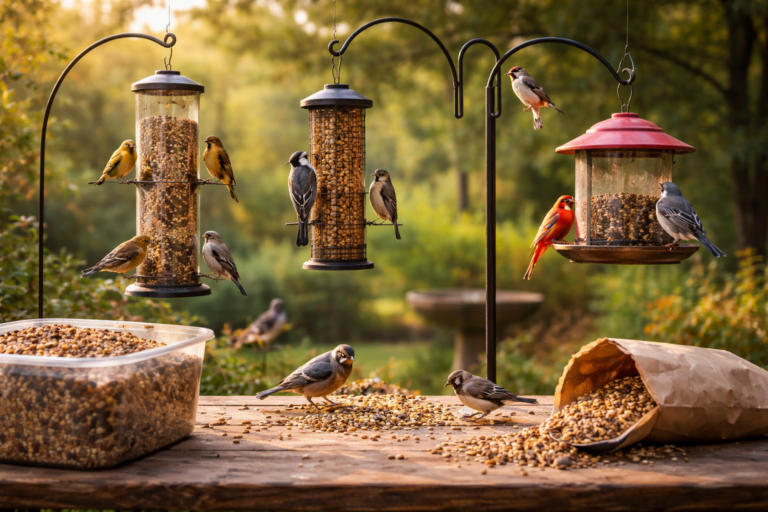
March can feel like a transition month for birds — days warm, nights still chilly, and food sources not yet abundant. Bird lovers use this cheap March treat to keep feeders busy and attract birds every morning: homemade peanut-butter-and-seed pinecone feeders (or simple suet cakes if you prefer a cook-and-store option). They’re inexpensive, beginner-friendly, and irresistible to a wide variety of species.
Why this treat works in March
- High-energy: Peanut butter and suet are calorie-dense, giving birds the fuel they need during cool mornings and breeding preparation.
- Visible and aromatic: The strong scent of peanut butter and the colorful seed coating make feeders easy for birds to find.
- Versatile: You can tailor ingredients to attract chickadees, nuthatches, titmice, woodpeckers, finches, and sparrows — even robins and bluebirds will check in when fruit is added.
- Cheap and recyclable: Use kitchen scraps, leftover seeds, and natural materials like pinecones to keep costs down.
Easy peanut-butter pinecone feeders — materials
- Fresh, clean pinecones (or small sticks/wood rounds if pinecones aren’t available)
- Natural, unsweetened peanut butter (no xylitol or added salt)
- Loose birdseed or a mix of sunflower chips, millet, and cracked corn
- String or twine for hanging
- Optional: quick oats, raisins, or unsalted chopped peanuts for extra texture
Step-by-step: make pinecone feeders
- Tie a 6–8 inch loop of string around the top of a clean pinecone for hanging.
- Use a butter knife or spoon to spread peanut butter into the pinecone grooves. Work quickly if it’s warm; refrigerate the peanut butter briefly to firm it up if needed.
- Roll or press the coated pinecone into a tray of birdseed until well-covered. Pat seeds into crevices so they stick.
- Hang the pinecone feeder from a branch, shepherd’s hook, or porch overhang about 5–10 feet from cover so birds feel safe.
- Replace or refresh feeders every few days if seed gets wet or moldy.
Quick suet cake alternative (no pork fat)
If you prefer something that stores on a shelf, mix 2 parts unsalted peanut butter with 1 part vegetable shortening or rendered beef suet, then stir in 3–4 parts birdseed and 1 part quick oats. Press into muffin tins or molds, chill until firm, and place in a suet cage. This keeps longer and feeds many birds at once.
Birds you’ll likely attract
- Chickadees and titmice: love peanut butter and seed combos
- Nuthatches and woodpeckers: cling-friendly feeders like pinecones or suet cages are perfect
- Sparrows and finches: will pick seeds from the ground or feeder base
- Robins and bluebirds: more likely if you include fruit halves or berries near the feeder
Placement and timing tips
- Hang feeders near trees or shrubs so birds can quickly escape to cover if a predator appears.
- Put feeders out early in the morning; birds learn food locations quickly and will return daily.
- Keep one or two feeders for consistent use; frequent changes can discourage repeat visits.
- In March, when ground cover is sparse, consider scattering some seed below the feeder — many species are comfortable feeding on the ground in early spring.
Safety and hygiene
- Always use unsalted, unsweetened peanut butter. Some processed peanut spreads contain sweeteners harmful to birds.
- Clean feeders regularly with hot water and a mild bleach solution (1 part bleach to 9 parts water) to prevent disease. Rinse thoroughly and dry.
- Avoid moldy or wet seed — mold can sicken birds.
- Don’t feed bread or salty human snacks. Stick to seeds, suet, peanut butter, and fruit.
Final notes
Bird lovers use this cheap March treat to keep feeders busy and attract birds every morning because it meets birds’ immediate energy needs, is simple to make, and provides a delightful backyard show. Start with a few pinecone feeders and a small suet cake; once birds find the food, they’ll return day after day, bringing color and song to your March mornings.