
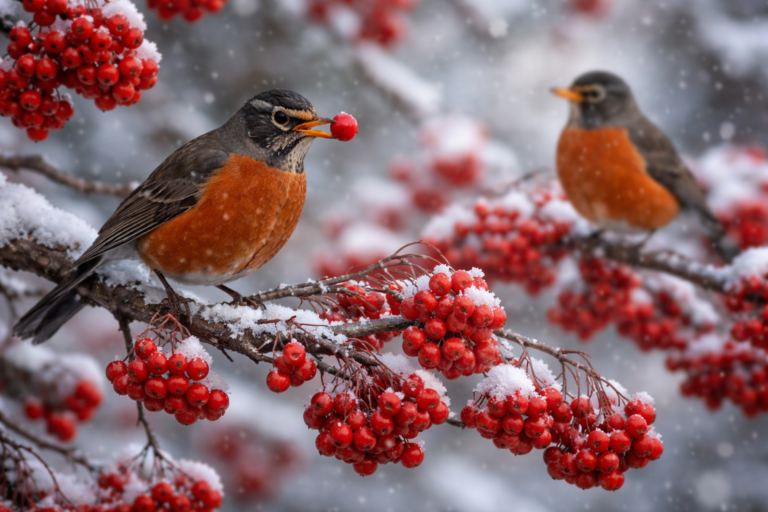
When summer berries fade and seeds are buried under snow, many songbirds still need reliable food. Birdwatchers say this one winter fruit keeps robins loyal to your garden: the bright red berries of winterberry (Ilex verticillata). Native, showy, and persistent, winterberry is a top pick for gardeners who want color in winter and feathered visitors year-round.
Why robins love winterberry
Robins are opportunistic fruit-eaters in the colder months. When insects and worms are scarce, they switch to berries and small fruits. Winterberry produces masses of fleshy red drupes that ripen in fall and often remain through deep winter, making them an important energy source.
Key features that attract robins:
- Bright, visible berries that are easy to spot in leafless shrubs.
- Fruits that persist after leaves drop, remaining available through snow and frosts.
- A dense shrub structure that offers perching and quick cover for foraging birds.
Choosing the right winterberry for your yard
Winterberry is dioecious — individual plants are either male or female — so fruiting requires at least one male plant near females. Here’s how to choose and plant wisely:
- Plant at least one male for every 5–10 female plants, or follow nursery recommendations for specific cultivars.
- Select female cultivars for abundant berries (the names often indicate female varieties).
- Place shrubs where berries are easily visible to birds: near a lawn, by windows, or along migrating flight paths.
- Winterberry prefers moist, acidic soil and tolerates wet locations that other shrubs may not.
Planting and care tips
Winterberry is relatively low-maintenance once established, but a few simple practices will maximize berry production and wildlife value.
- Site: Full sun to partial shade. More sun usually equals more berries.
- Soil: Moist, well-drained to consistently wet soils; amend for acidity if needed.
- Watering: Keep young plants consistently watered; established shrubs tolerate some drought but prefer steady moisture.
- Pruning: Prune in late winter or early spring before new growth; avoid heavy pruning of fruiting wood the year before berries form.
- Pollination: Ensure both sexes are present. Male plants should be within 50–100 feet for reliable pollination by bees.
Bird-friendly landscaping considerations
To make your garden as welcoming as possible for robins and other birds, layer habitat and follow a few safety rules.
- Provide perches: Low branches and nearby small trees give robins a place to survey and drop down to pick berries.
- Leave some leaf litter: While berries help, leaf litter can still provide seeds and shelter for insects when available.
- Avoid pesticides: Insecticides reduce insect prey and can be directly harmful to birds. Use integrated pest management instead.
- Do not net berry shrubs: Nets can entangle birds. If you must protect fruit from pests, use bird-safe alternatives like cage covers or temporary barriers removed when birds are feeding.
Other winter fruits that complement winterberry
While winterberry is a star, variety keeps birds coming back. Consider adding other native winter food sources to extend availability and diversity:
- Crabapple (Malus spp.) — small fruits that last into winter on some varieties.
- Viburnum (Certain species) — attractive berries for multiple bird species.
- Juniper and serviceberry — provide small fruits for thrushes and finches.
- Native hollies and cotoneaster — additional berry-bearing shrubs useful in different site conditions.
A seasonal reward
Planting winterberry gives your garden a twofold payoff: dramatic winter color for people and reliable nutrition for robins. By including at least one male and multiple female plants and following basic care, you create a winter buffet that keeps robins loyal to your garden. Birdwatchers say this one winter fruit keeps robins loyal to your garden — and with a little planning, it can keep them returning season after season.