
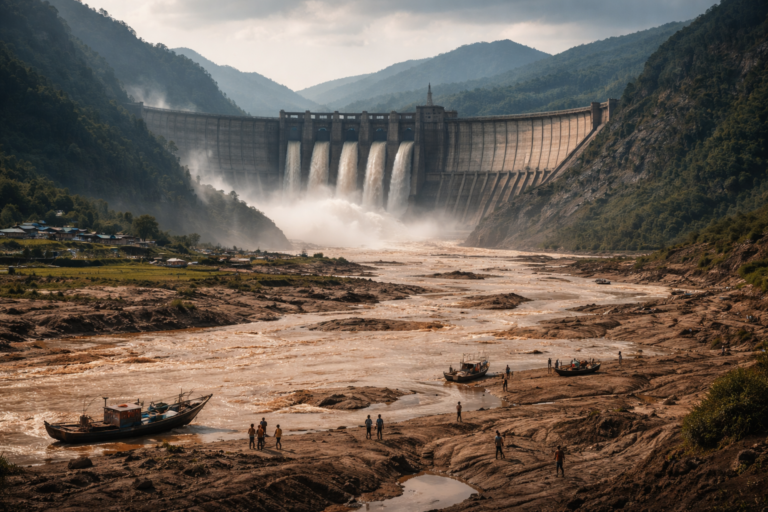
Dams bring electricity, irrigation and flood control. But by blocking natural waterways with massive dams, countries have altered sediment cycles that once sustained millions of people downstream. The interruption of sediment—the sand, silt and organic matter rivers carry—has cascading effects on farming, fisheries, coastal landforms and the resilience of communities.
How dams change sediment cycles
Rivers naturally transport sediment from mountains to plains and coasts. When a dam captures that flow, sediments settle in the reservoir instead of replenishing downstream soils and deltas. Over time reservoirs fill with sediment, reducing storage capacity and the dam’s effectiveness. Downstream, the water that flows is often “sediment-starved,” carrying more erosive energy that can scour riverbeds and banks.
Key processes altered by dams:
- Sediment trapping in reservoirs
- Reduced overbank flooding that deposits nutrient-rich sediments
- Changed timing of flows (water released off-season)
- Increased coastal erosion due to lower sediment delivery
Direct impacts on downstream people and landscapes
Agriculture and soil fertility
Floodplains historically relied on seasonal floods to deposit fertile silt. When that supply is cut off, farmers must turn to artificial fertilizers, irrigation intensification, or face declining yields. In many regions, the productivity that once supported generations has dropped, reducing food security for millions.
Delta subsidence and coastal erosion
Deltas are built and maintained by sediment. With reduced sediment input, deltas sink and coastlines retreat. This makes coastal communities more vulnerable to storm surges and sea-level rise. The Nile Delta after the Aswan High Dam and parts of the Mekong Delta are often cited examples where reduced sediment has accelerated land loss.
Fisheries and aquatic ecosystems
Sediments carry nutrients that fuel plankton and support fish populations. Changes in sediment regimes alter spawning grounds, reduce primary productivity and can collapse local fisheries. Communities that depend on river and estuarine fisheries lose livelihoods and protein sources.
Infrastructure and reservoir longevity
Sediment accumulation shortens the operational life of reservoirs. Dredging is expensive; failing to address sedimentation can mean lost investments in hydropower and water storage—costs often borne by the same people who depend on those services.
Human consequences: social and economic ripple effects
When sediment cycles change, the impacts are not only environmental but deeply social. Reduced agricultural yields fuel rural poverty and migration, often to cities ill-equipped to absorb newcomers. Loss of fisheries hits women and artisanal fishers hardest in many cultures. Coastal land loss displaces communities and forces difficult choices about relocation and compensation.
Transboundary rivers complicate the picture: upstream dam decisions can affect downstream nations, creating diplomatic tensions and uneven development outcomes.
Practical solutions and mitigation measures
There is no single fix, but a mix of engineering, policy and ecological approaches can reduce harm:
- Sediment management techniques (sluicing, flushing, bypass tunnels)
- Managed floods or environmental releases timed to mimic natural sediment flows
- Sediment augmentation (adding sand downstream)
- Strategic dam removal where costs outweigh benefits
- Integrated river basin planning that accounts for downstream needs
- Transboundary agreements to share data, costs and adaptive strategies
- Investment in sustainable agriculture and alternative livelihoods for affected communities
Each option has trade-offs; combining approaches based on local conditions works best.
Moving forward
Recognizing that rivers are dynamic systems is the first step. By blocking natural waterways with massive dams, countries have altered sediment cycles that once sustained millions of people downstream—and the consequences are unfolding in fields, fisheries and coastlines worldwide. Thoughtful river management that balances energy and water needs with the rights and livelihoods of downstream communities can restore some of the vital functions sediment provides. The challenge now is to apply lessons learned, innovate in sediment management, and forge policies that protect both human and ecological health.