
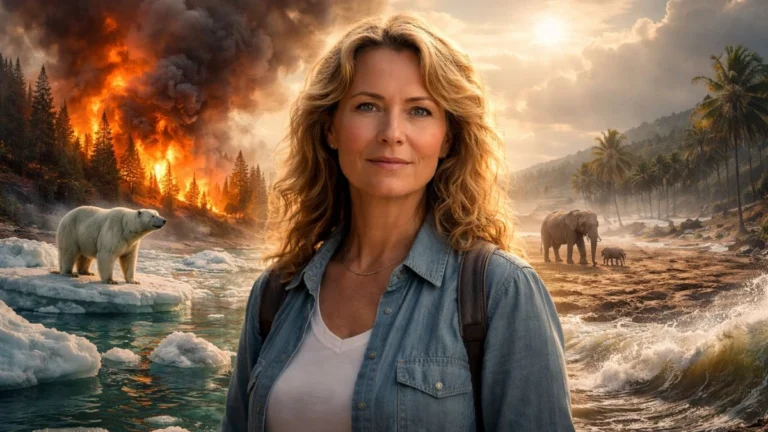
Camille Parmesan, climate refugee scientist, explains what global warming is really doing to life on Earth
Camille Parmesan, climate refugee scientist, has spent decades watching the living world respond to a warming planet. Her work—tracking butterflies, birds, plants, and more—has helped turn abstract temperature charts into a clear picture of how species are moving, changing, and in some cases disappearing. The story she tells is straightforward and alarming: global warming is not just warming air and oceans; it is rearranging life on Earth.
Species on the move
One of the clearest signals Parmesan and other researchers document is range shifts. As temperatures rise, many species move toward the poles or upslope to stay within their preferred climates. Mountains, coastlines, and fragmented habitats limit how far and how fast species can move.
- Lowland butterflies and insects shift to higher elevations.
- Marine species appear farther north as ocean waters warm.
- Tree lines climb mountainsides, sometimes outpacing the animals that depend on them.
These movements create the idea of “climate refugees”—species forced from their historical homes by changing conditions. Unlike human refugees, these organisms often lack the means to relocate safely and may be trapped by habitat fragmentation or natural barriers.
Timing is unraveling
Global warming changes not only where species live but when they do things. Phenology—the timing of biological events like flowering, breeding, and migration—is advancing for many organisms as springs arrive earlier and seasons lengthen.
This shift can cause mismatches. For example:
- Birds that time their migration to historical insect emergence can arrive too late for the peak food supply.
- Pollinators and plants may fall out of sync, reducing pollination success and seed production.
- Agricultural pests may complete more life cycles per year, increasing crop damage.
Parmesan’s work highlights how these temporal mismatches ripple through food webs, undermining reproductive success and altering ecosystem stability.
Community reshuffling and local extinctions
As species move at different rates, ecological communities are being reshuffled. New competitors, predators, and diseases arrive in once-stable ecosystems. Some species adapt or thrive in the new mix; others decline.
Where movement isn’t possible—on mountaintops, small islands, or in fragmented landscapes—local extinctions increase. Small-range specialists are particularly vulnerable. Over time, this leads to a homogenization of life: the same generalist species replacing unique local assemblages.
Oceans, ice, and the collapse of specialized systems
Parmesan’s perspective extends beyond terrestrial systems. Ocean warming and acidification devastate sensitive marine life. Coral bleaching events remove foundational species that support entire reef communities. Loss of sea ice impacts polar specialists like seals and polar bears, while shifting currents alter plankton communities that form the base of marine food webs.
These changes cascade. Declines in foundational species reduce biodiversity, fisheries productivity, and the ecosystem services humans rely on—coastal protection, carbon storage, and food security.
New disease dynamics
Warmer temperatures and changing precipitation patterns also influence pathogens and their vectors. Diseases that used to be confined to the tropics can move into temperate zones. Parmesan’s broader synthesis of climate impacts makes it clear: changing climates create new opportunities for pests and disease to expand, with consequences for wildlife, livestock, and human health.
What scientists recommend
Parmesan’s findings point to two urgent priorities.
- Mitigation — sharply reduce greenhouse gas emissions to limit future warming. The less the climate changes, the fewer ecosystems will be forced beyond their capacity to adapt.
- Adaptation and conservation — help nature cope with what is already happening through:
- Creating connected habitat corridors so species can move.
- Protecting climate refugia—areas that remain suitable longer.
- Restoring degraded ecosystems to increase resilience.
- Targeted interventions such as assisted migration where natural movement is impossible.
Long-term monitoring is also essential: tracking shifts, documenting emerging mismatches, and testing conservation strategies in real time.
Why this matters to people
Parmeson’s research shows that biodiversity loss and ecosystem change are not distant problems. They affect pollination of crops, availability of clean water, coastal protection, and the spread of disease. Protecting biodiversity is therefore integral to human well-being, not an optional side project.
Camille Parmesan, climate refugee scientist, turns the abstract phrase “global warming” into a lived reality: shifting ranges, changing seasons, collapsing communities. The message is urgent but actionable. Reduce emissions, protect and reconnect habitats, and invest in monitoring and adaptive conservation—these are the steps that can keep many species from becoming the planet’s first climate refugees.