
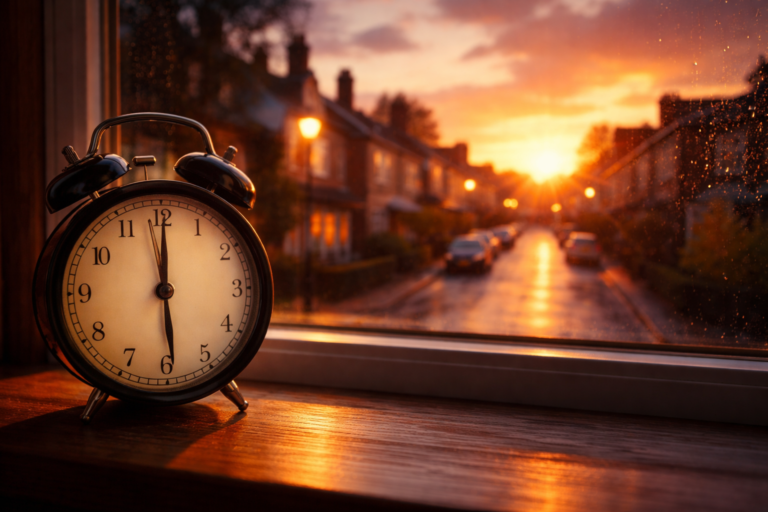
As clocks are set to change earlier in 2026, households across the UK are bracing for a noticeable shift in evening light. Earlier sunsets will alter how families organise evenings, affect commuting patterns, and influence everything from children’s bedtimes to energy use. Here’s what to expect and how to adapt your routine with minimal disruption.
What does “clocks changing earlier” mean?
Unlike the usual clock change that moves time forward or back by one hour at a familiar date, the 2026 adjustment will move the official switch to an earlier point in the calendar. The practical result for most people will be evenings that grow darker sooner than they’re used to at that time of year.
The effect is simple: sunset times will be earlier, so activities that used to take place in daylight—after-school sports, walking the dog, gardening, or commuting—will more often happen in twilight or darkness.
Immediate impacts on UK households
Earlier sunsets ripple through daily life in several ways:
- Disrupted evening routines: Families who rely on natural light for after-school activities may need to shift schedules indoors or bring earlier timing to extracurriculars.
- Safety concerns: More people travelling after dark increases the need for visibility—reflective clothing, better lighting, and cautious driving.
- Mental wellbeing: Reduced evening daylight can affect mood and energy. Even a small change in light exposure sometimes influences sleep cycles and motivation.
- Energy use: Early evening darkness can increase demand for lighting and heating, potentially raising household bills in the short term.
Who will feel it most?
- Parents and carers: More evening chores and child care activities will fall under artificial light, which can disrupt sleep routines for children and adults alike.
- Commuters: Those travelling home later in the evening may face darker roads and increased travel times if public transport schedules remain unchanged.
- Outdoor workers and sport clubs: Evening training, gardening and construction may need rescheduling or better lighting.
- Pets and livestock owners: Animals tied to daylight cues may need gradual adjustments in feeding or exercise times.
Practical tips to adapt quickly
Small, practical changes can make the transition smoother for everyone in the household.
- Gradually shift sleep and activity times: Move bedtimes and meal times by 10–15 minutes a few days before the change to ease circadian adjustment.
- Maximise daytime light exposure: Get outside during daylight hours—especially in the morning—to help stabilise sleep patterns and mood.
- Improve home lighting: Use layered lighting (ambient, task, accent) and warm-coloured bulbs to create comfortable evening environments without being overstimulating.
- Update safety gear: Keep reflective clothing, bike lights and vehicle headlights in good condition; consider additional outdoor lighting for pathways.
- Plan indoor alternatives: Have a list of indoor activities for children—puzzles, creative play, exercise routines—so evenings stay active without daylight.
- Monitor energy use: Use programmable thermostats and energy-efficient bulbs to manage any rise in evening energy consumption.
For employers and community groups
Workplaces and clubs can reduce disruption by adopting flexible schedules and improving public information.
- Flexibility: Encourage flexible start and finish times where possible to help employees avoid commuting in the darkest hours.
- Communication: Update parents, members and staff well in advance about schedule changes for classes, training or community events.
- Lighting and safety audits: Local groups and businesses should review external lighting and signage to ensure safe access after dusk.
Longer-term considerations
If earlier sunsets become a sustained pattern, longer-term behavioural adjustments may follow. Schools might look at after-school provision timing, councils could reassess street lighting strategies, and energy planners may need to factor shifting demand profiles into forecasts.
Final thoughts
Clocks will change earlier in 2026, with new sunset times set to disrupt daily routines across UK households—but with a little planning the impact can be minimised. Gradual adjustments to sleep and activity schedules, better lighting choices, and coordinated community responses will help families and businesses adapt quickly. The change is a good reminder to review safety, energy and wellbeing habits—and to plan evenings that work under the new light.