
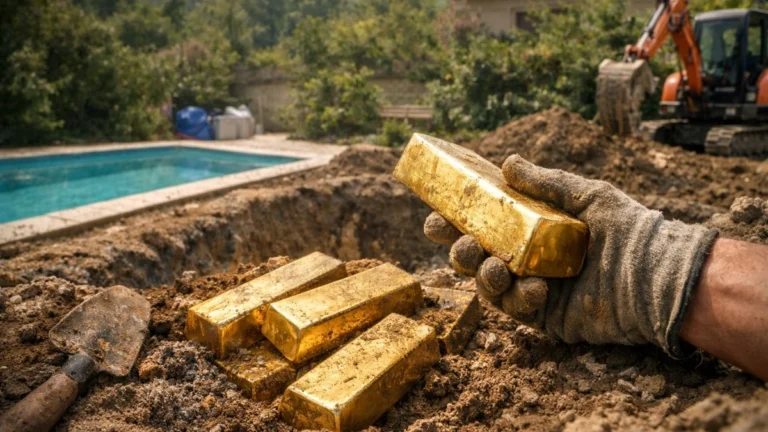
A €700,000 treasure: a Rhône resident finds gold bars and coins while digging a swimming pool. When a homeowner in the Rhône region began digging to install a backyard swimming pool, they did not expect the shovel to strike something more valuable than clay. Reports say the discovery included gold bars and coins with a combined estimated value of around €700,000. The find has caught the attention of local residents, authorities, and collectors alike.
The discovery and immediate reaction
According to local accounts, the treasure was uncovered at shallow depth while contractors prepared the site for excavation. Workers alerted the homeowner, who contacted the police. Word spread quickly through the neighborhood, drawing curious onlookers and journalists.
For many, the image of sunlit coins and bars emerging from French soil evokes a romantic notion of buried fortunes. For officials, the situation prompts questions about provenance, ownership, and the proper legal steps to preserve cultural heritage.
What authorities typically do
When valuable objects are found during private works in France, several steps usually follow:
- Secure the site: Police or gendarmes will cordon off the area to prevent tampering and theft.
- Inventory and appraisal: Experts from cultural or heritage services may catalog objects and assess their value.
- Legal determination: Authorities investigate ownership. If the items are considered archaeological or historically significant, different rules apply than for lost personal property.
- Possible seizure and restitution: Depending on findings, items may be seized for public interest, returned to rightful owners, or shared with finders under specific legal frameworks.
These procedures aim to balance the rights of finders and landowners with the protection of historical artifacts.
Why such finds matter
Discoveries of gold bars and coins are notable for multiple reasons:
- Historical insight: Coins can reveal information about trade, circulation, and historical periods. They might be modern, wartime hoards, or ancient currency.
- Legal precedents: High-value private finds often set or clarify legal interpretations around treasure trove, ownership, and compensation.
- Local economy and tourism: Sensational finds draw media attention, sometimes boosting local interest in history and tourism.
Even when the monetary value is significant, the cultural and academic value can be equal or greater.
What homeowners and workers should do if they find valuables
If you discover a treasure while renovating or landscaping, follow these recommended steps:
- Stop work and secure the area to prevent disturbance.
- Notify local police or municipal authorities immediately.
- Avoid cleaning or handling artifacts excessively—preservation matters for accurate assessment.
- Document the find with photos and notes about location and depth.
- Cooperate with experts and provide access for evaluation.
These actions protect both the find’s integrity and your legal position.
Questions about ownership and compensation
In France, laws about found objects and archaeological discoveries are designed to protect cultural heritage. Key considerations include:
- Whether the object is considered an archaeological artifact (which often belongs to the state).
- Whether the finder had lawful access to the land.
- Whether the original owner or heirs can be identified.
Compensation and rewards can be complex. In some cases, finders or landowners may receive a portion of the assessed value, while in others the state retains the items for museums or research.
Looking beyond the headline
While “A €700,000 treasure: a Rhône resident finds gold bars and coins while digging a swimming pool” is an eye-catching headline, the full story unfolds through investigations and expert analysis. Coin compositions, mint marks, and bar inscriptions can reveal dates, origins, and reasons why the cache was buried.
More broadly, such finds remind us that everyday places sometimes conceal traces of dramatic past events—wars, migrations, or secreted savings. They also highlight the intersection of private life and public heritage.
Final thoughts
Whether this Rhône discovery ends up in a museum, returns to a family, or becomes the subject of legal proceedings, it underscores the importance of responsible handling and the surprising ways history can surface in contemporary life. For homeowners and workers, the takeaway is simple: if you hit something that glints in the soil, pause, document, and call the authorities—history may be waiting beneath your feet.