
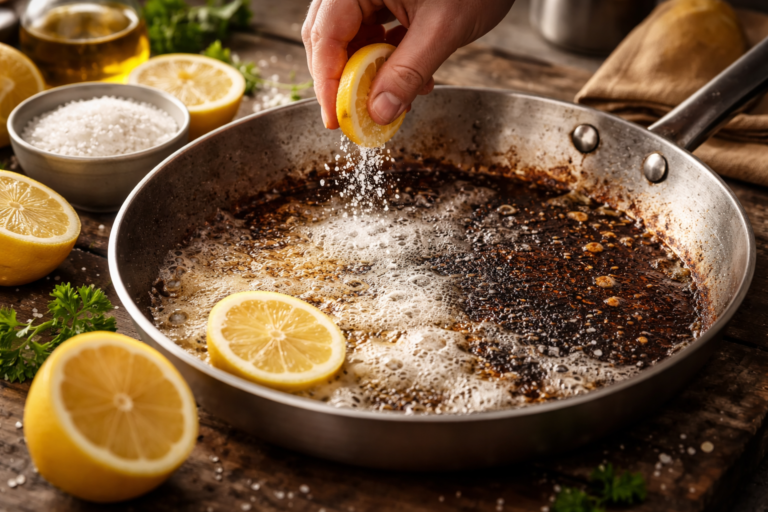
If you’re tired of scouring your pans with baking soda and vinegar only to see stubborn burnt grease laugh in your face, there’s a simple, natural alternative that often works faster and gentler: lemon (or plain citric acid). The acidity in lemon helps break down grease and carbonized residue, while its natural oils lift and loosen grime. Best of all, it’s safe, affordable, and usually already in your kitchen.
Why lemon (citric acid) works
Lemon contains citric acid, which is an effective degreaser. Acids help break down the molecular bonds in grease and burnt food, loosening them from metal and ceramic surfaces. When you combine heat and moisture—by simmering water with lemon or adding a bit of lemon juice—the acid penetrates burnt-on layers and softens them, making the residue easy to wipe away.
This method is especially useful for stainless steel, enameled pans, and cast iron (with caution). It’s less abrasive than scrubbing with salt alone and less messy than using strong chemical cleaners.
Quick method: simmer-and-scrub with lemon
This simple routine takes about 20–30 minutes and works on many types of pans.
- Remove loose food debris from the pan.
- Fill the pan with enough water to cover the burnt area.
- Slice one lemon (or squeeze 1/4 to 1/2 cup of lemon juice) into the water. You can also add 1–2 tablespoons of citric acid powder if you have it.
- Bring the water to a gentle boil, then simmer 10–15 minutes. You’ll notice the burnt bits loosening.
- Turn off the heat and let the water cool slightly until it’s safe to handle.
- Pour out most of the liquid, leaving a little to keep things wet.
- Sprinkle coarse salt or baking soda (optional) and gently scrub with a non-abrasive sponge or wooden scraper.
- Rinse and dry. Repeat if necessary for very stubborn spots.
For cast iron and delicate surfaces
- Cast iron: Avoid extended soaking. Use a quick simmer with a small amount of lemon juice, then scrub with a stiff brush and re-season the pan afterward. Never leave cast iron soaking in acidic solutions for long periods—acid can strip seasoning.
- Nonstick pans: Skip high heat. Use warm water and lemon juice without boiling, then gently scrub with a soft sponge to protect the coating.
- Enameled cookware: Safe to simmer with lemon, but avoid metal scouring pads that can chip enamel.
If the burn is severe
For really burnt-on carbon, try this two-step approach:
- Simmer water with lemon slices or citric acid for 15–20 minutes to loosen layers.
- Drain and sprinkle coarse salt or a paste of lemon juice and salt, then scrub with a non-scratch pad.
For persistent dark spots on stainless steel, a follow-up polish with a small amount of olive oil can help restore shine.
Benefits of using lemon
- Natural and non-toxic: Safe around kids and pets; no harsh fumes.
- Affordable and accessible: Many kitchens already have lemons.
- Pleasant scent: Leaves pans smelling fresh, not chemical-laden.
- Versatile: Also works on cutting boards, ovens, and greasy countertops.
Prevent future burns
- Preheat pans properly and use the right oil for the cooking temperature.
- Don’t walk away during high-heat cooking—many burns happen fast.
- Deglaze the pan immediately after cooking with a splash of water, wine, or broth to lift bits before they harden.
- Regularly season cast iron and avoid sudden temperature changes that cause food to stick and burn.
Final thoughts
Forget baking soda and vinegar: the natural ingredient that melts burnt grease off your pans isn’t always a new-fangled chemical—often it’s the humble lemon. With a little heat and patience, citric acid can loosen burnt-on grime without harsh abrasives or strong cleaners. Try the simmer-and-scrub method next time and enjoy cleaner pans with minimal effort and a fresh citrus scent.