
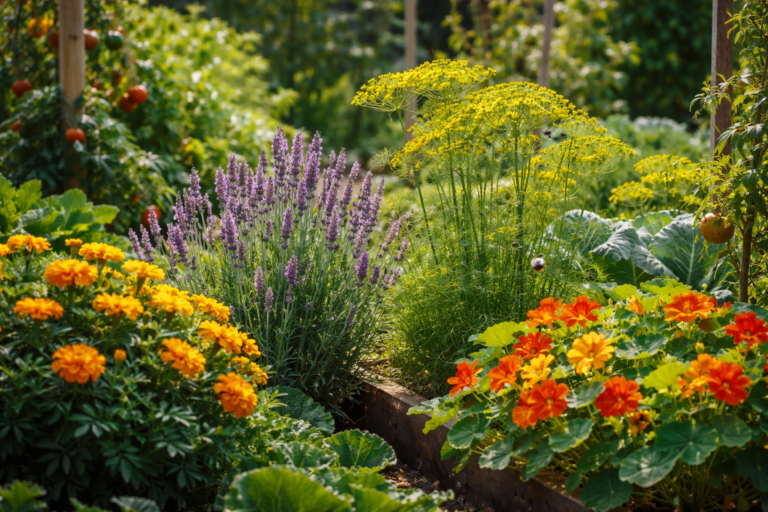
Planting for balance is one of the smartest things you can do in a vegetable garden. By adding a few strategic plants, you invite predators and pollinators that help control pests and boost yields. Below are four plants that naturally attract beneficial insects while keeping pests away from your vegetable garden — easy to grow, attractive, and highly effective as part of an integrated pest-management approach.
1. Marigold (Tagetes spp.)
Marigolds are garden workhorses. Their bright flowers attract hoverflies, lacewings, and parasitic wasps—natural enemies of aphids, whiteflies, and other soft-bodied pests. Certain marigold species (especially French marigolds, Tagetes patula) also release root exudates that can suppress nematodes in the soil.
- Benefits: Attracts beneficial predators; nematode suppression; strong visual deterrent for some pests.
- Planting tips: Sow seeds or transplant seedlings around the borders of vegetable beds, or interplant between rows. Deadhead spent blooms to encourage continuous flowering.
- Timing: Plant after the last frost and continue to plant throughout the season for ongoing attraction.
2. Dill (Anethum graveolens)
Dill’s feathery leaves and umbrella-like flower clusters are magnets for predatory wasps, lady beetles, hoverflies, and lacewings. These predators feed on caterpillars, aphids, and other insects that commonly damage tomatoes, brassicas, and beans.
- Benefits: Attracts parasitic and predatory wasps; supports pollinators when flowering; provides shade for young seedlings.
- Planting tips: Sow dill in sunny spots where it won’t overshadow smaller plants. Allow some plants to flower—this is when they attract the most beneficial insects.
- Caution: Dill can self-seed prolifically and may cross with fennel, so manage volunteers if you don’t want it everywhere.
3. Nasturtium (Tropaeolum majus)
Nasturtiums are edible, colorful, and serve as sacrificial or trap plants for aphids, whiteflies, and certain beetles. At the same time, their flowers attract predatory insects and pollinators like hoverflies and bees. Planted near brassicas, nasturtiums can reduce pest pressure by luring pests away from your main crops.
- Benefits: Acts as a trap crop; attracts beneficial insects and pollinators; edible flowers and leaves add culinary value.
- Planting tips: Plant nasturtiums near vulnerable vegetables such as cabbages, broccoli, and kale. Leave some flowers untouched to maximize insect attraction.
- Growth habit: They can be trailing or bushy—choose varieties to suit your garden layout.
4. Borage (Borago officinalis)
Borage is a pollinator powerhouse. Its star-shaped blue flowers are irresistible to bees, which increases pollination for tomatoes, cucumbers, and squash. Borage also attracts predatory wasps and syrphid flies, and it’s known to deter tomato hornworms and cabbage moths to some degree.
- Benefits: Attracts bees and predatory insects; improves pollination and potentially fruit set; can enhance soil when used as a green manure.
- Planting tips: Scatter seeds or transplant seedlings in sunny locations. Borage is hardy and self-seeding; allow one or two plants to flower freely.
- Companion benefits: Often planted near strawberries and tomatoes for improved flavor and yield.
How to use these plants effectively
- Plant in diversity: A mix of blooms throughout the season keeps beneficial insect populations stable.
- Feature flowering succession: Stagger planting times so something is always in bloom.
- Place strategically: Border plantings, interplanting within beds, and small dedicated insectary strips all work well.
- Avoid broad-spectrum pesticides: They kill beneficials as well as pests. Use targeted or organic controls when necessary.
- Provide habitat: Include a shallow water source, low-growing cover, and some undisturbed soil for overwintering insects.
Quick reference: who they attract and what they deter
- Marigold: Attracts hoverflies, lacewings, parasitic wasps; deters some nematodes and root pests.
- Dill: Attracts parasitic wasps and predatory flies; helps control caterpillars and aphids.
- Nasturtium: Attracts hoverflies and ladybugs; acts as a trap for aphids and flea beetles.
- Borage: Attracts bees and predatory wasps; can deter hornworms and cabbage pests.
Adding these four plants that naturally attract beneficial insects while keeping pests away from your vegetable garden creates a healthier, more resilient space. They reduce reliance on chemicals, improve pollination, and help maintain a balanced ecosystem where your vegetables can thrive. Start small, observe what shows up, and adjust plant placement season to season for the best results.