
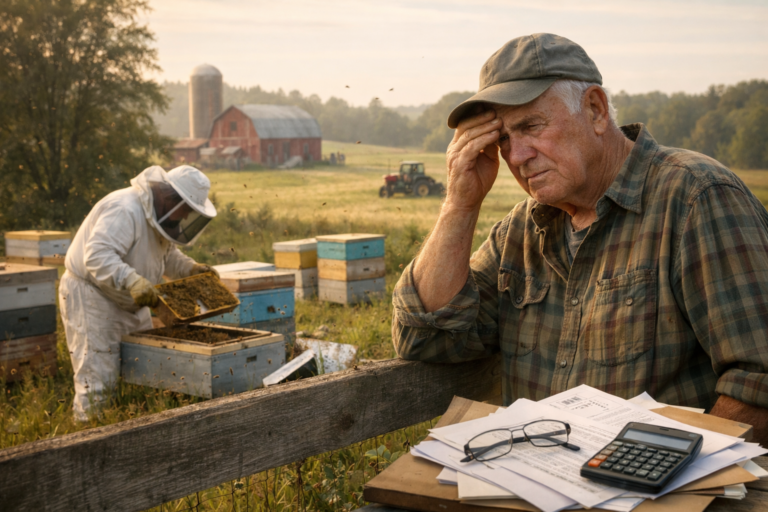
What began as a simple act of generosity has turned into a financial nightmare for one retiree. By allowing a local beekeeper to place hives on his unused land, he unknowingly exposed himself to agricultural taxation, regulatory scrutiny, and mounting financial pressure. This case highlights a growing issue: can helping small-scale producers come at the cost of personal financial stability?
As governments tighten oversight on land use, taxation, and agricultural classification, stories like this are becoming more common. This article explores the legal, financial, and ethical dimensions of such situations, backed by recent policy trends and real-world implications.
The Situation Explained
The retiree, living on a fixed income, owned a modest plot of rural land. In an effort to support local agriculture and sustainability, he allowed a beekeeper to install several bee colonies on his property.
Initially, the arrangement seemed harmless:
- No formal lease agreement
- No direct income generated
- Minimal disruption to the land
However, local authorities later reclassified the land as agricultural-use property, triggering property tax reassessment and additional levies.
Key Facts And Figures
| Aspect | Details |
|---|---|
| Land Type Before | Non-commercial/private land |
| Activity Introduced | Beekeeping (pollination & honey production) |
| Number Of Hives | Typically 10–50 per small beekeeper setup |
| Tax Change | Agricultural classification applied |
| Financial Impact | Increase in annual tax liability (20%–200% depending on region) |
| Retiree Income Source | Pension / fixed income |
| Legal Agreement | Informal or none |
| Regulatory Trigger | Land-use reclassification laws |
Why Beekeeping Triggers Taxation
Beekeeping is widely recognized as an agricultural activity due to its role in pollination and food production. Even small-scale operations can:
- Contribute to crop yields
- Produce marketable honey and wax
- Qualify as commercial agricultural use
Once authorities detect such activity, the land may be reclassified under agricultural tax codes. This can result in:
- Higher property taxes
- Compliance requirements
- Possible penalties for undeclared usage
The Hidden Legal Risks
Many landowners are unaware that allowing even limited agricultural use can have legal consequences. Key risks include:
1. Land-Use Reclassification
Authorities may automatically categorize land as agricultural if it supports production activities.
2. Liability Exposure
If the beekeeper sells products, the landowner could be indirectly linked to a commercial enterprise.
3. Lack Of Formal Agreements
Without written contracts, landowners have little protection against:
- Tax liabilities
- Disputes
- Regulatory penalties
Financial Impact On Retirees
For retirees living on fixed incomes, unexpected tax burdens can be devastating. In some regions:
- Property taxes can increase by 30% to 150% after reclassification
- Additional compliance costs may apply
- Legal consultation fees can add further strain
This creates a paradox: a goodwill gesture ends up threatening financial security.
Broader Policy Trends
Governments worldwide are increasingly focusing on:
Sustainable Agriculture
Encouraging practices like beekeeping to support biodiversity and food systems.
Tax Compliance
Ensuring all agricultural activities—no matter how small—are properly taxed.
Land Transparency
Using satellite data and digital records to monitor land usage more accurately.
While these policies aim to improve accountability, they can unintentionally impact individuals who are not engaged in commercial farming.
Ethical Question: Should Helping Come At A Cost?
This case raises a critical ethical dilemma:
- Should citizens be penalized for supporting local producers?
- Is the tax system flexible enough to distinguish between commercial activity and casual assistance?
Critics argue that rigid regulations discourage community cooperation and sustainability initiatives. Supporters, however, emphasize the need for consistent enforcement to prevent tax evasion.
How To Avoid Similar Situations
Landowners can take several steps to protect themselves:
1. Draft A Formal Agreement
Clearly define:
- Purpose of land use
- Responsibility for taxes
- Duration of arrangement
2. Check Local Regulations
Understand how activities like beekeeping are classified in your area.
3. Consult A Tax Advisor
A professional can help assess potential liabilities before allowing land use.
4. Limit Commercial Activity
Avoid arrangements that involve profit generation unless properly documented.
Future Outlook
As agricultural practices evolve and sustainability becomes a priority, more individuals may participate in activities like:
- Urban farming
- Community-supported agriculture
- Small-scale beekeeping
However, without regulatory adjustments, these initiatives could lead to unintended financial consequences.
Experts suggest that future reforms may include:
- Tax exemptions for small-scale or non-commercial activities
- Clearer definitions of incidental agricultural use
- Simplified compliance frameworks
Such changes could balance economic fairness with environmental responsibility.
Conclusion
The story of a retiree facing unexpected agricultural levies after helping a beekeeper is a cautionary tale. It underscores the importance of understanding how seemingly harmless actions can trigger complex legal and financial consequences.
As governments modernize tax systems and monitor land use more closely, individuals must stay informed and proactive. Supporting local producers remains valuable—but it should not come at the expense of personal financial stability.