
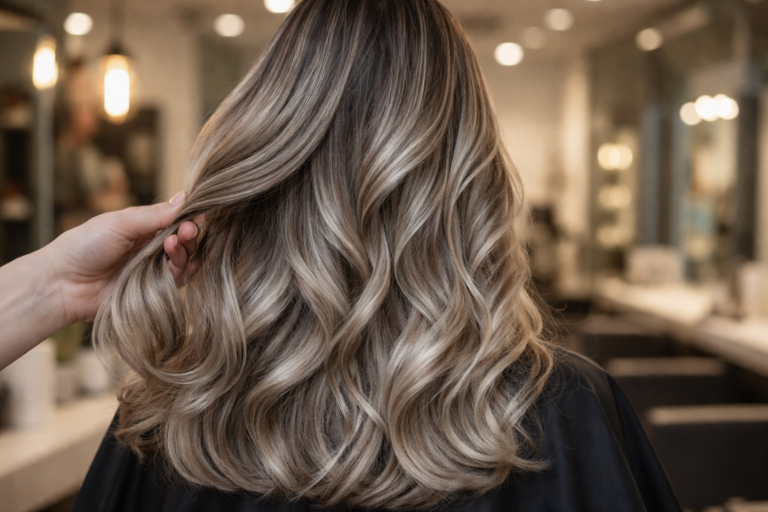
Gray hair has shifted from a sign of aging to a stylish statement, but many still want a softer transition that minimizes regrowth lines. Enter melting — a modern coloring technique that blends gray strands into your natural color with subtlety and dimension. If you loved balayage for its lived-in look, melting might become your new go-to.
What is melting?
Melting is a color technique where the colorist seamlessly blends shades so there’s no visible line between natural roots and colored lengths. Unlike traditional highlights or harsh color blocks, melting creates a gradual, almost imperceptible transition. The goal is to make color shifts look organic, like the hair has naturally evolved.
This technique is particularly effective for blending gray hair because it doesn’t attempt to cover every silver strand. Instead, melting integrates gray with warm and cool tones, reducing contrast and making regrowth far less obvious.
How melting differs from balayage
- Balayage uses painted highlights to create contrast and brightness, often focusing on lighter strands.
- Melting focuses on blending multiple shades so color shifts are invisible and soft.
- Balayage can emphasize dimension; melting gently erases harsh lines, prioritizing a smooth gradient.
Think of balayage as painting highlights and melting as smudging them into the base color. Both are artistic, but melting leans toward subtlety and low-maintenance wear.
Why melting is ideal for gray hair
- Minimizes regrowth lines: By blending grays into surrounding tones, the harsh demarcation that appears as hair grows out is dramatically reduced.
- Preserves natural texture: Melting doesn’t require full coverage, so hair retains movement and life.
- Low maintenance: Since regrowth is less noticeable, salon visits can be spaced farther apart.
- Customizable: Colorists can play with warm, cool, or neutral tones to complement skin tone and existing gray patterns.
What to expect in a salon session
A melting service typically involves:
- Consultation: You and your colorist discuss goals, how much gray you want blended, and preferred tones.
- Sectioning: The stylist sections hair strategically to map where each shade will fall.
- Painting and blending: Multiple tones are applied and softened at the seams to create a fluid transition.
- Toner or glaze: A finishing glaze or toner harmonizes all shades and neutralizes unwanted brassiness.
- Treatment: Because coloring can be dehydrating, a conditioner or bond-repair treatment is often applied.
Sessions vary in length depending on hair thickness and the number of tones used, but expect at least two hours for a full melting service.
Maintenance and aftercare
- Use color-safe, sulfate-free shampoo and conditioner to preserve tone.
- Add a weekly deep-conditioning or bond-repair treatment to maintain hair health.
- Use a purple or blue shampoo only if your toner needs it to combat brassiness; otherwise, stick to gentle products.
- Schedule gloss or toner refreshes every 8–12 weeks, depending on how fast your hair grows and your tolerance for subtle changes.
Who should try melting?
Melting is great for:
- People with 20–70% gray who want a softer look without full coverage.
- Anyone seeking a low-maintenance, natural finish.
- Clients who liked balayage but want less contrast and fewer salon trips.
It may be less suitable for those aiming for complete gray coverage or dramatic, high-contrast color changes.
Tips for choosing a colorist
- Look for color portfolios that show subtle, blended results rather than stark highlights.
- Ask about their experience specifically with gray-blending techniques.
- Discuss hair health: a skilled colorist will recommend pre- and post-color treatments to protect your hair.
Final thoughts
Goodbye balayage? Not entirely — but melting offers a fresh, understated approach that’s especially flattering for gray hair. By embracing a blended, painterly finish, you get a natural, lived-in look with fewer touchups and softer regrowth. If you want gray hair to appear part of your color story rather than an interruption, melting might be the change your hair needs.