
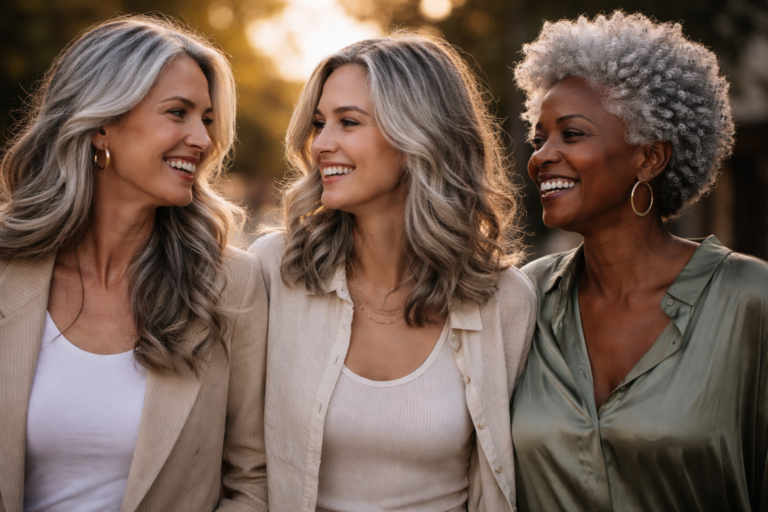
Gray hair used to be a sign of surrender to age. Now it’s a fashion statement. Across social media, runways, and red carpets, more people are ditching dye and letting silver strands lead the way. The result? A lively debate about beauty, authenticity, and whether gray really makes you look younger—or just different.
Why gray is suddenly “youthful”
It sounds counterintuitive: how can losing pigment make you look younger? A few reasons:
- Silver and white strands reflect light differently than dyed hair, often brightening the face and emphasizing bone structure.
- Natural gray tends to have a mix of tones—ashen, silver, and salt-and-pepper—that create modern contrast and depth without heavy color blocking.
- Letting hair grow without repeated chemical processing often results in stronger, shinier strands. Healthier hair can look more vibrant and “alive,” which reads as youthful.
Celebrities like Helen Mirren and Jamie Lee Curtis have helped mainstream the look, but younger influencers are also choosing to go gray on purpose, showing that the trend isn’t limited to any single age group.
The authenticity argument: what’s “natural” anymore?
One of the loudest conversations around this trend is philosophical: is an artfully grown-out gray any more natural than a perfectly blended dye job? Opinions split into a few camps:
- Embrace-it proponents: Gray is a rejection of ageism and daily upkeep. It’s honest and freeing.
- Polished-gray advocates: Some people use toners, glosses, or strategic lowlights to enhance gray. They call it “curated natural.”
- Dye defenders: Others prefer dyed hair because it lets them control color and combat brassiness or uneven regrowth.
The truth is hybrid. Many people use gentle color services to smooth the transition from dyed to natural gray. That balance—accepting your hair but also tending to it—fuels much of the debate about what’s “really natural.”
Styling and maintenance: how to make gray look intentional
If you’re considering joining the gray movement, you don’t have to abandon all care. A few practical tips:
- Use a purple shampoo weekly to neutralize yellow tones and keep gray bright.
- Schedule trims to remove damaged ends that can make gray look frizzy or limp.
- Try glossing treatments to add shine and seal the cuticle.
- Embrace soft layers or blunt cuts to showcase the natural texture and prevent a washed-out silhouette.
- Consult a colorist about lowlights or a shadow root to blend transitions without heavy dye.
These small rituals maintain a polished, healthy appearance without the relentless repainting of roots.
Social meaning: more than a color choice
This trend touches deeper cultural themes. For many, going gray is political: a pushback against youth-obsessed beauty standards and the pressure to conform. For others, it’s practical—less time in salons, fewer chemicals, and money saved.
But it also raises questions about privilege. Access to high-quality treatments that make gray look chic is not universal, and the freedom to experiment with one’s image often comes from having time and resources. So while gray can be liberating, its polished version sometimes remains an elite aesthetic.
Final thought: choose what feels right
Whether you see gray as genuinely natural, curated, or simply fashionable, the heart of the conversation is personal choice. Some will love the low-maintenance authenticity; others will prefer their custom color. The smartest move? Decide based on what makes you feel confident.
If you’re curious, try a slow grow-out, add a few gloss treatments, and see how the new you feels in the mirror. After all, the best trend is the one that lets you look—and feel—like yourself.