
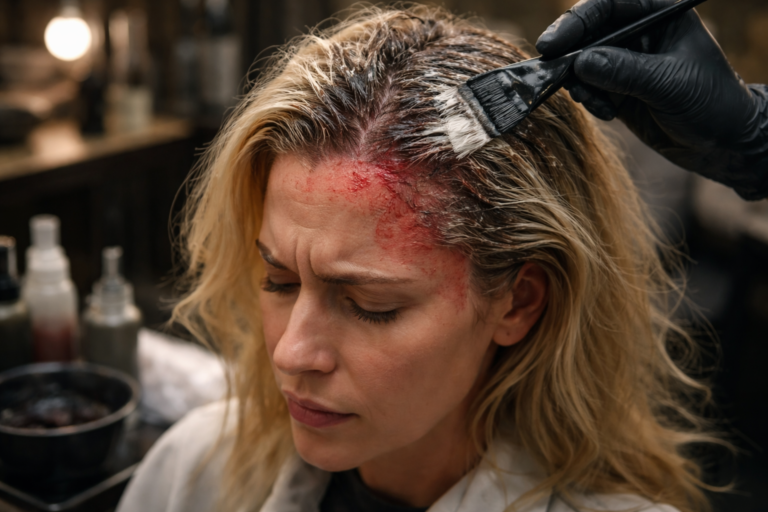
Hair color is powerful: it can refresh your look, hide gray, or express personality. But when coloring becomes a habit — weekly touch-ups, constant root coverage, or continual bleaching — the scalp and hair pay the price. Many stylists reassure clients that coloring is safe when done correctly, and that’s often true. The caveat: frequency, product type, and technique matter. Repeated exposure can lead to irritation, sensitization, and long-term damage. So how often is too often?
Why repeated coloring can harm scalps and hair
Hair dyes and lighteners contain active chemicals (oxidative dyes, peroxides, ammonia, and bleaching agents) designed to penetrate the hair and alter pigment. Those same chemicals can also affect the scalp’s skin barrier.
- Chemical irritation: Repeated contact can cause redness, itching, flaking, or a burning sensation.
- Allergic sensitization: Compounds like p‑phenylenediamine (PPD) can trigger allergic contact dermatitis, sometimes only after multiple exposures.
- Physical damage: Bleaching strips hair of natural proteins and oils, causing breakage and thinning when done often.
- Barrier breakdown: Chronic inflammation can weaken the scalp’s protective layer, making it more vulnerable to infection and long-term sensitivity.
Signs your scalp is being damaged
Watch for these red flags — they suggest you should pause and reassess your coloring routine:
- Persistent itching or burning that doesn’t subside after a few days
- Redness, swelling, or scabbing at the hairline or part
- New patches of hair loss or noticeable thinning after treatments
- Blisters or sores following a coloring session
- Rashes that spread beyond the scalp (possible allergic reaction)
If you experience severe symptoms (blistering, difficulty breathing, or facial swelling), seek emergency medical care.
How often is too often? Practical guidelines
There isn’t a one-size-fits-all answer, but these industry and dermatologist-friendly guidelines can help you decide:
- Semi-permanent colors: Less aggressive and deposit-only; generally safer to use more often, but try to space treatments at least 2–4 weeks apart.
- Demi-permanent glosses: Gentle refreshes that can be used every 4–6 weeks depending on fading.
- Permanent color (ammonia/peroxide): Aim for 4–8 weeks between full applications; frequent root retouches are often recommended every 4–6 weeks, but closer intervals increase scalp exposure.
- Bleach/high-lift lightening: The most damaging. Space sessions at least 6–8 weeks apart and avoid repeated scalp bleaching.
- Toners and color-depositing products: Typically gentler, but cumulative use matters — monitor your scalp’s reaction.
Remember: these are general ranges. Your hair type, scalp sensitivity, and the exact products used will change what’s safe.
Sensitization risk increases over time
Allergic reactions can develop after repeated exposures. Regularly doing small at-home touch-ups or overlapping treatments increases cumulative exposure and the chance of becoming sensitized to an ingredient like PPD. If you’ve had any unusual reaction, stop dyeing and see a dermatologist before continuing.
Professional coloring vs. at-home routines
Professionals use barrier creams, targeted application, and neutralizing steps that reduce scalp contact. They also can select formulations that minimize damage (e.g., lower-peroxide developers, glosses, or balayage techniques). At-home box dyes often result in more scalp contact and unpredictable overlap, increasing risk when used frequently.
If you color often, consider seeing a stylist for root-smudging, balayage, or face-framing highlights rather than full-head retouches — these reduce constant scalp chemical exposure.
How to dye less often and protect your scalp
Small changes can stretch time between appointments and safeguard scalp health:
- Choose low‑maintenance styles (balayage, lived-in color, or root blends).
- Use color-refreshing shampoos or glosses to extend vibrancy without reprocessing hair.
- Invest in deep conditioning and protein treatments to strengthen hair between services.
- Avoid heat styling and harsh clarifying shampoos right after coloring.
- Patch-test new formulas and switch to ammonia-free or lower-peroxide options if your scalp is sensitive.
- Keep a log of products and dates so you can spot patterns if irritation develops.
When to stop and see a pro
If irritation persists despite reducing frequency, see a dermatologist. Immediate medical attention is necessary for severe reactions (blistering, breathing trouble, swelling). For chronic issues — ongoing redness, thinning, or flaking — a specialist can test for allergies and recommend safer alternatives.
Final thought
Coloring isn’t inherently dangerous, but “too often” varies by product and person. Hair dye addiction — the impulse to constantly change or refresh color — quietly increases risk by multiplying chemical exposures. Balance your aesthetic goals with scalp health: space treatments, choose gentler options, and consult professionals when in doubt. Your scalp will thank you.