
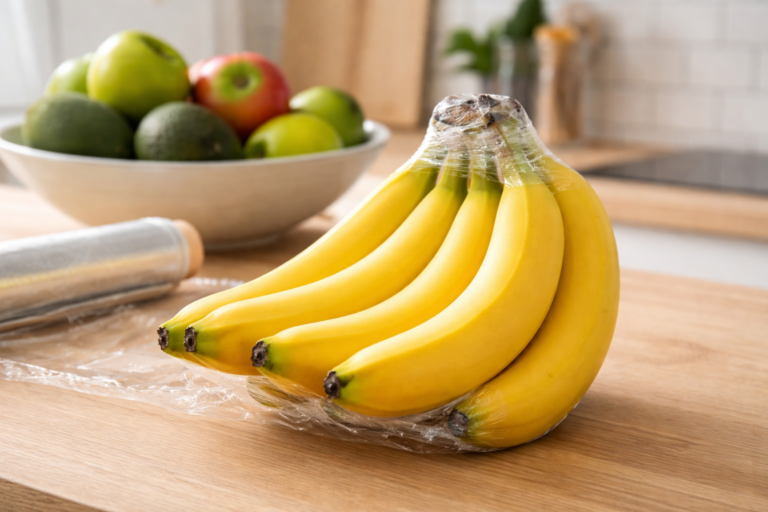
Bananas are one of the most consumed fruits worldwide, yet they are also among the fastest to spoil. Within just 3 to 5 days, a perfectly yellow banana can turn brown and mushy. However, recent food storage insights reveal that using one simple household item—plastic wrap or aluminum foil—can extend freshness up to 10–14 days by slowing the ripening process.
Understanding the science behind banana ripening and applying this easy technique can significantly reduce food waste while keeping your bananas fresh, firm, and delicious for longer.
Why Bananas Ripen So Quickly
Bananas ripen rapidly due to a natural plant hormone called ethylene gas. This gas is released mainly from the stem (crown) of the banana bunch and accelerates the conversion of starch into sugar.
Key Factors That Speed Up Ripening
- High temperature
- Exposure to sunlight
- Humidity
- Contact with other fruits (like apples and avocados)
- Damage or bruising
When bananas are grouped together, ethylene gas builds up around them, causing a chain reaction that speeds up ripening.
The One Household Item That Changes Everything
Wrap The Banana Stem
The simplest and most effective trick is to wrap the banana stem (crown) using:
- Plastic wrap
- Aluminum foil
- Cling film
This method works because it blocks or slows the release of ethylene gas, reducing its effect on the rest of the fruit.
How It Works Scientifically
- The stem is the main source of ethylene gas
- Wrapping acts as a barrier
- Less gas exposure = slower ripening
Results You Can Expect
- Shelf life extended from 3–4 days to 10–14 days
- Bananas stay yellow and firm longer
- Reduced browning and mushiness
Step-By-Step Guide To Keep Bananas Fresh
Step 1: Do Not Separate Immediately
Keep bananas as a bunch unless needed.
Step 2: Wrap The Crown Tightly
Use foil or plastic wrap to seal the stem area completely.
Step 3: Store In A Cool, Dry Place
Ideal temperature: 15°C to 20°C
Step 4: Keep Away From Other Fruits
Avoid storing near apples, tomatoes, or avocados.
Step 5: Optional Refrigeration
Once ripe, refrigerate to extend life further (peel may darken, but inside stays fresh).
Storage Methods Comparison Table
| Storage Method | Freshness Duration | Appearance After Days | Best Use |
|---|---|---|---|
| No wrapping (room temp) | 3–4 days | Brown/black | Baking only |
| Wrapped stem (room temp) | 10–14 days | Yellow | Perfect for eating |
| Refrigerated (no wrap) | 5–7 days | Yellow with spots | Good for consumption |
| Wrapped + Refrigerated | 14–18 days | Pale yellow | Longest preservation |
Additional Tips To Extend Banana Freshness
1. Hang Your Bananas
Hanging improves airflow and reduces bruising.
2. Separate Individual Bananas
This reduces ethylene spread between fruits.
3. Avoid Plastic Bags
They trap moisture and speed up spoilage.
4. Buy In Stages
Choose bananas with different ripeness levels.
5. Freeze Overripe Bananas
Perfect for smoothies and baking.
Common Mistakes To Avoid
- Storing bananas in sealed containers
- Keeping them near heat sources
- Mixing with ethylene-producing fruits
- Refrigerating unripe bananas
These mistakes can drastically shorten their shelf life.
Future Trends In Fruit Preservation
With growing awareness about food waste, simple hacks like stem wrapping are becoming mainstream. Future developments may include:
- Smart packaging that controls ethylene gas
- Eco-friendly wraps replacing plastic
- AI-powered kitchen storage systems
- Improved supply chain preservation techniques
Conclusion
Bananas may seem difficult to store, but with one simple household item—plastic wrap or aluminum foil—you can dramatically extend their freshness. By targeting the source of ethylene gas at the stem, this easy method slows ripening, keeps bananas yellow, and reduces waste. Combined with proper storage practices like keeping them cool, dry, and away from other fruits, you can enjoy perfectly ripe bananas for up to two weeks or more. This small change in your kitchen routine delivers big results, saving both money and food.