
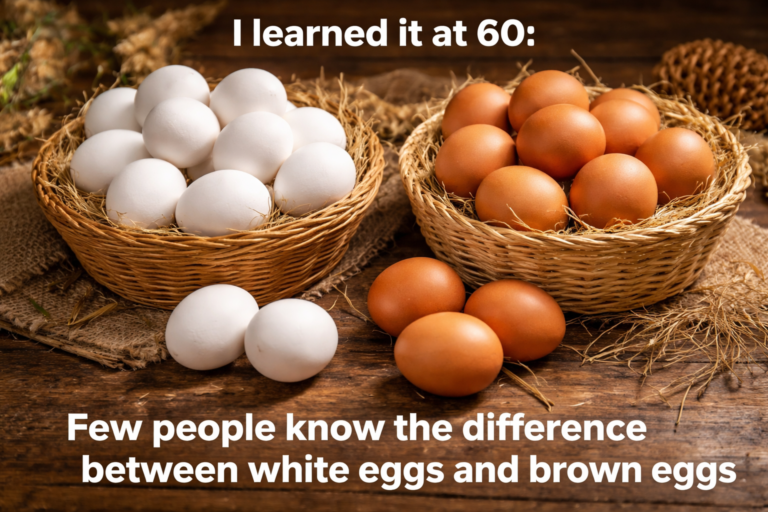
At the age of 60, many people discover something surprising about everyday foods. One of the biggest misconceptions is about white eggs vs brown eggs. For decades, people have believed that brown eggs are healthier, more natural, or more nutritious. However, modern research has revealed a completely different truth.
Understanding the real difference between white eggs and brown eggs can help you make smarter, healthier, and more cost-effective choices. In this article, we will explore facts, myths, nutritional data, and future trends related to eggs.
What Determines Egg Color?
The most important fact is simple:
- Egg color depends on the breed of the hen
- White-feathered hens typically lay white eggs
- Brown-feathered hens lay brown eggs
This means that the shell color is purely genetic and has nothing to do with nutrition or quality.
Nutritional Comparison: White Eggs vs Brown Eggs
Many people assume brown eggs are healthier—but this is a myth.
- Both types contain almost identical nutrients
- A typical egg contains:
- 6–7 grams of protein
- 70–80 calories
- Essential vitamins like B12, D, and A
- Minerals such as iron and selenium
- Studies confirm:
- No significant difference in protein, fat, or cholesterol
Key Insight
The hen’s diet and environment, not egg color, determine nutritional quality
Table: White Eggs vs Brown Eggs Comparison
| Feature | White Eggs | Brown Eggs |
|---|---|---|
| Shell Color | White | Brown |
| Hen Type | White-feathered breeds | Brown-feathered breeds |
| Nutrition | Same as brown eggs | Same as white eggs |
| Taste | No difference | No difference |
| Price | Usually cheaper | Often more expensive |
| Shell Thickness | No consistent difference | No consistent difference |
| Key Influencer | Hen diet & environment | Hen diet & environment |
Why Are Brown Eggs More Expensive?
One of the most interesting facts is pricing:
- Brown-egg-laying hens are usually larger
- They require more feed
- This increases production cost
This is why brown eggs often appear premium—even though they are not nutritionally superior.
Does Taste Differ Between White And Brown Eggs?
Another common myth is taste.
- There is no inherent taste difference
- Flavor depends on:
- Freshness
- Hen diet
- Cooking method
For example, eggs from hens fed omega-3-rich diets may taste slightly richer.
What Actually Affects Egg Quality?
Instead of shell color, focus on these factors:
1. Hen Diet
- Omega-3 feed increases healthy fats
- Vitamin-rich feed boosts nutrients
2. Farming Conditions
- Free-range hens may produce eggs with:
- More vitamin D
- Better nutrient profile
3. Freshness
- Fresher eggs taste better and have firmer texture
4. Storage
- Proper refrigeration preserves quality
Common Myths About Egg Colors
Myth 1: Brown Eggs Are Healthier
- Reality: False
- Nutrition is the same
Myth 2: Brown Eggs Are More Natural
- Reality: Both are natural; color is genetic
Myth 3: Brown Eggs Have Thicker Shells
- Reality: Shell thickness varies by hen age, not color
The Role of Egg Components
Understanding the egg itself is important:
- Egg White (Albumen)
- ~90% water, rich in protein
- Almost no fat or cholesterol
- Egg Yolk
- Contains vitamins, minerals, and healthy fats
- Rich in choline and antioxidants
Both parts are equally important for health.
Future Trends in Egg Consumption
With growing awareness, the focus is shifting from color to quality:
1. Organic and Free-Range Eggs
- Increasing demand for ethical farming
2. Omega-3 Enriched Eggs
- Enhanced nutrition through specialized feed
3. Sustainable Farming
- Consumers prefer eco-friendly egg production
4. Functional Eggs
- Eggs enriched with nutrients like vitamin D and DHA
How To Choose The Best Eggs
Instead of focusing on color, follow these tips:
Conclusion
The truth is simple but surprising: there is no real nutritional difference between white eggs and brown eggs. The shell color is determined entirely by the breed of the hen and has no impact on health, taste, or quality.
What truly matters is how the hens are raised, what they eat, and how fresh the eggs are. As consumer awareness grows, the future of egg consumption will shift toward quality, sustainability, and nutritional enrichment, rather than outdated myths.
So next time you’re shopping, remember: don’t judge an egg by its shell color—focus on what’s inside.