
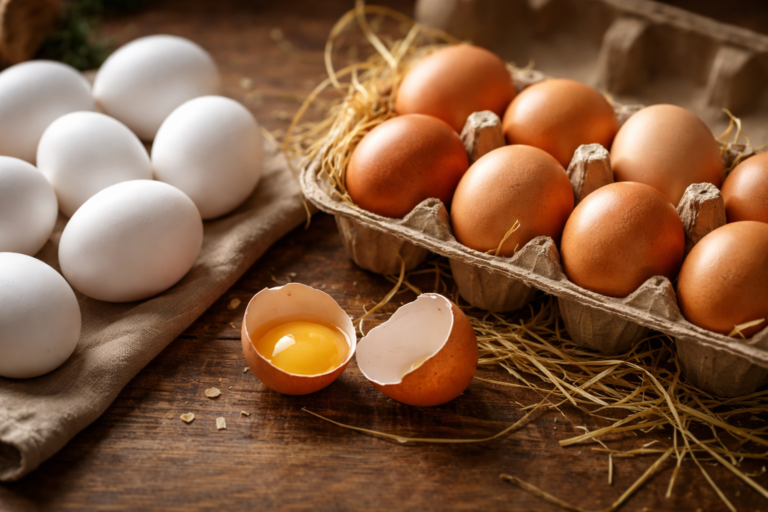
When I was 61 I finally paid attention to something many of us take for granted — the color of an eggshell. I learned it at 61 : few people know the difference between white eggs and brown eggs. It turns out the answer is simpler than most myths suggest, and more interesting too.
Shell color is about breed, not quality
The most important fact: shell color comes from the hen’s genetics. White-feathered hens with white earlobes tend to lay white eggs. Brown-feathered hens with red earlobes usually lay brown eggs. There’s no inherent nutritional advantage tied to the pigment that colors the shell.
Breeds that lay brown eggs are often larger and may eat more, which can make their eggs costlier. But price reflects farming practices and breed maintenance more than any secret health benefit of brown shells.
Yolk color depends on diet, not shell
Another common confusion is yolk color. People think brown eggs have darker, richer yolks. In reality, a yolk’s color depends on what the hen eats. Course greens, marigold petals, or diets high in xanthophylls make yolks deeper yellow or orange. Grain-fed hens produce paler yolks.
So if you want a deep-orange yolk, focus on sourcing eggs from hens with a diverse diet — pasture-raised or free-range — rather than choosing by shell color.
Taste and freshness: more than color
Do brown eggs taste better? Not inherently. Taste differences come from freshness, hen diet, and farming methods. An egg from a happy, pasture-fed hen often tastes superior, but those hens can lay either brown or white eggs.
Freshness matters for texture and cooking performance. A fresher egg has a firmer white and centered yolk. For hard-boiled eggs, slightly older eggs peel more easily. Learn to gauge freshness by date, local sourcing, or the float test (fresh eggs sink; old eggs float).
Why brown eggs often cost more
Brown eggs frequently cost more in stores. Reasons include:
- Brown-egg breeds often weigh more and need more feed.
- Producers of brown eggs sometimes market them as “natural” or “farm-fresh,” carrying added premium.
- Smaller-scale or specialty farms that produce brown eggs may have higher per-egg costs.
Price reflects production and marketing, not a consistent nutritional benefit.
How to choose eggs wisely
If you want good eggs, consider these factors instead of shell color:
- Farming method: pasture-raised and free-range hens often produce better-flavored eggs with richer yolks.
- Feed: look for farms that feed diverse greens or feeds enriched with omegas if nutrition is a priority.
- Freshness: buy from local farmers or check pack dates for fresher eggs.
- Certifications: organic, certified humane, or pasture-raised labels can indicate higher welfare standards and sometimes different nutritional profiles.
Quick tips for cooking and storing
- Store eggs pointy-end down to help the yolk stay centered.
- Refrigerate eggs to maintain freshness and safety.
- Use older eggs for hard-boiling and fresher eggs for poaching or frying.
- Let refrigerated eggs sit at room temperature for 15–20 minutes before baking to help with consistent mixing.
My takeaway at 61
I learned it at 61 : few people know the difference between white eggs and brown eggs, and that gap in knowledge kept me guessing for decades. The lesson is pleasantly simple: shell color is mostly cosmetic, while flavor, nutrition, and quality come from hen diet, care, and farm practices. Next time you pick up a carton, read the label, ask the farmer if possible, and remember that an egg’s shell tells only one small part of the story.