
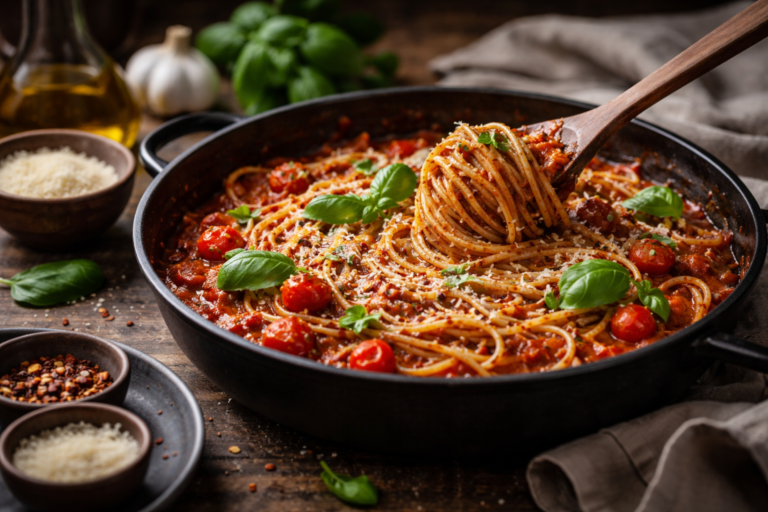
There’s a handful of kitchen lessons that only sink in after a burned pan, a gummy plate of noodles, or a meal that tastes like nothing at all. This pasta recipe is one of those lessons — the one I learned the hard way, and now I never make it differently. It’s simple, forgiving, and tastes like the kind of home cooking that demands nothing but attention to technique.
Why it stuck with me
The first time I tried this dish, I followed a recipe like a robot: boiled pasta, drained, tossed with sauce. The result was bland, dry, and slightly tragic. Over the next few months I made the same mistakes repeatedly — under-salted water, garlic burned to a bitter crisp, and a pan of lonely tomatoes that never became a sauce.
The breakthrough came when I stopped treating pasta and sauce as separate parts and learned to make them one thing. The secret was the starchy pasta water and finishing the pasta in the pan so the flavors marry. Once I embraced that, this simple garlic-tomato-basil pasta became my “never change it” weeknight meal.
What you’ll need
Ingredients (serves 2–3)
- 250g (about half a pound) spaghetti or linguine
- 2 tablespoons extra-virgin olive oil
- 4–5 cloves garlic, thinly sliced
- 250g (about 2 cups) cherry tomatoes, halved
- Pinch of red pepper flakes (optional)
- Salt and freshly ground black pepper
- 1/2 cup freshly grated Parmesan (plus more for serving)
- Handful of fresh basil leaves, torn
- 1/2 cup reserved pasta cooking water
- Juice and zest of half a lemon (optional, but recommended)
You don’t need anything fancy — good olive oil and fresh garlic make the difference.
Step-by-step method
Bring a large pot of water to a rolling boil. Salt it generously — it should taste like the sea. Add the pasta and cook until just shy of al dente (about 1–2 minutes less than package directions). Reserve 1/2–1 cup of the starchy cooking water, then drain the pasta.
While the pasta cooks, heat the olive oil in a wide skillet over medium heat. Add the sliced garlic and a pinch of red pepper flakes. Sauté gently for 30–60 seconds until fragrant; do not let the garlic brown.
Add the halved cherry tomatoes to the skillet. Season lightly with salt and pepper and cook until they blister and begin to release their juices, about 4–6 minutes. Use the back of a spoon to gently crush any tomatoes that hold their shape. You want a loose, saucy consistency, not a puree.
Turn the heat down to low. Add the drained pasta directly into the skillet with the tomatoes. Pour in about 1/2 cup of reserved pasta water. Toss everything with tongs, letting the pasta finish cooking in the sauce for 1–2 minutes. The pasta should absorb some liquid and the sauce should cling to each strand.
Remove the pan from heat. Stir in the grated Parmesan, lemon zest, and a squeeze of lemon juice if using. Add torn basil leaves and toss again. Taste and adjust seasoning with salt and pepper.
Serve immediately with extra Parmesan and a drizzle of good olive oil.
Tips I learned the hard way
- Salt the pasta water properly. Under-salted pasta makes the whole dish taste flat.
- Never burn the garlic. Browned garlic equals bitter garlic — throw it away and start again.
- Always reserve pasta water. The starch in it emulsifies with oil and cheese to make a silky sauce.
- Finish in the pan. Tossing the pasta with the sauce on the heat is the difference between coated noodles and a cohesive dish.
- Use fresh cheese. Pre-grated cheese often contains anti-caking agents that prevent a smooth finish.
- Don’t be afraid of acid. A touch of lemon brightens the flavors without turning the dish into something sour.
Variations and serving ideas
- Add wilted spinach or arugula at the last minute for greens.
- Swap cherry tomatoes for canned whole tomatoes crushed in the pan if fresh tomatoes aren’t in season.
- For protein, toss in sautéed shrimp, shredded rotisserie chicken, or crispy pancetta.
- Make it creamy by stirring in a couple tablespoons of mascarpone off the heat — but you rarely need it if your pasta water technique is right.
Final thoughts
This recipe is proof that technique beats complexity. A few small mistakes taught me to respect timing, seasoning, and the humble power of pasta water. It’s quick enough for weeknights and elegant enough to serve guests. I learned this pasta recipe the hard way, and now I never make it differently — not because I can’t, but because every time I follow these steps, it turns out exactly how I want: warm, simple, and unforgettable.