
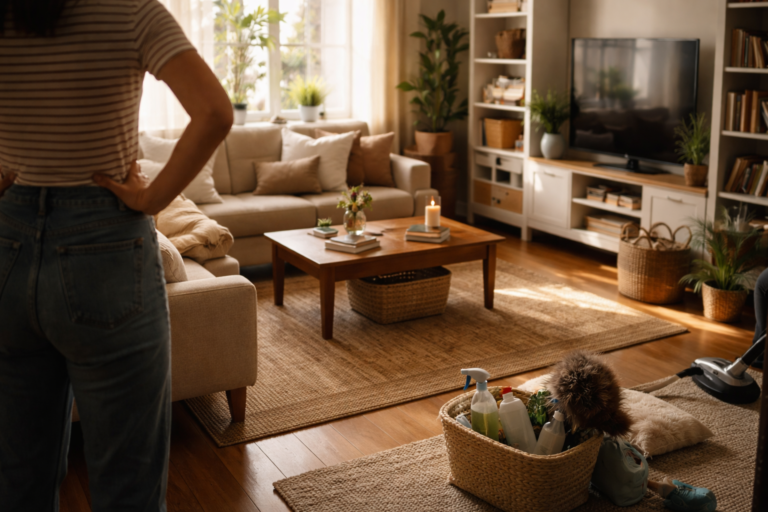
For years I cleaned in bursts: a frantic evening before guests, a rushed weekend when piles grew too tall, or a five-minute spree to hide the evidence. It never lasted. The randomness made my home feel chaotic, and I was exhausted by the constant catch-up. Then I made one simple change: I stopped cleaning randomly and finally felt in control of my space.
This post explains what I did, why it worked, and how you can apply the same principles to reclaim calm in your home.
Why random cleaning fails
Random cleaning is reactive, not proactive. It relies on panic to motivate action, and panic is an inconsistent driver. A few problems with that approach:
- You burn energy on peaks and then crash.
- Mess accumulates in predictable places, creating visual noise and stress.
- You never build habits, so the workload returns.
- Decision fatigue increases because you constantly face the same small choices (where does this go? do I keep this?).
Once I realized these patterns, I decided to change the system instead of my willpower.
My new approach — simple, repeatable, sustainable
I wanted a system that required less motivation and more structure. The four main pillars I adopted were: audit, zones, anchors, and small daily rituals.
1. Audit: see what’s actually happening
I spent an afternoon observing my routines. I noted:
- Where clutter accumulates (kitchen counter, entryway bench, desk).
- Which tasks I hated (folding laundry, sorting mail).
- Which tasks were urgent vs. optional.
The audit was painless but revealing. It showed that a few hotspots caused most of my stress.
2. Zones: stop treating the whole house the same
I divided my space into actionable zones: entry, kitchen, living area, bedroom, and workspace. For each zone I set a purpose and a simple rule.
Examples:
- Entry: Drop keys and one bag; everything else goes to its zone within 24 hours.
- Kitchen: Clear counters at night; dishes done or in the dishwasher.
- Workspace: One clear surface for current projects; archive the rest.
Zones limit decision-making because each item has a pre-defined place or rule.
3. Anchors: tie tasks to existing habits
Instead of inventing new habits, I tied small cleaning rituals to things I already did.
Anchors I used:
- After morning coffee → 5-minute kitchen tidy.
- After work shoes off → quick entryway reset.
- Before bed → 10-minute “surface sweep” of the living room.
Anchors made the tasks automatic. I didn’t rely on motivation — I relied on cues I already honored.
4. Small daily rituals beat big occasional marathons
I stopped trying to do everything at once. Instead, I adopted tiny daily rituals:
- A one-swipe surface clean each evening.
- A 15-minute “reset” block after dinner.
- A weekly 30-minute focused spot-clean (e.g., paper sorting).
These short, consistent actions prevent the need for massive cleaning days and keep the baseline tidy.
Tools and habits that helped
You don’t need fancy storage or hours of time. A few pragmatic choices helped me maintain control:
- Bins and labels for quick sorting.
- A donation box that leaves the house once a week.
- A “handle once” rule for mail and paper: act immediately.
- Laundry thresholds: if the basket is half-full, start a load.
- Visible, reachable storage for frequently used items.
These small supports reduce friction. The easier it is to do the right thing, the more likely you’ll do it.
The unexpected benefits
Beyond a neat home, the changes delivered surprising wins:
- Less mental clutter — my mind felt clearer.
- Fewer stressful surprises when guests drop by.
- More time for things I enjoy because I wasn’t constantly tidying.
- A sense of agency: I wasn’t at the mercy of my environment anymore.
The best part? The system scales. On busy weeks I slip a bit, but recovery is quick because the habits are embedded.
How to start this week
If you want to try this approach, start small:
- Do a 20-minute audit to map hotspots.
- Create 3 simple zone rules.
- Pick one anchor (e.g., after coffee) and attach a 5-minute task.
- Use a donation box and commit to one weekly removal.
One week of consistent micro-actions will show you how much less draining maintenance can be.
Final thought
I stopped cleaning randomly and finally felt in control of my space not because I became a perfect cleaner, but because I stopped expecting perfection and built a system that supports a calm, liveable home. If your space often feels chaotic, try swapping randomness for routine — the relief is real.