
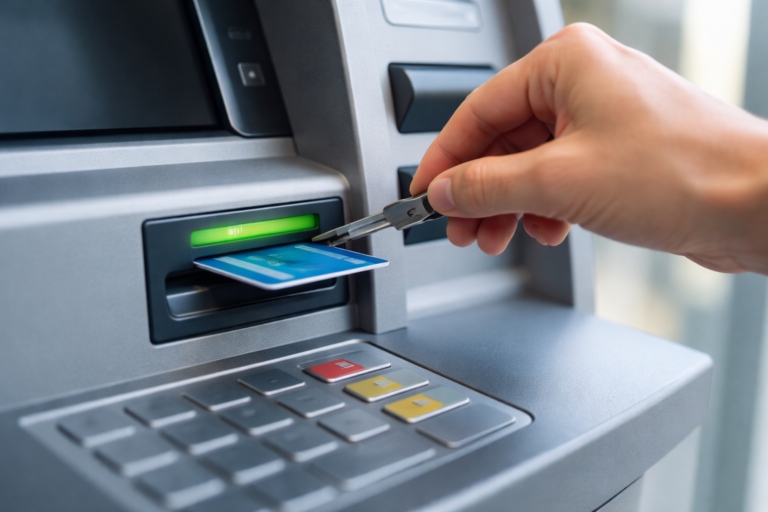
An ATM keeps your card is a stressful and surprisingly common situation faced by millions of users every year. Whether due to wrong PIN attempts, technical glitches, or even fraud devices, card capture is a built-in safety mechanism used by banks to protect accounts.
Many people believe there’s a “quick trick” to instantly retrieve a stuck card—but the truth is more nuanced. While there are immediate actions that can sometimes help, there are also serious risks if handled incorrectly. This guide explains the fastest safe techniques, what actually works, and what you must avoid.
Why ATMs Swallow Cards
Before trying any technique, it’s important to understand why your card was retained:
- Entering the wrong PIN 3 times
- Taking too long to remove the card
- Expired or blocked card
- Bank security instructions
- Technical malfunction
- Fraud attempts like card trapping devices
In some cases, retrieval is possible immediately—but in others, it is intentionally blocked for security reasons.
The “Fast Technique” That May Work Immediately
Press Cancel And Wait
One of the only legitimate quick actions you can take is:
- Press the Cancel (Red) button immediately
- Stay at the machine for 2–5 minutes
- Watch the slot carefully
Many ATMs are programmed to re-eject the card after a cancelled transaction or reset cycle.
Why This Works
When a transaction is interrupted, the ATM may attempt a card return cycle before locking the card internally.
Important: Stay At The ATM
Never leave immediately. Experts recommend:
- The machine may eject the card suddenly
- Leaving gives fraudsters a chance to steal it
- Some scams rely on users walking away
Fraud techniques like the “Lebanese loop” trap cards and rely on victims leaving, allowing criminals to retrieve them later.
Signs Of Fraud: Do NOT Try Any Tricks
If you notice:
- Loose or unusual card slot
- Resistance when inserting card
- Suspicious people nearby
Then do not attempt to force or retrieve the card manually.
Fraudsters may use devices that:
- Block card ejection
- Capture your card after you leave
- Steal your PIN
What To Do Immediately (Safe Steps)
Even if you try the quick technique, always follow these steps:
- Stay Calm And Observe
- Press Cancel And Wait
- Call The Number On The ATM
- Freeze Or Block Your Card
- Contact Your Bank Immediately
Banks recommend blocking your card quickly to prevent misuse.
Detailed Action Table
| Situation | Immediate Action | Recovery Chance | Risk Level |
|---|---|---|---|
| Wrong PIN Entered | Press Cancel & Wait | Medium | Low |
| Timeout Delay | Wait for auto-eject | High | Low |
| Machine Error | Contact bank | Medium | Medium |
| Fraud Suspected | Block card instantly | Very Low | High |
| Expired/Blocked Card | Order new card | None | Low |
Can You Really Retrieve The Card Instantly?
The idea of a “guaranteed instant trick” is misleading.
Reality:
- Only system reset or cancellation may release the card
- If retained internally, only the bank can access it
- Some ATMs are sealed and cannot be opened on-site
In many cases, the card is collected later by bank staff and may not be returned immediately.
What Happens After Card Capture
Depending on the situation:
- You may retrieve it from the branch (with ID)
- The card may be destroyed for security
- A replacement card is issued in 3–7 days
- Emergency cash may be available at branches
Future Trends And Smart ATM Technology
Modern ATMs are evolving rapidly:
- AI-based fraud detection systems
- Real-time card blocking alerts
- Contactless withdrawals (cardless ATMs)
- Faster customer support integration
These advancements aim to reduce card capture incidents by up to 30–40% in coming years.
Key Safety Tips To Avoid Card Loss
- Always remove your card immediately
- Never share your PIN
- Avoid using isolated ATMs at night
- Use bank branch ATMs when possible
- Inspect the card slot before inserting
Conclusion
When an ATM keeps your card, the only safe “fast technique” is pressing cancel and waiting for a reset. Beyond that, immediate action and security steps are crucial. While it may feel urgent to recover your card instantly, avoiding risks and protecting your account should always come first.
With improving ATM technology and awareness, such incidents are becoming easier to handle—but staying alert remains your best defense