
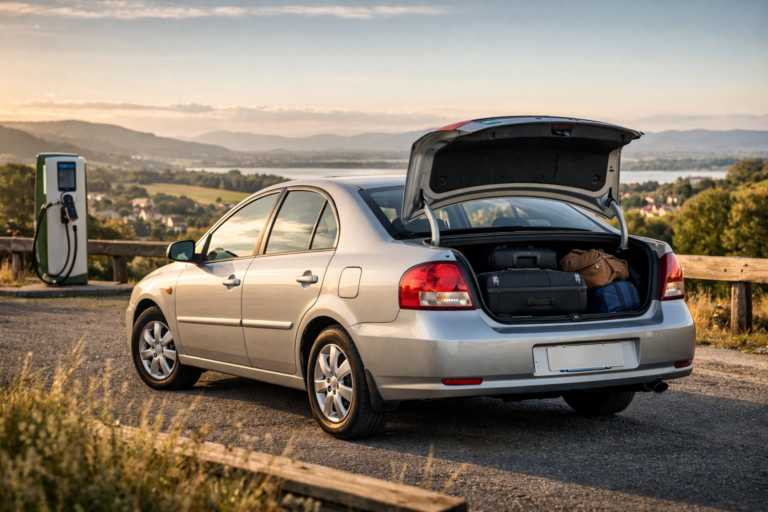
Buying a car in late 2025 is as much about supply, value and real-world practicality as it is about glossy styling and headline-grabbing tech. If you can live with an older design language, a package that combines a 520-litre boot, 4.6 L/100 km fuel consumption, a theoretical 1,000 km range and a price of €19,700 — all while avoiding China-dependent supply chains — suddenly looks very attractive.
Below I break down why an “outdated” appearance can be a feature rather than a flaw, who benefits most from this kind of choice, and a few practical tips to make sure the purchase remains smart long-term.
Why a conservative look can be an advantage
A dated exterior often signals engineering choices that prioritized durability and cost-efficiency over trendy styling. Manufacturers that stick to tried-and-tested designs:
- Avoid overcomplicated electronics that are expensive to fix.
- Use body panels and parts that are easier and cheaper to source or replace.
- Produce a car that’s familiar to technicians across markets, reducing service costs.
If the core attributes — roomy boot, strong fuel economy, long range and an affordable price — are met, the visual age of the car matters less for day-to-day ownership.
Practical benefits: the numbers that matter
- 520-litre boot: This is generous for families, weekenders and anyone who needs luggage capacity without moving to a bigger, thirstier vehicle. It removes the need for rooftop boxes and keeps center of gravity lower.
- 4.6 L/100 km: Real-world economy near this figure makes the car cheap to run. For commuters and high-mileage drivers, lower fuel bills quickly offset purchase price differentials.
- 1,000 km range: Whether achieved via a large tank and efficient consumption or a hybrid setup, this kind of range minimizes refueling interruptions on long trips and gives flexibility for rural or cross-border driving.
- €19,700 price point: Sub-€20k for a vehicle with these attributes is compelling. It opens access to recent technologies and safety features without the premium of trendier models.
The supply-chain angle: “without going through China”
In recent years, supply chain dynamics have affected lead times, spare-part availability and even vehicle pricing. A model built or assembled outside China, or one that uses supply chains less dependent on Chinese components, offers tangible benefits:
- Potentially shorter waiting lists and more reliable delivery times.
- Easier sourcing of replacement parts locally.
- Fewer geopolitical disruptions affecting availability or warranty support.
For buyers concerned about procurement transparency or wanting to support regional manufacturing, this is an appealing factor.
Who should consider this car
This kind of buy is especially smart for:
- Families needing cargo space without a large SUV footprint.
- High-mileage drivers who prioritize running costs over styling statements.
- Budget-conscious buyers who want modern reliability and range without the premium price tag.
- Buyers wary of supply chain risks who prefer locally produced or regionally sourced vehicles.
What to check before you buy
Even a great-value car needs the usual checks:
- Warranty and after-sales support: Confirm coverage length and what’s included.
- Maintenance costs: Ask for a three- to five-year service schedule and typical costs.
- Real-world fuel economy: Look for owner forums or long-term tests rather than just WLTP numbers.
- Resale value: Research depreciation trends for similar models in your market.
- Parts availability: Verify that common wear items are stocked locally and check lead times.
Final thought
An “outdated”-looking car that delivers a 520-litre boot, 4.6 L/100 km, a 1,000 km range and a €19,700 price — and avoids the complexities of China-centric supply chains — can be one of the smartest purchases you make in late 2025. It’s a reminder that practicality, running costs and dependable logistics often matter more to daily life than the latest styling cue. If your priorities are utility and value rather than being a walking billboard for the newest trend, this package deserves serious consideration.