
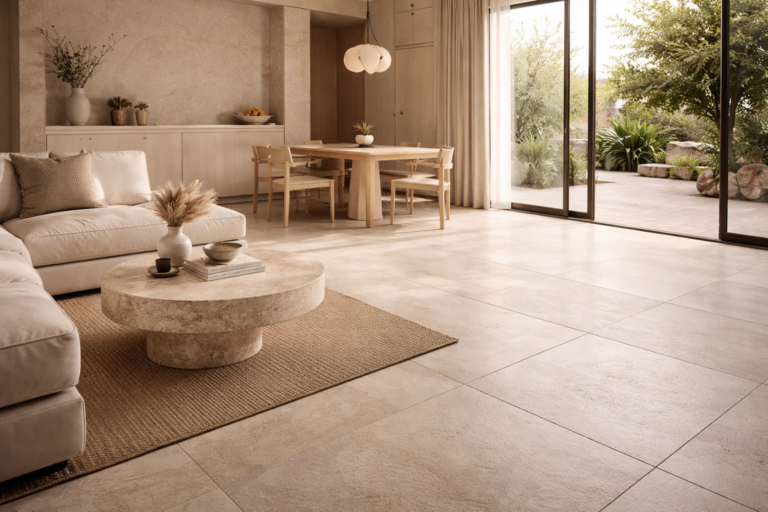
Microcement has enjoyed a run as the go-to finish for seamless, contemporary interiors. Its smooth, concrete-like look fits modern kitchens, bathrooms, floors and walls. But as homeowners and designers demand more durability, lower maintenance and better long-term performance, a new champion is taking over: sintered stone (also known as ultra-compact surfaces).
Below I explain why sintered stone is poised to replace microcement in our homes, what makes it different, and how to decide whether it’s right for your next renovation.
Why microcement is falling out of favor
Microcement’s appeal comes from its thin, continuous finish and the way it transforms ordinary spaces into minimalist statements. Yet several limitations have become increasingly apparent:
- It’s sensitive to movement and can crack if the substrate shifts.
- It requires highly skilled installers to get a flawless result.
- It’s relatively porous compared with hardened engineered materials and can mark or stain without proper sealing.
- Repairs are tricky and rarely invisible.
These practical concerns have led homeowners to seek materials that deliver the same sleek aesthetic with greater resilience and less ongoing maintenance.
What is sintered stone?
Sintered stone is an engineered, non-porous surface produced by compacting natural raw materials—like feldspar, silica and mineral oxides—under extreme heat and pressure. The result is a dense, uniform slab with superior mechanical and chemical properties.
Well-known commercial names include Dekton, Neolith and Lapitec, but the technology is used by multiple manufacturers. These slabs come in large formats and a wide variety of finishes, including convincing concrete and cement-look options designed specifically to replace microcement-style aesthetics.
Advantages of sintered stone over microcement
Sintered stone improves on several of the shortcomings that have troubled microcement:
- Durability: Highly scratch-, impact- and abrasion-resistant. It stands up to heavy use in kitchens and high-traffic floors.
- Low porosity: Essentially non-porous, so it resists staining and bacterial growth without the need for frequent sealing.
- Heat and UV resistance: Can tolerate hot pans and direct sunlight without discoloration—useful for both indoor and outdoor applications.
- Consistent finish: Large-format slabs deliver continuous, monolithic looks with fewer seams than conventional tiles.
- Ease of cleaning: Simple soap-and-water maintenance keeps surfaces looking new for years.
Where sintered stone works best
Sintered stone is exceptionally versatile. Typical applications include:
- Kitchen countertops and splashbacks
- Bathroom walls and vanity tops
- Flooring in high-traffic areas
- Exterior cladding and terraces (UV and weather-resistant varieties)
- Fireplace surrounds and feature walls
Because sintered stone comes in thin large-format panels, it can create the same seamless appearance homeowners liked about microcement while offering real performance advantages.
Considerations and trade-offs
No material is perfect. Before replacing microcement with sintered stone, keep these points in mind:
- Cost: Sintered stone is generally more expensive material-wise than microcement, and installation can add to the price.
- Weight and handling: Large slabs are heavy and need specialist installation and framing; substrate and support should be assessed.
- Edge and joint detailing: Achieving a truly monolithic look still requires careful planning—seams can be minimized but not always eliminated.
- Environmental impact: Sintered stone is long-lasting (which reduces replacement frequency), but the production process is energy-intensive. Look for manufacturers with sustainability credentials if that’s a priority.
Practical tips for homeowners
- If you loved the concrete look of microcement, choose a sintered stone finish that mimics it—many manufacturers now produce photorealistic concrete effects.
- Work with an installer experienced in sintered stone; handling and cutting require specialized tools.
- Consider mixing finishes: use sintered stone for countertops and high-use surfaces and pair with softer materials for warmth (wood or textiles).
- Request samples and test them in your space—lighting changes how the surface reads.
The bottom line
Microcement offered a sleek, contemporary aesthetic, but its practical limitations—cracking, maintenance and repair challenges—have opened the door for better-performing alternatives. Sintered stone delivers the seamless concrete look with far greater durability, stain resistance and longevity. For homeowners seeking a low-maintenance, high-performance finish that still reads modern and minimal, sintered stone is quickly becoming the material set to replace microcement in our homes.