
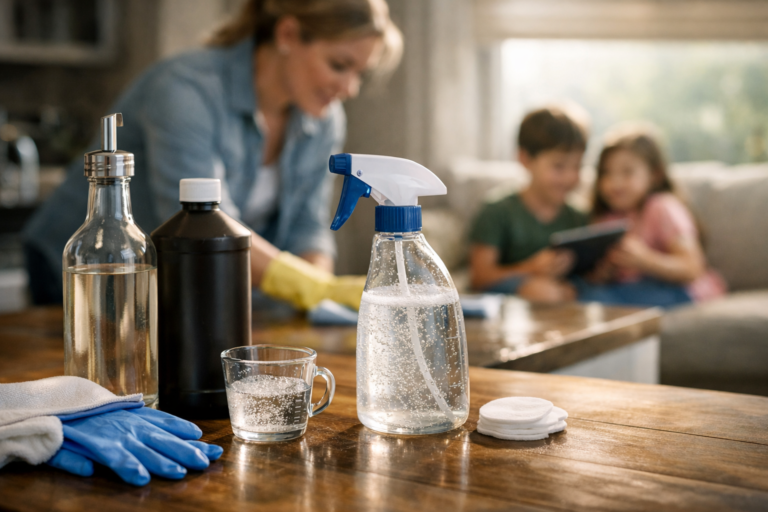
There’s a persistent DIY-cleaning claim that “mixing vinegar and hydrogen peroxide protects your family better than store bought disinfectants.” That sounds appealing: inexpensive household ingredients giving superior protection. But that claim is misleading and potentially unsafe. Here’s what you need to know to keep your home clean and your family safe—without creating hazardous chemical reactions or relying on unproven methods.
Why the claim is misleading and potentially dangerous
Vinegar (acetic acid) and hydrogen peroxide are both common cleaning products, but they work differently and are not simply interchangeable with commercial disinfectants.
- Vinegar is an acid with some antimicrobial activity against certain bacteria and fungi, but it is a weak disinfectant and is not reliably effective against many pathogens of concern (including norovirus and many strains of bacteria).
- Hydrogen peroxide is an oxidizer and can inactivate a range of microbes at sufficient concentrations and contact times. Household hydrogen peroxide is usually 3% and can be effective as a surface disinfectant when used correctly.
Mixing vinegar and hydrogen peroxide in the same container can form peracetic acid, a strong oxidant that can irritate the skin, eyes, and respiratory tract. Peracetic acid can be used industrially as a disinfectant at controlled concentrations, but forming it uncontrolled in your home is unsafe. For this reason—plus the lack of clear evidence that the mixture is safer or more effective than tested disinfectants—combining them is not recommended.
What the evidence and experts recommend
Public health agencies recommend using products that have been tested and approved for disinfection. Key points:
- EPA-registered disinfectants and manufacturer-labeled products have been evaluated for efficacy against specific pathogens and include instructions for safe, effective use (contact time, concentration, ventilation, personal protective equipment).
- For general household disinfection, common, effective options include properly diluted household bleach solutions, alcohol solutions with at least 70% alcohol, and some hydrogen peroxide formulations—used according to label directions.
- Vinegar is useful for cleaning certain surfaces (removing grime and mineral deposits) but is not a reliable substitute for disinfectants when you need to kill viruses or bacteria.
Safe alternatives and best practices
If your goal is effective, safe disinfection, follow these practical guidelines:
- Use EPA-registered disinfectants or follow CDC guidance for homemade options. For example, a properly prepared household bleach solution is effective against many pathogens. Always follow label instructions for concentration and contact time.
- Household 3% hydrogen peroxide can be used as a disinfectant on hard, non-porous surfaces—follow product labeling for safe use, and allow the surface to remain wet for the recommended contact time.
- Do not mix cleaners. Never combine bleach with ammonia, vinegar, hydrogen peroxide, or other household chemicals—dangerous gases or reactive compounds can form.
- Clean first, then disinfect. Remove visible dirt and organic matter with soap and water before applying a disinfectant; debris can reduce the effectiveness of disinfectants.
- Pay attention to contact time. Most disinfectants need surfaces to stay wet for a specified period to be effective; wiping too soon reduces efficacy.
- Ensure good ventilation and use gloves if the product label recommends them. Store chemicals out of reach of children and pets.
Everyday cleaning checklist
- Focus on high-touch surfaces: doorknobs, light switches, remote controls, countertops, faucets, and phones.
- Use soap and water for routine cleaning of most surfaces; disinfect when someone is sick or there’s a higher risk of infection.
- Launder linens and clothing from sick household members separately when possible, using the warmest appropriate water setting and drying completely.
- Read and follow product labels—labels tell you how to use the product safely and effectively.
Bottom line
The idea that “mixing vinegar and hydrogen peroxide protects your family better than store bought disinfectants” is not supported by safety guidance or public health recommendations. Combining those chemicals can create irritating, potentially harmful byproducts and does not guarantee better protection. For reliable disinfection, choose products that are proven and used according to label instructions—or follow established public health guidance for safe, effective household disinfecting.