
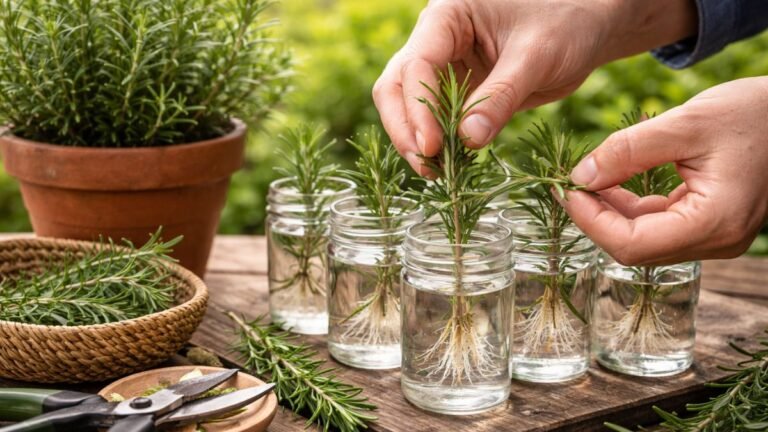
If you love rosemary but hate the uncertainty of seeds or the fiddliness of cuttings, there’s a reliable alternative: layering. This low-effort method produces new rosemary plants while they remain attached to the mother plant, which vastly improves success rates. With a bit of patience and basic supplies, you can multiply rosemary successfully every time using this simple trick.
Why layering beats seeds and cuttings
Layering lets a living stem develop roots while still drawing nutrients from the parent plant. That means:
- Higher success rate than starting from seed.
- No need to root cuttings in a jar or pot where they can dry out or rot.
- New plants form with established vigor and are less stressed when separated.
- It’s ideal for stubborn or woody herbs like rosemary that can be difficult to root from hardwood cuttings.
Layering is especially useful for older, low-growing rosemary varieties that have flexible stems close to the soil.
Best time to layer rosemary
The optimal window is spring to early summer, when growth is active and the soil warms. Plants have energy to produce new roots and recover quickly. Avoid late fall or winter unless you’re in a warm, frost-free climate; slower growth reduces rooting success.
What you’ll need
Minimal supplies make this method very accessible:
- A healthy rosemary plant with low, flexible stems
- A small garden trowel or dibber
- Clean garden scissors or pruners (for later)
- A short length of garden twine, landscape pin, or U-shaped staple
- A handful of well-draining potting mix or garden soil
- Optional: small rock or brick to hold the stem down
- Optional: rooting hormone (not necessary but can speed root formation)
Step-by-step: Layering rosemary
- Choose a suitable stem. Find a healthy, flexible side branch that reaches the soil. The stem should be at least pencil-thick and have multiple nodes (leaf joints).
- Prepare the site. Loosen the soil where the stem will contact the ground and mix in a bit of compost or potting mix to improve drainage and nutrients.
- Wound the stem (optional but helpful). Gently scrape a small section of bark on the underside of the stem where it will touch the soil. This exposes inner tissue and encourages root formation.
- Position the stem. Bend the stem down so the wounded section rests in the prepared soil pocket. Leave the shoot tip exposed and pointing outward—this continues to produce energy for rooting.
- Secure and cover. Anchor the stem with twine, a landscape pin, or a small rock. Cover the wounded area with about 2–3 cm (1 inch) of soil and tamp lightly to ensure good contact.
- Keep moist. Water the covered area regularly to maintain steady moisture—never waterlogged, but consistently damp. Mulching around the spot helps retain moisture.
- Wait and check. Roots typically form in 4–12 weeks depending on conditions. Gently dig around once you see resistance when tugging the stem or a cluster of white roots.
Separating and planting the new rosemary
Once a healthy root ball has developed:
- Cut the rooted stem from the parent plant with clean pruners.
- Lift the new plant carefully and transplant it into its own pot or planting hole.
- Water well and place in bright light with some afternoon shade until established.
- If potted, use a well-draining mix (equal parts potting soil, perlite, and coarse sand works well).
Troubleshooting and pro tips
- No roots after two months: check moisture—too dry will stall rooting. You can re-expose and re-wound the stem or try air-layering as an alternative.
- Woody, inflexible stems: choose younger growth or try a different branch. If necessary, perform air-layering higher up the stem.
- Too wet: rosemary dislikes soggy soil. Improve drainage by mixing in grit or moving to a slope or raised bed.
- Want faster results: apply a light rooting hormone to the wounded area before covering.
Layering is a gardener’s secret for multiplying rosemary successfully with minimal fuss. It preserves the traits of the parent plant, demands little equipment, and gives consistently excellent results. Give it a try this season and enjoy an expanding supply of fragrant rosemary for cooking, crafts, and the garden.