
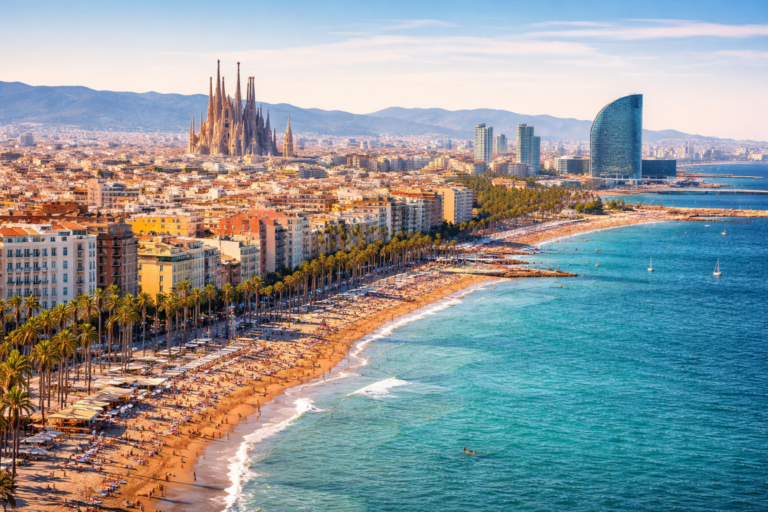
When discussing wealth in Europe, countries like Luxembourg, Ireland, or Switzerland usually dominate the conversation. However, when it comes to tourism profitability per visitor, the story changes dramatically. Not France Or Switzerland: Europe’s Richest Country Is Also The One That Earns The Most Per TouristSpain emerges as the leader
This remarkable position highlights a shift in global travel trends, where quality tourism and spending power are becoming more important than sheer visitor numbers. Spain’s tourism strategy, infrastructure, and diversified offerings have helped it outperform even traditional giants like France and Switzerland.
Spain: Europe’s Tourism Powerhouse
Spain is consistently ranked among the top global tourism destinations, welcoming tens of millions of visitors annually. In 2023 alone, the country recorded over 85 million international tourists, generating more than €108 billion in tourism revenue and contributing roughly 12% to its GDP. Even more impressive, Spain’s tourism income reached approximately $106.5 billion, placing it among the top global earners.
What truly sets Spain apart, however, is its tourism revenue per capita (or per tourist). Studies show that Spain generates significantly higher revenue per visitor—nearly double that of France in some comparisons.
Key Data Overview
| Indicator | Spain | France | Switzerland |
|---|---|---|---|
| International Tourists (2023) | ~85 million | ~100 million | ~12 million |
| Tourism Revenue | €108+ billion | Lower per capita | High but niche |
| Revenue Per Tourist | Highest in Europe | Moderate | High-end but smaller scale |
| Contribution To GDP | ~12% | ~8% | ~3%–4% |
| Global Ranking (Visitors) | 2nd | 1st | Not top 10 |
Why Spain Earns More Per Tourist
1. Strong Focus On High-Value Tourism
Spain has shifted from mass tourism to premium and experience-driven travel. Tourists are now spending more on luxury stays, gastronomy, and cultural activities.
- Growth in culinary tourism and wine experiences
- Expansion of luxury resorts and boutique hotels
- Increased focus on off-season tourism
2. Diversified Travel Experiences
Unlike countries that rely heavily on a single attraction type, Spain offers:
- Beaches (Costa del Sol, Canary Islands)
- Cultural hubs (Barcelona, Madrid)
- Heritage sites and UNESCO landmarks
- Rural and eco-tourism destinations
This diversity encourages longer stays and higher spending per visitor.
3. Strategic Regional Tourism Distribution
Spain has successfully expanded tourism beyond major cities. Regions like Andalusia, Valencia, and Galicia are now major contributors, reducing overcrowding while increasing economic output.
4. Strong International Visitor Mix
Spain attracts tourists from high-spending countries such as:
- United Kingdom
- Germany
- United States
This results in higher average expenditure per tourist, boosting overall revenue.
Comparison With Europe’s Richest Countries
Europe’s richest countries, measured by GDP per capita, include Luxembourg, Ireland, and Switzerland, each exceeding $100,000 per capita income.
However, these nations:
- Have smaller populations
- Receive fewer tourists
- Focus on financial services or niche tourism
For example:
- Switzerland attracts luxury tourists but in lower numbers
- Luxembourg is wealthy but not a major tourism hub
In contrast, Spain combines large-scale tourism with high spending per visitor, making it uniquely successful.
Europe’s Tourism Landscape
Europe remains the world’s leading tourism region, accounting for about 40% of global international visitors.
Major players include:
- France – highest number of visitors
- Spain – highest revenue efficiency
- Italy – cultural tourism giant
- Germany – strong business travel sector
Spain’s ability to outperform in revenue per tourist reflects a broader shift toward sustainable and high-value tourism models.
The Role Of Tourism In Spain’s Economy
Tourism is one of Spain’s most important industries:
- Contributes around 12–13% of GDP
- Supports millions of jobs
- Drives regional development
Globally, tourism is expected to contribute $11.7 trillion to GDP by 2025, showing its growing economic importance. Spain’s model demonstrates how countries can maximize economic benefits without solely relying on visitor volume.
Future Trends: Quality Over Quantity
Spain is now focusing on sustainable tourism growth, including:
- Limiting overcrowding in major cities
- Promoting eco-friendly travel
- Encouraging longer stays
- Investing in digital tourism infrastructure
This strategy ensures continued dominance in revenue per tourist while addressing challenges like overtourism.
Challenges Facing Spain’s Tourism Sector
Despite its success, Spain faces several issues:
- Overtourism in popular regions
- Rising housing costs in tourist cities
- Environmental pressure on coastal areas
Authorities are introducing tourism taxes and visitor caps to balance growth with sustainability.
Conclusion
Spain has redefined what it means to be a tourism powerhouse in Europe. While countries like France lead in visitor numbers and Luxembourg tops wealth rankings, Spain stands out as the most efficient tourism economy—earning the highest revenue per tourist.
By focusing on quality experiences, diversified offerings, and strategic planning, Spain has created a model that other countries are now trying to replicate. As global travel evolves, Spain’s approach highlights a crucial lesson: it’s not just about attracting tourists—it’s about maximizing their value.