
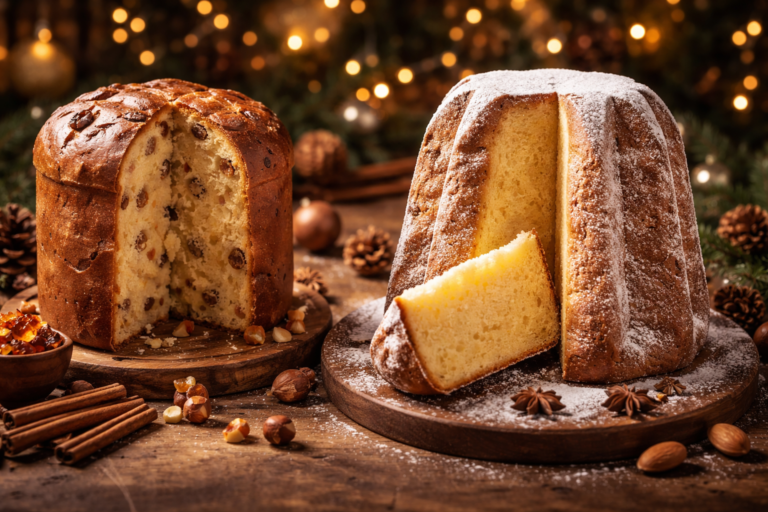
Every holiday season Italian bakeries fill with two iconic treats: panettone and pandoro. At a glance they can seem similar — both are tall, sweet breads associated with Christmas — but once you slice into them, the differences become clear. This post will guide you through origins, texture, flavor, and how to choose the right one for your celebration.
Quick snapshot: what sets them apart
- Panettone: domed, airy, studded with candied fruit and raisins, often a little tangy from long leavening.
- Pandoro: star-shaped, golden crumb, plain or dusted with sugar, rich buttery flavor and velvety texture.
Keep reading for the story and the practical tips.
Origins and shapes
Both panettone and pandoro come from Italy, but from different cities and culinary traditions.
Panettone originated in Milan. Its iconic dome and fluffy, open crumb reflect a long fermentation process using natural starters. The classic version contains candied citrus peel and raisins.
Pandoro comes from Verona. Its name means “golden bread” and it’s traditionally baked in a star-shaped mold. The surface is usually dusted with powdered sugar to mimic snow, giving a festive look.
Ingredients and texture
Though both are enriched doughs, their ingredient balances and resulting textures differ.
Panettone:
- Higher hydration and long proofing.
- Uses eggs, butter, sugar, and often a natural starter or yeast.
- Light, airy, with large irregular holes in the crumb.
- A slightly tangy, complex flavor from fermentation.
Pandoro:
- Richer in butter and eggs relative to flour.
- Dough is tighter and more uniform.
- Texture is fine, soft, and velvety — almost cake-like.
- Flavor leans more on butter and vanilla than on fermentation tang.
Flavor and fillings
The classic panettone is flavored and studded. Typical inclusions are:
- Candied orange and lemon peel
- Raisins (sometimes soaked in rum or marsala)
- Occasionally chocolate chips or modern variations like pistachio cream
Pandoro is usually plain, relying on the richness of the dough itself. Common ways to enjoy or vary pandoro:
- Dust heavily with powdered sugar
- Slice horizontally and fill with mascarpone cream, zabaglione, or chocolate ganache
- Serve with hot chocolate or sweet wine
How they’re made: process differences
Panettone requires patience. Many traditional recipes use multiple rises over a day or days. The long fermentation builds flavor and creates its characteristic airy structure. Bakers often shape the dough into a high cupola and bake in tall cylindrical molds.
Pandoro production focuses on enriched doughs and careful lamination. Butter is incorporated thoroughly to create that fine, tender crumb. It’s baked in a distinctive star-shaped mold to give pandoro its familiar profile.
How to serve and store
Serving:
- Panettone: best sliced vertically to show off the dome. Warm slightly before serving to release aroma.
- Pandoro: often dusted with sugar and sliced horizontally for filling. It pairs beautifully with mascarpone, creams, or a cup of espresso.
Storing:
- Keep both in their original wrapping or airtight container at room temperature for up to a week.
- Freeze slices individually in airtight bags for longer storage; thaw at room temperature before serving.
Buying tips and how to choose
When choosing between panettone and pandoro, consider the occasion and your guests’ tastes.
- If you prefer fruity, a bit tangy, and rustic texture: choose panettone.
- If you want buttery, refined, and easy-to-fill slices: pick pandoro.
- Look for authentic labels (e.g., Italian brands or PDO/IGP certifications) if you want traditional methods.
- Check the ingredient list: real butter and eggs (not margarine or artificial flavors) usually indicate quality.
Final slice: which is right for you?
Panettone and pandoro each bring something unique to a holiday table. Panettone offers complexity and a fruit-studded bite; pandoro brings buttery softness and a versatile base for creams and fillings. You don’t have to choose — many families enjoy both, using panettone as a breakfast treat and pandoro as a dessert. Either way, understanding the difference helps you appreciate what makes each one special.
Happy tasting — and Buon Natale!