
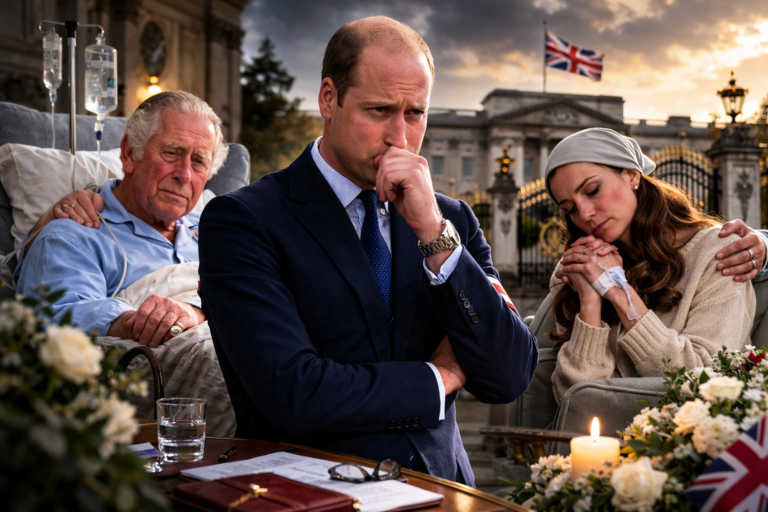
The British monarchy has entered one of its most challenging periods in decades, as Prince William finds himself at the center of a deeply personal and public crisis. With King Charles III and Catherine, Princess of Wales, both undergoing cancer treatment, the future king is balancing immense emotional strain with increasing royal responsibilities. This unprecedented situation has not only reshaped the internal dynamics of the royal family but has also intensified public scrutiny and expectations.
A Royal Family Hit By Dual Health Crises
The crisis began in early 2024 when King Charles III was diagnosed with an undisclosed form of cancer following a medical procedure. Soon after, Princess Catherine revealed that she too was undergoing chemotherapy after cancer was detected post-surgery.
These back-to-back announcements shocked the nation and created a rare moment of vulnerability for the monarchy. The simultaneous illnesses of two senior royals significantly reduced the number of active working members, placing additional strain on the institution.
Prince William’s Role Intensifies
As the heir to the throne, Prince William has been forced to step into a more prominent leadership role. With his father temporarily stepping back from public duties and his wife focusing on recovery, William has become one of the most visible figures representing the monarchy.
He has taken on increased responsibilities, including:
- Representing the Crown at public engagements
- Supporting national and charitable initiatives
- Maintaining stability in the royal image
Experts note that the absence of key figures has amplified the expectations placed on him, making his role more demanding than ever.
The Emotional Toll: A ‘Brutal’ Year
Prince William himself has described this period as the “hardest year” of his life. The emotional burden of supporting both his father and wife through cancer treatments while maintaining public duties has been immense.
In his own words, the year has been “brutal,” reflecting the collision of private grief and public obligation.
Beyond public appearances, William has also had to:
- Provide emotional stability for his children
- Shield his family from media speculation
- Balance caregiving responsibilities with royal duties
Timeline Of Key Events
| Event | Details |
|---|---|
| Early 2024 | King Charles III diagnosed with cancer |
| March 2024 | Princess Catherine announces cancer diagnosis |
| Mid 2024 | Both reduce public engagements significantly |
| Late 2024 | Catherine completes chemotherapy |
| Early 2025 | Catherine announces remission |
| 2025–2026 | Charles continues treatment with limited duties |
Public Pressure And Media Scrutiny
The British public and global media have closely followed every development. Speculation, misinformation, and intense coverage have added to the pressure on Prince William.
Key challenges include:
- Maintaining transparency without compromising privacy
- Managing public expectations about the monarchy’s stability
- Addressing rumors surrounding royal health
The reduced visibility of senior royals has also raised broader questions about the monarchy’s resilience and future.
A Shift Toward A Modern Monarchy
This crisis has accelerated the transformation of the monarchy into a more modern and emotionally open institution. Both King Charles III and Prince William have adopted a more transparent communication style, breaking away from traditional royal secrecy.
Notable changes include:
- Personal video messages from Princess Catherine
- Public acknowledgment of health struggles
- Increased focus on mental health awareness
These shifts have helped humanize the royal family and strengthen public empathy.
Balancing Duty And Family Life
Despite the pressure, Prince William has emphasized the importance of family. He has reportedly prioritized:
- Supporting his children emotionally
- Maintaining a sense of normalcy at home
- Spending time with his wife during recovery
This balance reflects a broader evolution in royal priorities, where personal well-being is no longer secondary to duty.
Future Implications For The Monarchy
The ongoing health challenges have sparked speculation about the future of the monarchy. While there is no immediate transition of power, William’s expanded role suggests a gradual shift toward the next generation.
Potential long-term impacts include:
- A more streamlined monarchy with fewer working royals
- Increased reliance on Prince William and his leadership
- Greater public expectations for transparency and relatability
Key Facts At A Glance
| Aspect | Information |
|---|---|
| Prince William’s Role | Heir to the throne, primary public representative |
| King Charles III | Diagnosed with cancer in 2024, continues treatment |
| Princess Catherine | Completed chemotherapy, in remission as of 2025 |
| Public Reaction | High sympathy but increased scrutiny |
| Royal Impact | Reduced workforce, increased pressure on William |
Conclusion
The British monarchy is navigating one of its most turbulent periods in modern history. At the heart of this storm stands Prince William, balancing personal hardship with public duty. His resilience, leadership, and evolving approach to royal responsibility are shaping the future of the institution.
As the monarchy adapts to changing expectations and unprecedented challenges, William’s role as a steady and compassionate leader may ultimately define the next era of royal history.