
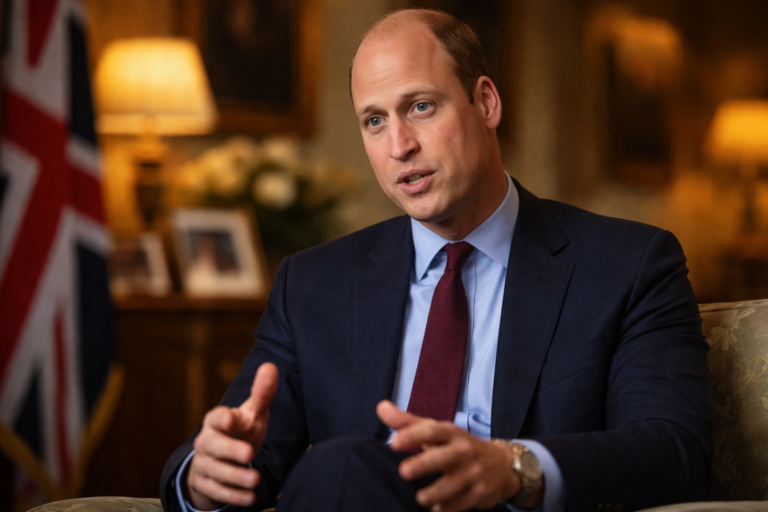
In a rare and deeply personal revelation, Prince William has spoken candidly about the immense pressure of balancing royal duty with family responsibilities during one of the most challenging periods in modern British monarchy history. With both King Charles III and Princess Catherine facing serious health issues, the Prince of Wales has found himself navigating emotional strain, increased responsibilities, and growing expectations as the future king.
This period, often described as a defining chapter for the monarchy, has brought forward a more human, relatable side of William—one that emphasizes family, resilience, and modernization.
A Challenging Period For The British Monarchy
The past few years have been exceptionally turbulent for the royal family. Health crises, evolving public expectations, and internal transitions have reshaped the institution.
- Both King Charles III and Kate Middleton underwent cancer treatment in 2024
- Kate announced remission in early 2025
- William described 2024 as the “hardest year” of his life
- Public scrutiny and media pressure intensified during this time
William admitted that managing both personal and public responsibilities simultaneously was emotionally overwhelming, especially when it involved his family.
Key Facts At A Glance
| Aspect | Details |
|---|---|
| Role | Prince of Wales, heir to the British throne |
| Family Members Affected | King Charles III and Princess Catherine |
| Major Event | Cancer diagnoses and treatment (2024–2025) |
| Emotional Impact | Described as “hardest year” |
| Children | Prince George, Princess Charlotte, Prince Louis |
| Focus Areas | Family protection, modernization, public service |
| Future Vision | A modern, simplified monarchy |
Balancing Duty And Family Life
Prince William’s remarks highlight a universal struggle—balancing work and family—but under extraordinary circumstances.
He emphasized that while royal duties are demanding, it is family-related stress that affects him most deeply.
Key Challenges He Faces:
- Supporting his wife during recovery
- Assisting his father while maintaining royal duties
- Protecting his children from media intrusion
- Continuing public engagements and leadership roles
William noted that protecting his children’s emotional well-being is a top priority, shaped by his own experiences growing up in the spotlight.
A Modern Approach To Fatherhood
Unlike previous generations, Prince William is redefining royal parenting. He is known for being:
- A hands-on father involved in school routines
- Focused on emotional openness and mental well-being
- Determined to provide a normal upbringing despite royal status
He has openly expressed the importance of being present as a parent, saying that finding time to “just be Dad” is essential even amid royal obligations.
This shift reflects a broader transformation within the monarchy—moving from rigid traditions to a more relatable and human-centered approach.
The Emotional Weight Of Responsibility
William acknowledged that the burden of responsibility has grown significantly due to recent events. The overlapping crises have accelerated his transition into a more prominent leadership role.
- Increased public visibility
- Greater expectations as future king
- Emotional strain from family health issues
- Pressure to maintain stability within the monarchy
He admitted feeling “overwhelmed” when it comes to family matters, highlighting the deeply personal nature of his challenges.
Vision For A Modern Monarchy
Despite the difficulties, Prince William has shown a clear vision for the future of the monarchy.
Key Elements Of His Vision:
- Modernization without abandoning tradition
- Greater public engagement and relatability
- Reduced emphasis on outdated royal protocols
- Focus on service, empathy, and connection
He has stated that “change is on my agenda,” signaling a willingness to adapt the institution to modern society.
Experts suggest that his leadership style is more empathetic, approachable, and reform-oriented, aligning with changing public expectations.
Public Image And Growing Support
William’s candid approach has strengthened his connection with the public. His openness about struggles, family priorities, and emotional challenges has made him more relatable than many predecessors.
Public Perception Trends:
- Seen as a responsible and caring leader
- Praised for prioritizing family values
- Viewed as a symbol of stability during uncertainty
- Recognized for advocating mental health awareness
His ability to combine tradition with modern values is widely considered crucial for the monarchy’s long-term survival.
Future Outlook: What Lies Ahead
Looking forward, Prince William’s role is expected to expand further as the monarchy continues to evolve.
Future Possibilities:
- A streamlined monarchy with fewer formalities
- Greater transparency and public interaction
- Increased focus on social causes like mental health and climate change
- A leadership style rooted in empathy and adaptability
The coming years will likely define how successfully he balances royal expectations with personal priorities.
Conclusion
Prince William’s candid reflections offer a rare glimpse into the human side of royalty. As he navigates one of the most difficult periods in the monarchy’s recent history, his commitment to family, duty, and modernization stands out.
His approach signals a new era—one where the monarchy evolves to remain relevant while staying rooted in its core values. By embracing vulnerability, prioritizing family, and advocating meaningful change, William is shaping not just his future as king, but the future of the British monarchy itself.