
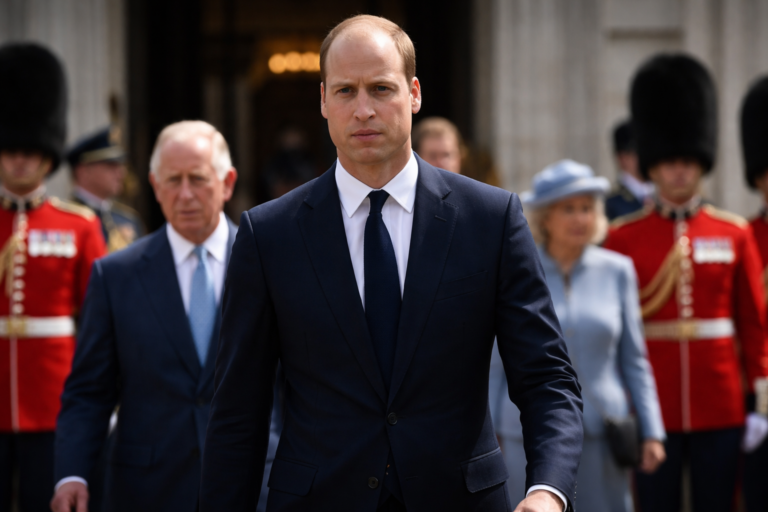
The British monarchy is undergoing a period of noticeable evolution, and Prince William is increasingly at the center of this transformation. As the Prince of Wales takes on more prominent duties, royal watchers and experts are speculating about a possible accelerated transition of power within the royal family.
Recent developments in 2025 and 2026 highlight how Prince William’s leadership role is expanding significantly, positioning him as a future monarch who is already influencing decisions at the highest level. While King Charles III remains on the throne, growing responsibilities and strategic delegation are reshaping the monarchy’s structure.
The Growing Leadership Role Of Prince William
Over the past two years, Prince William has steadily stepped into a more visible and influential leadership role. His responsibilities have expanded not just symbolically, but also functionally.
One of the most significant developments is his upcoming authority to grant Royal Warrants starting in Spring 2026. This power allows him to formally recognize companies and individuals that provide services to the royal household.
This move is highly symbolic, as previously only senior monarchs like King Charles III and Queen Camilla held this authority.
Key Leadership Indicators
- Expanded Royal Duties: William and his wife have seen their roles grow “exponentially” since 2025.
- Royal Warrant Authority (2026): A major step toward executive influence in the monarchy.
- Strategic Decision-Making: Increasing involvement in shaping royal policies and public image.
- Global Leadership Initiatives: Continued leadership through projects like environmental and social programs.
These developments clearly indicate that Prince William is no longer just preparing for kingship—he is actively practicing it.
Table: Key Facts About Prince William’s Expanding Role
| Aspect | Details |
|---|---|
| Current Title | Prince of Wales |
| Age (2026) | 43 |
| Major New Role | Grantor of Royal Warrants (from Spring 2026) |
| Leadership Focus | Modernization, sustainability, social impact |
| Key Initiative | Homewards (homelessness project) |
| Future Role | King of the United Kingdom |
| Transition Indicator | Increased delegation from King Charles III |
Signs Of A Possible Accelerated Transition
Royal insiders and commentators have pointed to several signs suggesting that the transition of power may be happening faster than expected.
1. Delegation From King Charles III
With King Charles III dealing with health challenges and scaling back certain engagements, more responsibilities have been informally passed to Prince William. Reports suggest that William is increasingly taking the lead on sensitive matters within the royal family.
2. Acting As A De Facto Leader
Some royal experts believe that Prince William is already functioning as a central decision-maker, especially in managing controversies and shaping the monarchy’s direction.
This includes:
- Handling internal royal family issues
- Strengthening public trust
- Driving modernization strategies
3. Strategic Vision For The Monarchy
Prince William has openly expressed his desire to bring “change for good” to the monarchy, focusing on relevance, empathy, and long-term impact.
His approach signals a shift from tradition-heavy leadership to a more modern, socially engaged monarchy.
Modernization And Future Vision
A major aspect of Prince William’s leadership style is modernization. Unlike previous generations, he aims to make the monarchy more relatable and impactful.
Key Focus Areas
- Sustainability: Through initiatives like the Earthshot Prize
- Social Welfare: Tackling homelessness via the Homewards program
- Efficiency: Streamlining royal operations and public spending
- Public Engagement: Connecting with younger generations
His leadership reflects a balance between tradition and innovation, ensuring that the monarchy remains relevant in a rapidly changing world.
The Role Of Princess Catherine In This Transition
Catherine, Princess of Wales, also plays a crucial role in this evolving leadership dynamic. Her increasing responsibilities and public influence complement William’s rise.
Notably, she will become the first Princess of Wales in over a century to grant Royal Warrants, highlighting her growing authority within the institution.
Together, the couple represents a modern royal partnership, often described as the future face of the monarchy.
Public Perception And Royal Watchers’ Speculation
Public sentiment toward Prince William has remained largely positive, with many viewing him as a stable and forward-thinking leader.
Royal watchers speculate that:
- The monarchy is transitioning toward a “House of Wales” era
- William is being prepared for kingship sooner than anticipated
- His leadership style could redefine royal expectations globally
While there is no official confirmation of an accelerated transition, the pace of change is undeniable.
Challenges Ahead
Despite the growing influence, Prince William faces several challenges:
- Balancing tradition with modernization
- Managing internal royal family tensions
- Maintaining public trust in a digital age
- Navigating global political and social expectations
His ability to handle these challenges will ultimately define his reign.
Conclusion
The increasing visibility and authority of Prince William signal a significant shift within the British monarchy. From gaining new powers like issuing Royal Warrants to taking on a more active leadership role, he is clearly stepping into the responsibilities of a future king.
While King Charles III remains the reigning monarch, the groundwork for transition is already being laid. Whether or not an official transfer of power happens sooner than expected, one thing is clear: Prince William is shaping the future of the monarchy today.