
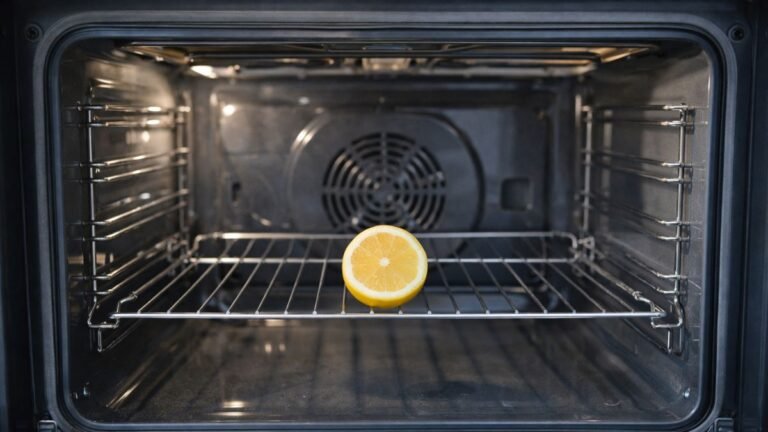
There’s a viral kitchen tip that says putting a lemon slice in your cold oven will freshen, clean, or deodorize it. It sounds simple and natural — and lemons do have useful cleaning properties — but does a lemon slice in a cold oven actually do anything? Short answer: usually no. Longer answer: it can help, but only when used correctly.
Why people put lemons in ovens
People are drawn to lemons for a few reasons:
- Lemon’s bright scent feels like a natural deodorizer.
- Citric acid cuts through grease and mineral deposits.
- It’s an inexpensive, eco-friendly idea compared with chemical cleaners.
- Easy demos (microwaving lemon water) show visible steam and scent release, so people assume the same will work in an oven.
These reasons make the lemon trick sound appealing. But context matters.
What a lemon slice does — and doesn’t do — in a cold oven
What it doesn’t do:
- A single lemon slice sitting in a cold oven will not release its scent or acid into the space. Without heat there’s little evaporation and no steam to carry fragrance or loosen grime.
- It won’t disinfect or kill bacteria. Citric acid has mild antimicrobial properties, but not enough to sanitize oven surfaces.
- It won’t “absorb” odors the way baking soda does. Citrus doesn’t neutralize smells by adsorption.
What it can do (when used properly):
- When heated with water, lemon releases steam and a pleasant citrus aroma, which can help soften grease and make wiping easier.
- Citric acid can help break down mineral deposits and light food residue when combined with heat and moisture.
- A lemon steam treatment can reduce lingering cooking odors and give the oven a fresher smell.
When putting lemon in the oven actually helps
The lemon trick is effective only as part of a steam-clean or deodorizing routine, not as a passive cold placement. Try this method when the oven needs light cleaning and you want a natural option:
- Slice 1–2 lemons and place them in an oven-safe dish.
- Add about 1–2 cups of water to the dish (enough to produce steam, not to flood the oven).
- Heat the oven to 250–300°F (120–150°C) for 20–30 minutes.
- Turn off the oven and let it cool enough to safely open.
- Wipe down the interior with a damp cloth or sponge. The steam will loosen grime and the lemon will leave a mild citrus scent.
This approach uses heat to release lemon’s cleaning benefits. For heavy burnt-on grease, this will only help soften surface grime — you’ll still likely need a scrub with baking soda paste or a commercial cleaner.
Safety and practical tips
- Use an oven-safe dish for the lemon and water. Don’t place loose slices directly on burners or heating elements.
- Don’t use this method in a self-cleaning cycle. Self-cleaning ovens reach very high temperatures and should be run empty.
- Avoid leaving acidic juices on metal surfaces for long periods; while occasional use is safe, concentrated acid left on parts can lead to corrosion over time.
- If your oven has enamel surfaces, be gentle when wiping; use soft cloths to avoid scratching.
Alternatives and when to choose them
- Baking soda: Best for neutralizing strong odors and tackling stubborn, dry baked-on grime (make a paste with water, apply, let sit, then scrub).
- Vinegar: Good for dissolving mineral deposits and for a mild disinfecting wipe-down (use diluted).
- Commercial oven cleaners: Choose when you have heavy grease and burnt-on carbon that natural methods won’t remove.
- Self-clean feature: Effective for deep cleaning; follow manufacturer instructions.
Bottom line
Putting a lemon slice in your cold oven by itself is mostly a myth — it won’t freshen or clean the oven unless you add heat and water to create steam. Use lemons as part of a steam-clean routine to loosen grime and impart a light citrus scent, but rely on baking soda, vinegar, or oven cleaners for heavy-duty cleaning. If you like natural methods and have light residue or odors to tackle, lemon steam is a safe, pleasant option — just don’t expect miracles from a lone slice sitting cold on a rack.