
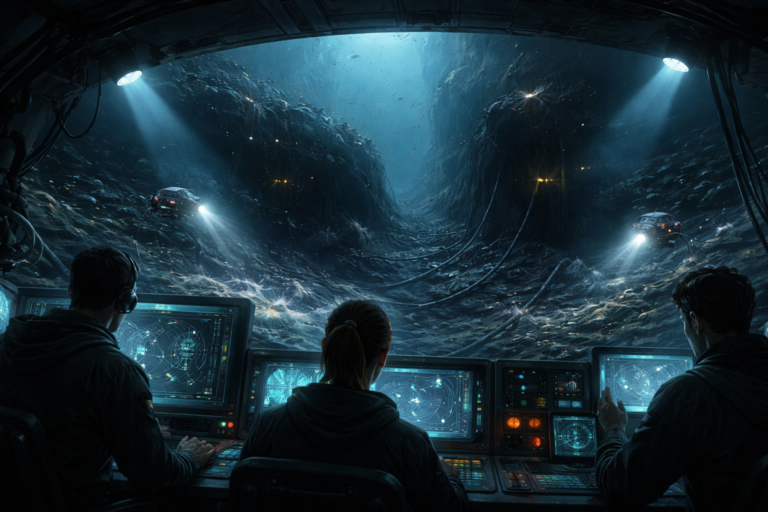
In recent years, ocean researchers have begun investigating a strange phenomenon known as mysterious underwater blackouts, where sections of the seafloor suddenly plunge into darkness for days, weeks, or even months.
These events, sometimes referred to as marine darkwaves, are drawing global scientific attention because they can disrupt entire marine ecosystems and affect the delicate balance of underwater life.
Scientists are now deploying advanced monitoring tools and global research networks to better understand what causes these unusual subsea light blackouts and how they may affect the future of the ocean.
What Are Underwater Blackouts?
Underwater blackouts occur when the sunlight reaching the seafloor suddenly decreases or disappears, even during daytime. Normally, shallow marine environments such as kelp forests and seagrass beds depend on sunlight to sustain photosynthesis and ecological productivity.
However, scientists have discovered that certain environmental conditions can block sunlight from penetrating through the water column. These conditions can temporarily transform normally bright underwater environments into dark zones.
Recent research describes these events as marine darkwaves, which are sudden episodes of underwater darkness triggered by environmental disturbances. These disturbances include sediment runoff, storms, algae blooms, and organic matter in the water, all of which can significantly reduce light penetration beneath the ocean surface.
These blackouts can last from a few hours to several months depending on the scale of the disturbance.
How Scientists Are Tracking These Mysterious Events
Tracking underwater blackouts is challenging because the ocean is vast and difficult to monitor continuously. To solve this problem, researchers use a combination of modern technologies and scientific observation systems.
Key Monitoring Tools
- Underwater sensors measuring light levels
- Cabled ocean observatories
- Hydrophones for acoustic monitoring
- Satellite data
- Autonomous underwater vehicles (AUVs)
A cabled observatory is particularly valuable because it connects scientific instruments on the seabed directly to shore via underwater cables, allowing researchers to monitor ocean conditions in real time.
These systems measure:
- Light intensity
- Water turbidity
- Temperature
- Nutrient levels
- Biological activity
By analyzing these data streams, scientists can detect the moment when a darkwave event begins and how it evolves.
Key Facts About Underwater Blackouts
| Category | Details |
|---|---|
| Phenomenon Name | Marine Darkwaves |
| Main Cause | Sediment, algal blooms, organic matter blocking sunlight |
| Duration | Hours to several months |
| Affected Areas | Coastal zones, kelp forests, seagrass beds |
| Detection Tools | Sensors, satellites, hydrophones, cabled observatories |
| Ecological Impact | Reduced photosynthesis, ecosystem stress |
| Research Status | Newly recognized oceanographic phenomenon |
Causes Behind These Ocean Blackouts
Scientists believe several environmental factors contribute to underwater blackouts. These causes often occur simultaneously.
Sediment Runoff
Heavy rainfall and coastal erosion can wash massive amounts of sediment into the ocean. When sediment spreads through coastal waters, it forms thick clouds that prevent sunlight from reaching deeper layers.
Algal Blooms
Certain algae blooms grow rapidly due to nutrient pollution. When these blooms spread across the water surface, they create a barrier that blocks sunlight from reaching the seabed.
Storms and Ocean Turbulence
Powerful storms stir up sediment from the ocean floor. This can cause murky water conditions that dramatically reduce visibility and light penetration.
Organic Matter Accumulation
Decomposing organic material suspended in the water can also darken the water column, producing conditions similar to underwater smog.
The Impact On Marine Ecosystems
These blackouts are not just an interesting scientific mystery. They could pose a serious risk to marine life.
Threats to Kelp Forests
Kelp forests depend heavily on sunlight for photosynthesis. When underwater light levels drop dramatically, kelp growth slows or stops completely.
Damage to Seagrass Meadows
Seagrass is another light-dependent marine plant. Long blackout events can cause seagrass die-offs, reducing habitat for fish and marine animals.
Disruption of Marine Food Chains
When plants stop producing energy through photosynthesis, the entire marine food chain may be affected. This can reduce fish populations and disrupt ocean biodiversity.
Hidden Infrastructure Beneath the Sea
Another reason scientists monitor ocean blackouts is because of the vast network of submarine cables that lie on the seafloor. These cables carry most of the world’s internet and communications.
- Around 95% of global data travels through submarine cables.
- The world experiences roughly 150–200 cable faults every year.
- Fishing activity and ship anchors cause more than 80% of these faults.
While marine blackouts themselves do not directly break cables, monitoring systems installed along these cables help researchers detect unusual environmental events on the seafloor.
Why This Discovery Matters
Understanding underwater blackouts could help scientists answer several critical questions about the ocean.
Climate Change Monitoring
As climate change intensifies storms and alters ocean circulation, the frequency of darkwave events could increase.
Coastal Management
Tracking these events could help governments manage coastal pollution and sediment runoff more effectively.
Marine Conservation
Better understanding of light availability underwater could improve conservation strategies for vulnerable ecosystems such as coral reefs and seagrass habitats.
Ocean Observation Networks
This research also highlights the importance of expanding global ocean monitoring infrastructure.
Future Research And Technology
Scientists are now developing advanced methods to predict underwater blackouts before they occur.
Emerging Technologies
- Artificial intelligence analyzing ocean data
- Autonomous underwater monitoring drones
- Large-scale ocean sensor networks
- Satellite ocean color monitoring
Researchers are also building global datasets that compare blackout events across different oceans. This will help identify patterns and determine whether marine darkwaves are becoming more common worldwide.
Conclusion
The discovery of mysterious underwater blackouts has opened a new chapter in ocean science. These marine darkwaves reveal how dynamic and complex underwater environments truly are.
By combining advanced monitoring technologies with global research collaboration, scientists are beginning to understand the causes and consequences of these sudden dark events beneath the sea.
As research continues, these findings may reshape how we monitor ocean health, protect marine ecosystems, and manage coastal environments in an era of rapid environmental change.