
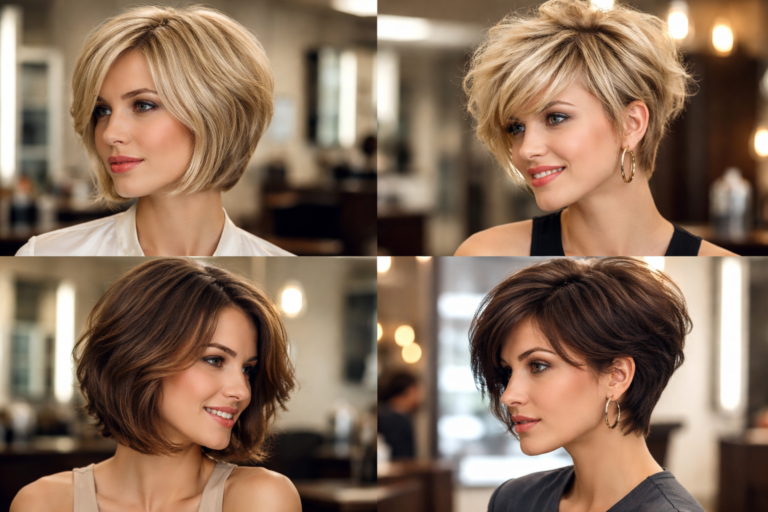
If you have fine hair, the promise of instant volume is tempting. As a stylist, I’ve seen clients light up when a new cut suddenly makes their hair look fuller. But here’s a shocking stylist confession: some of the most popular volume-boosting short haircuts rely on techniques that can, over time, make fine hair permanently weaker.
This isn’t to scare you—it’s to help you decide with full information. Below I’ll explain four common short styles that deliver major lift and what to watch out for.
1. The Stacked Bob (with heavy undercut)
The stacked bob creates fullness at the crown by stacking shorter layers in the back. It’s a classic for fine hair because it creates a rounded silhouette and instant volume.
Why it weakens
- Heavy undercutting and extreme elevation during styling strain the hair shaft.
- Repeated cutting of weight and over-styling with heat can lead to chronic breakage and fragile ends.
How to keep it safe
- Ask for subtle stacking rather than aggressive undercutting.
- Schedule regular trims and use a bond-repair treatment if you color or heat-style.
2. The Textured Pixie (razored, choppy finish)
A textured pixie gives a messy, airy look that reads as thicker hair. Stylists often use razors or heavy point-cutting to remove weight and create lift.
Why it weakens
- Razoring thins the hair shaft at the ends; combined with daily styling, it increases split ends and breakage.
- Constant texturizing means you’re perpetually shortening hair, which can make strands more vulnerable.
How to keep it safe
- Request soft layering instead of deep razor shears.
- Use a leave-in conditioner and limit daily heat. Trim every 6–8 weeks.
3. The Graduated Bob with Micro-Layers
Micro-layers create movement and a fuller look on top by removing bulk in controlled areas. This is a go-to for creating the illusion of density.
Why it weakens
- Excessive thinning with shears can create fragile, wispy ends that break off easily.
- Many people pair micro-layers with root-lifting sprays and heated styling, compounding stress.
How to keep it safe
- Opt for longer internal layers and preserved weight at the ends.
- Use heat protectant and alternate styling days to let hair rest.
4. The Short Shag (choppy, feathered ends)
The short shag stacks choppy layers and feathered tips to maximize texture and body. It looks effortlessly full and lived-in.
Why it weakens
- Feathered cutting removes protective mass from ends. Combined with chemical services (color, lightening), hair becomes brittle.
- Over-manipulation (backcombing, excessive product) accelerates wear and tear.
How to keep it safe
- Maintain moisture with protein-balanced masks and avoid aggressive brushing.
- Consider a softer shag with blended ends rather than heavily feathered tips.
Why “permanently weaker” isn’t just salon drama
Hair is dead tissue: once the shaft is damaged—split, brittle, or broken—that damage doesn’t heal. Repeated mechanical cutting techniques and heat or chemical exposure make damage cumulative. The result can be hair that appears permanently thinner unless you allow healthy regrowth and repair routines.
That said, you can prevent long-term weakening by changing how you cut and care for your hair.
How to boost volume without sacrificing strength
- Choose blunt or slightly layered ends to preserve density.
- Ask your stylist to avoid excessive razoring or thinning shears.
- Use bond-building treatments (Olaplex-type products) after chemical services.
- Limit heat styling and always use a heat protectant.
- Rotate volumizing styling products: mousse, thickening spray, and powder—don’t pile them all on daily.
- Incorporate a weekly deep conditioning or protein treatment depending on hair porosity.
- Be gentle when detangling—wide-tooth combs and soft brushes are better for fragile lengths.
Final thoughts
Short haircut for fine hair a shocking stylist confession these 4 volume boosting hairstyles can make your hair look thicker but also permanently weaker—and knowing that helps you make better choices. Volume is possible without sacrificing strength if you pair the right cut with conservative texturizing, protective styling, and a solid care routine. Talk openly with your stylist about your hair history and long-term goals—great results come from teamwork, not trends.