
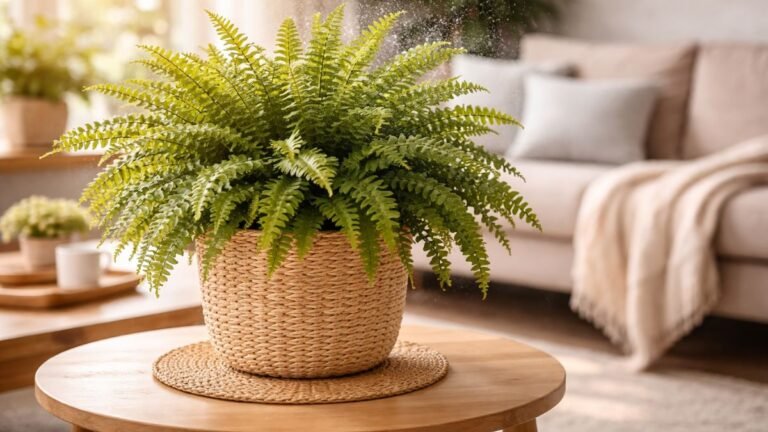
Dry indoor air can aggravate skin, sinuses, and houseplants themselves. If you want a simple, low-tech solution, consider introducing the plant that improves indoor humidity naturally without sprays or devices: the Areca palm (Dypsis lutescens). This elegant, tropical houseplant raises humidity through natural transpiration and doubles as an attractive focal point.
Why indoor humidity matters
Indoor humidity affects comfort and health. Low humidity can cause dry skin, irritated eyes, sore throats, and increased susceptibility to respiratory infections. It can also damage wood furniture and dry out other plants. Raising humidity by even a few percentage points often makes a noticeable difference in comfort.
Mechanical humidifiers work, but they require maintenance and electricity. A living, breathing plant like the Areca palm provides a passive, energy-free boost by releasing water vapor into the air.
Meet the Areca palm — nature’s humidifier
The Areca palm is one of the best indoor plants for increasing humidity naturally. Key reasons it’s effective:
- High transpiration rate: Areca palms release more water vapor from their leaves than many common houseplants.
- Large leaf surface: The feathery fronds present a broad surface area for evaporation.
- Attractive form: Its warm, arching fronds add tropical ambiance and soft visual screening.
- Easy to maintain: With the right light and watering, it thrives in many indoor settings.
Because of these traits, the Areca palm is often recommended for living rooms, offices, or bedrooms where a gentle humidity lift is desirable.
How the Areca palm increases humidity
Transpiration is the natural process plants use to move water from roots to leaves and release it as vapor. When you water an Areca palm and it takes up moisture, that water travels up and exits through tiny pores (stomata) on the underside of leaves. In aggregate, a healthy Areca palm can add a meaningful amount of moisture to a room—especially when placed near other plants or in groups.
A few things to keep in mind:
- The humidity boost is gradual and modest—good for alleviating mild dryness but not a replacement for humidifiers in extremely dry climates.
- Transpiration increases with warmth and light, so bright, warm rooms will see the greatest effect.
Care tips to maximize humidity benefits
To help your Areca palm be an effective, thriving natural humidifier, follow these simple care tips:
- Light: Bright, indirect light is ideal. Avoid harsh direct afternoon sun that can scorch leaves.
- Water: Keep the soil consistently moist but not waterlogged. Water when the top inch of soil feels slightly dry.
- Potting mix: Use a well-draining potting mix rich in organic matter to retain moisture while preventing root rot.
- Temperature: Keep between 65–75°F (18–24°C); avoid cold drafts.
- Grouping: Place several plants together to create a mini microclimate — grouped foliage increases local humidity.
- Cleaning: Wipe or gently rinse leaves occasionally to remove dust and improve transpiration efficiency.
- Fertilizer: Feed lightly during the growing season to maintain healthy growth.
Other plants that help increase indoor humidity
If you want options beyond the Areca palm, consider these humidity-friendly houseplants:
- Boston fern — a classic humidifier with fine fronds.
- Peace lily — adds moisture and blooms, and also filters air.
- Spider plant — resilient and releases moisture from many leaves.
- Rubber plant — thick leaves that transpire steadily.
- Pothos — easy-to-grow vine that benefits from grouping.
Combining several species often produces a stronger humidity effect than a single plant.
Placement and safety considerations
- Best spots: Near seating areas, home offices, or bedrooms where you notice dryness.
- Not a cure-all: For very low humidity in winter or medical needs, use a humidifier alongside plants.
- Pet safety: Areca palms are non-toxic to cats and dogs, making them a safe choice for pet owners. Always check toxicity if you introduce other species.
Conclusion
The Areca palm is an excellent answer to anyone searching for the plant that improves indoor humidity naturally without sprays or devices. With attractive fronds, manageable care needs, and a natural ability to release moisture into the air, it enhances comfort and indoor air quality while adding greenery to your space. Start with one healthy specimen, keep it well-watered and bright, and consider grouping plants for a noticeable, natural humidity boost.