
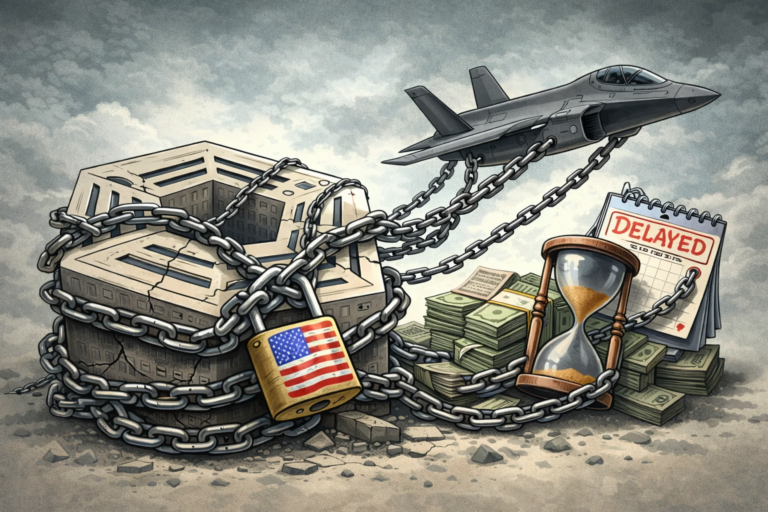
The United States has long pursued technological superiority in warfare. However, this ambition has created a paradox: by chasing the “perfect” weapon, the Pentagon has made many defense programs slower, costlier, and less effective. Recent data from oversight agencies and defense reports show a troubling pattern—projects ballooning into multi-trillion-dollar efforts while struggling to meet real-world military needs.
The Pursuit Of The “Perfect” Weapon
The Pentagon’s acquisition philosophy often prioritizes cutting-edge capabilities, multi-role systems, and long-term dominance. While this sounds strategic, it frequently leads to:
- Overly complex designs
- Constant requirement changes
- Delayed production timelines
- Rising costs beyond initial projections
Programs are expected to do everything—from stealth and AI integration to multi-domain warfare—which increases risk and slows delivery.
Key Facts And Figures
| Program | Initial Estimate | Current Cost | Key Issues |
|---|---|---|---|
| F-35 Fighter Jet | ~$233 billion | Over $485 billion acquisition; $2+ trillion lifecycle | Delays, maintenance issues, reduced usage |
| F-35 Sustainment | $1.1 trillion (2018) | $1.58 trillion (2023) | Rising operating costs |
| Sentinel ICBM | $95.3 billion | $140.9+ billion | Delays, engineering challenges |
| Zumwalt Destroyer | ~$3–4 billion per ship | ~$8 billion per ship | Reduced capabilities, high costs |
| TSSAM Missile (Cancelled) | ~$728K per unit | Over $2 million per unit | Cancelled due to overruns |
The F-35: A Case Study In Excess
The F-35 Lightning II is the most ambitious military program in history—and a prime example of the problem.
- Total lifecycle cost exceeds $2 trillion
- Sustainment costs increased 44% from 2018 to 2023
- Acquisition costs surpassed $485 billion, more than double early estimates
- Deliveries are often delayed, sometimes by over 200 days
Despite its advanced capabilities, the aircraft is used less than originally planned due to reliability and maintenance challenges .
This reflects a core issue: the pursuit of perfection has made the system too complex to operate efficiently.
Programs Without Clear Missions
Another growing concern is that some programs continue despite uncertain or evolving mission requirements.
For example:
- The Zumwalt-class destroyer faced criticism for unclear operational roles and reduced weapon capacity despite its high cost
- The E-7 Wedgetail radar aircraft faces doubts about relevance as satellite technologies advance
- The TSSAM missile program was ultimately canceled after massive overruns and loss of strategic purpose
These examples show how programs can become solutions in search of a problem.
Delays That Undermine Readiness
Time is a critical factor in military readiness. However, many Pentagon programs experience multi-year delays:
- F-35 Block 4 upgrades are five years behind schedule
- Sentinel nuclear missile deployment pushed to the early 2030s
Such delays force the military to rely on aging systems, increasing maintenance costs and reducing effectiveness.
The Cost Spiral: Why Budgets Keep Rising
Several structural issues drive cost overruns:
1. Constant Requirement Changes
Programs evolve during development, adding new features that increase complexity and cost.
2. Misaligned Incentives
Contractors may receive millions in performance bonuses even when deliveries are late .
3. Over-Optimistic Planning
Initial estimates often underestimate technical challenges and long-term costs.
4. Industrial Base Constraints
Supply chain shortages—such as 4,000+ parts shortages in F-35 production—slow manufacturing .
The Strategic Consequences
The impact of these issues goes beyond budgets:
- Reduced military readiness
- Delayed deployment of critical systems
- Increased reliance on outdated equipment
- Opportunity costs, as funds are diverted from emerging technologies like drones and AI
In some cases, the U.S. is forced to scale back purchases or reduce capabilities simply to control costs.
Is The Pentagon Changing Its Approach?
There are signs of reform. The Department of Defense is increasingly focusing on:
- Incremental development instead of all-in-one systems
- Digital engineering and simulation to reduce risk
- Rapid prototyping and testing
- Shifting investments toward autonomous systems and cheaper technologies
For example, budget adjustments have already begun redirecting funds from expensive platforms to drones and advanced munitions .
The Future Of U.S. Defense Procurement
Looking ahead, experts believe the Pentagon must shift from perfection to practicality:
- Build “good enough” systems faster
- Prioritize mission clarity over technical ambition
- Reduce dependency on single massive programs
- Increase accountability in contractor performance
If these changes are implemented, the U.S. could regain its edge through speed, adaptability, and affordability.
Conclusion
The United States has unintentionally trapped itself in a cycle where the pursuit of the perfect weapon leads to delays, cost overruns, and uncertain mission value. Programs like the F-35 and Sentinel highlight how ambition can outpace practicality.
To maintain global military dominance, the Pentagon must rethink its strategy—favoring efficiency, speed, and clear objectives over perfection. The future of warfare will not be won by the most complex system, but by the one that is ready, reliable, and relevant when it matters most.