
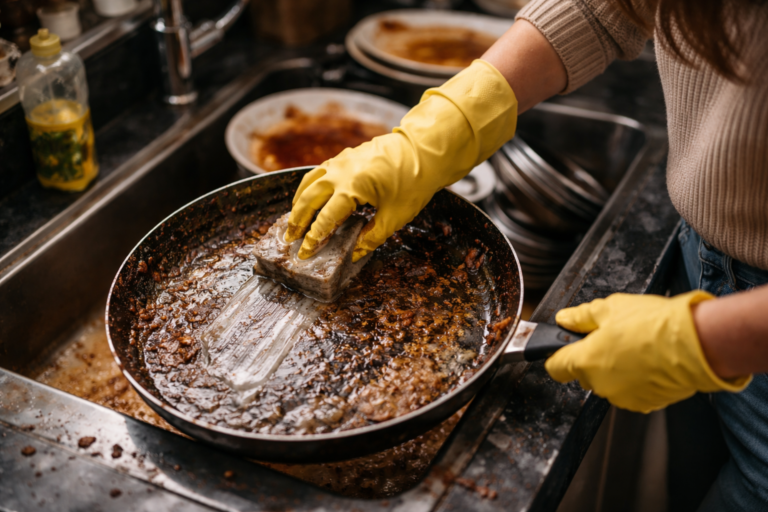
We all want shiny dishes, spotless countertops, and clothes that look fresh. Yet one small habit sabotages that goal: letting messes sit. This everyday mistake makes objects harder to clean, because dirt, grease, and biological grime bond to surfaces over time. The longer you wait, the more effort, stronger chemicals, or abrasive scrubbing you’ll need.
In this post I’ll explain why delaying cleaning causes problems, show common examples, and give simple, practical steps you can use right away to avoid the extra work.
Why waiting makes cleaning harder
When a spill, stain, or dust accumulates, several things happen:
- Proteins and sugars dry and polymerize, forming a sticky crust (think dried coffee or cooked-on sauce).
- Grease oxidizes and hardens, bonding to porous surfaces and fabrics.
- Minerals in water leave scale that cements onto metal or glass.
- Dust and moisture combine to form biofilm—ideal conditions for bacteria and mold.
- Heat (from baking or cooking) causes caramelization and Maillard reactions that strongly adhere food to pans.
All of these chemical and physical changes increase adhesion and penetration into surfaces, so a quick wipe later becomes an hour of scrubbing or the need for stronger cleaners that can damage finishes.
Everyday examples
- Dishes: Letting plates and pots sit with food residue dries it into stubborn baked-on layers. Soaking becomes mandatory.
- Kitchen surfaces: Spills grown sticky attract more dirt and bacteria, making sanitizing harder.
- Clothes: Fresh stains (oil, wine, blood) are easier to remove than set-in stains that require pre-treatment and multiple wash cycles.
- Bathroom fixtures: Soap scum and mineral deposits harden; acidic cleaners or abrasive pads are then needed.
- Electronics: Dust left to accumulate can turn into grime when combined with humidity and oils from skin, making it difficult to remove without special cleaners.
- Grills and oven racks: Baked-on grease can require high heat, specialized tools, or chemical degreasers to remove.
Quick habits to change (small effort, big payoff)
You don’t need to become obsessive. A few simple habits reduce future cleaning time dramatically:
- Wipe as you go: Keep a microfiber cloth handy in the kitchen and bathroom. Wiping spills immediately prevents them from bonding.
- Soak instead of scrubbing: If something will sit dirty (a pan, baby bottle, or cutting board), fill it with warm water and a bit of dish soap to loosen residue.
- Rinse dishes before stacking: Even a quick rinse prevents food from drying onto plates and keeps pests away.
- Pre-treat stains: Blot (don’t rub) fresh stains and apply a stain remover or a dab of liquid detergent before laundering.
- Use liners and mats: Drawer liners, oven liners, and sink mats catch grime and can be removed and washed easily.
- Clean daily hotspots: A 5-minute sweep of high-use areas (kitchen counters, stovetop, bathroom sink) prevents buildup.
- Store damp items properly: Don’t pile up wet sponges or cloths—let them dry to avoid bacterial growth.
Tools and cleaners that help
Having the right supplies makes prompt cleaning painless:
- Microfiber cloths — lift dirt without harsh chemicals.
- Soft scrubbing pads — effective without scratching.
- Spray bottles with diluted vinegar — good for glass and many surfaces (avoid on natural stone).
- Enzyme-based cleaners — powerful on organic stains (food, blood, urine).
- Baking soda — gentle abrasive for sinks and stovetops.
- Dish brush or soak basin — reduce the need to scrub.
When you already waited: how to recover
If a mess has set in, don’t despair. Use these steps to minimize damage and effort:
- Soak with warm water and dish soap for at least 15–30 minutes.
- Apply an appropriate cleaner (enzyme for organic stains, descaler for mineral buildup).
- Use gentle agitation with a brush—avoid metal pads on delicate surfaces.
- Repeat soak/clean cycles rather than increasing abrasive force.
- Consider professional cleaning for valuable or delicate items.
Final checklist
- Keep a microfiber cloth within reach.
- Rinse or soak when you can’t wash immediately.
- Pre-treat stains right away.
- Make a 5-minute daily tidy of high-use areas.
This everyday mistake makes objects harder to clean, but it’s also easily fixed. A few minutes of attention now saves hours of scrubbing later—and helps your home stay healthier and more pleasant to live in.