
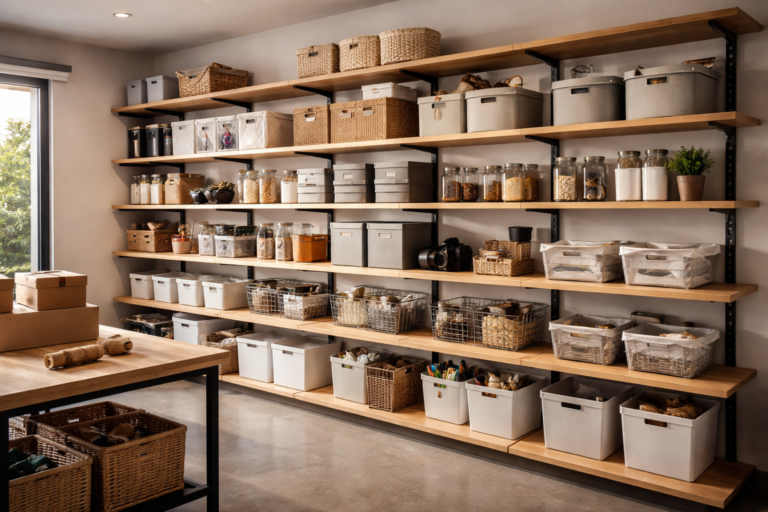
Creating adaptable, efficient storage doesn’t always require a major renovation. Often, a single, well-chosen tweak can change how you use a space — making it more functional, organized, and future-proof. This small adjustment keeps storage areas flexible, whether you’re organizing a garage, closet, pantry, or office.
Why flexibility matters
Storage needs change. Seasonal items, growing families, new hobbies, and shifting work patterns mean what you store and how you use a space will evolve. Fixed shelving and bulky built-ins can lock you into one arrangement and create wasted space.
Flexibility lets you:
- Reconfigure quickly for different needs
- Maximize usable space
- Avoid costly remodels down the line
- Keep things organized and accessible
The small adjustment: adjustable shelving and track systems
The single adjustment I recommend is installing adjustable shelving using a simple track-and-bracket system. It’s inexpensive, easy to install, and instantly converts static storage into a dynamic system.
Adjustable shelving systems use vertical tracks mounted to the wall and metal brackets that slot into the tracks at any height. Shelves rest on the brackets, making it easy to change shelf spacing or remove shelves entirely.
Benefits at a glance
- Customizable shelf height for tall or short items
- Easy to reconfigure without tools
- Compatible with a variety of shelf materials (wood, metal, wire)
- Works in closets, garages, pantries, utility rooms, and offices
- Scales from a single wall to an entire storage zone
Practical ways to use this adjustment
Adjustable shelving can be applied in many contexts to boost flexibility:
- Pantry: Create taller gaps for cereal boxes and small gaps for spice jars. Move shelves seasonally for holiday containers.
- Closet: Alternate shelves and hanging rods to accommodate shoes, sweaters, and long garments.
- Garage: Store bins, power tools, and paint cans with adjustable spacing for odd-sized items.
- Office: Reconfigure storage as files convert to digital or new equipment is added.
- Laundry room: Shift shelves to hold detergent, baskets, and folding space as appliance sizes change.
Quick step-by-step installation
You don’t need to be a DIY expert. Here’s a simple guide:
- Measure the wall height and desired shelf lengths.
- Purchase a track-and-bracket kit sized for your wall and shelf load.
- Locate studs and mark vertical track positions.
- Mount the tracks level, securing them to studs or using heavy-duty anchors.
- Insert brackets at initial heights and place shelves on top.
- Test weight capacity and adjust as needed.
Most systems take under an hour to install for a single wall. If you’re mounting multiple bays, you can do one at a time and spread the work over a weekend.
Tips for maximizing flexibility
To get the most from this small adjustment, combine adjustable shelving with these strategies:
- Use uniform-looking storage bins to create a cohesive, clutter-free look.
- Label bins and shelves to make reconfiguration painless.
- Consider rolling bins or baskets for lower shelves so you can pull items out easily.
- Add door-mounted organizers for smaller items that don’t need shelf space.
- Reserve one or two adjustable shelves as “wildcard” spaces for unpredictable items.
Maintenance and future-proofing
Adjustable systems are low-maintenance. Periodically check that tracks and brackets are secure, especially if you store heavy items. If your needs change significantly, you can add more tracks, switch shelf materials, or integrate drawer units that sit on brackets.
Because the system is modular, upgrades are inexpensive. Swap wood for wire shelves if you need better air circulation, or add dividers to prevent tall items from toppling.
Conclusion
This small adjustment keeps storage areas flexible by turning fixed spaces into adaptable, long-lasting storage solutions. With a modest investment of time and money, you get a system that evolves with your life — making organizing easier, reducing waste, and keeping your spaces efficient for years to come. Consider installing adjustable shelving the next time you want to make a small change with a big impact.