
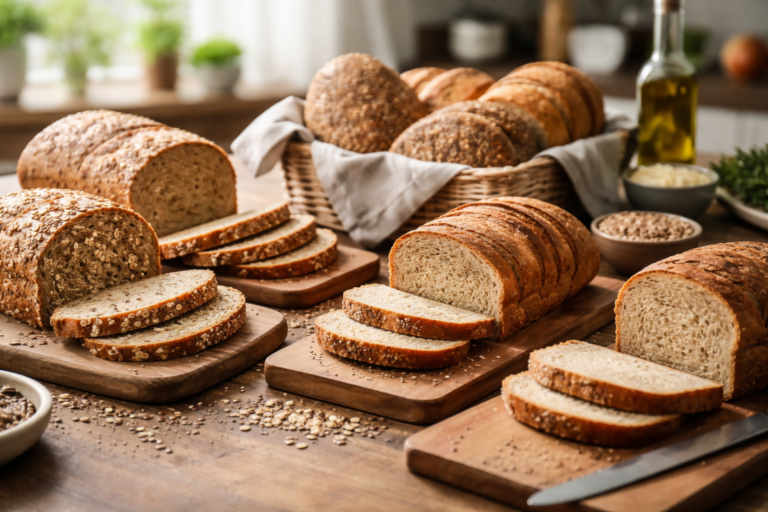
When we asked dietitians which bread is healthiest, they all gave the same answer: choose 100% whole-grain bread (or 100% whole wheat). That might sound simple, but understanding what “whole grain” means—and how to pick the best loaf at the store—can make a big difference for your health and how satisfied you feel after a meal.
Why dietitians recommend whole-grain bread
Whole-grain bread is made from the entire grain kernel: the bran, germ, and endosperm. Because it preserves all parts of the grain, it keeps more fiber, vitamins, minerals, and beneficial plant compounds than refined white bread.
Key benefits include:
- Higher fiber content, which supports digestion and helps you feel full longer.
- More B vitamins, magnesium, and iron compared with refined bread.
- Lower glycemic impact for many people, which can help control blood sugar spikes.
- Potential long-term benefits for heart health and weight management when part of a balanced diet.
How to read labels like a pro
Not every loaf that looks “brown” or “healthy” actually is. Here are practical tips dietitians use when choosing bread:
- Look for “100% whole grain” or “100% whole wheat” as the first ingredient. If the label says “whole wheat flour” or “whole grain” but also lists refined flours before it, it’s not 100% whole-grain.
- Avoid ambiguous terms like “multigrain,” “wheat,” or “made with whole grains.” These don’t guarantee the bread is mostly whole grain.
- Check the fiber: aim for at least 3–5 grams of fiber per slice or per serving.
- Scan added sugars and sodium. Some breads contain several grams of added sugar or high sodium levels—look for lower numbers.
- Shorter ingredient lists are often better. Look for recognizable ingredients you can pronounce.
Other good options and when to choose them
While 100% whole-grain bread is the unanimous pick for most people, dietitians also highlight a few alternatives depending on individual needs:
- Sprouted-grain bread: Made from whole grains that have begun to sprout, these breads are often higher in certain nutrients and may be easier to digest.
- Sourdough: The fermentation process can make bread gentler on digestion for some people and may slightly lower the bread’s glycemic response.
- Rye and mixed-grain loaves: Rye can have a lower glycemic index and a distinctive flavor; look for whole-rye options.
- Gluten-free whole-grain breads: For those with celiac disease or non-celiac gluten sensitivity, gluten-free breads made from whole-grain alternatives (like buckwheat, millet, or brown rice) are good substitutes.
Portion control and how to use bread wisely
Even the healthiest bread can contribute to excess calories if portions aren’t considered. Dietitians recommend:
- Pay attention to serving sizes—one slice is often smaller than you think.
- Pair bread with protein, healthy fats, or fiber-rich toppings (e.g., nut butter, avocado, hummus, lean turkey, or a vegetable-heavy spread) to improve satiety and balance blood sugar.
- Use whole-grain bread as part of balanced meals: sandwiches with veggies, toast topped with eggs, or as a side for soups and salads.
Quick shopping checklist
When you’re at the grocery store, keep this short list handy:
- First ingredient: “100% whole wheat” or “100% whole grain”
- Fiber: ≥3 g per serving
- Added sugar: low or none (check sugar grams)
- Sodium: moderate (check milligrams)
- Minimal, recognizable ingredients
Bottom line
We asked dietitians which bread is healthiest – they all gave the same answer: choose 100% whole-grain bread. It delivers more fiber, nutrients, and sustained energy than refined white bread. Pair it with protein and healthy fats, read labels carefully, and choose versions like sprouted-grain or sourdough when they fit your personal needs. Small switches—like swapping white bread for true whole-grain bread—can add up to meaningful benefits for your health and satisfaction at mealtimes.