
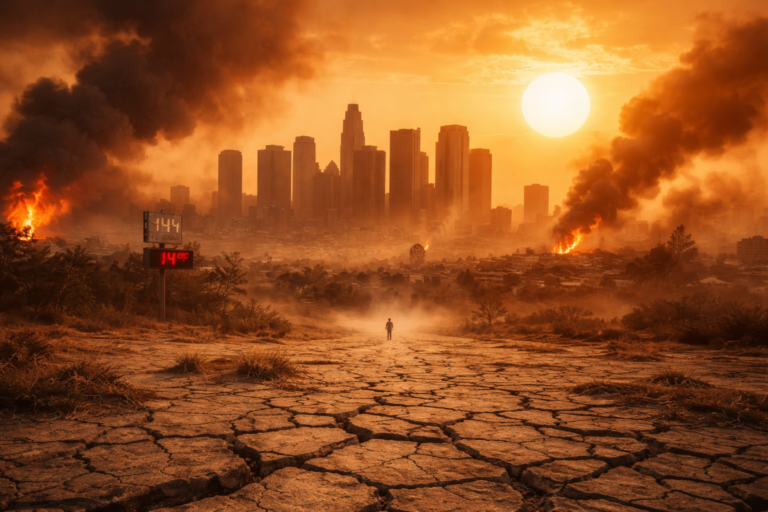
For years, extreme weather has stopped feeling extreme. Heatwaves, record rainfall, and late-season wildfires arrive with alarming regularity—and we shrug, adjust our plans, and move on. That complacency is exactly what climate scientists warn against. We normalized the abnormal: the climate signal experts say should alarm us, and the signal is loudest in one simple trend—extremes are becoming the new baseline.
The abnormal that became ordinary
What used to be once-in-a-century events are now common. Overnight low temperatures rise, summers extend, and “100-year” storms reappear every few years. This shift isn’t just an increase in averages; it’s a change in variability and persistence. Heatwaves last longer, rains come harder, and multiple extremes often hit the same place in quick succession.
Experts point to several clear indicators:
- More frequent and intense heatwaves.
- Higher nighttime temperatures that reduce recovery time for people and ecosystems.
- Longer wildfire seasons and larger burned areas.
- Stronger, more erratic rainfall events that overwhelm drainage and flood defenses.
- Rapid loss of Arctic sea ice and accelerating glacier melt.
Each of these changes is a signal that the climate system is being pushed into a new state—one that communities and infrastructure were not built to handle.
Why scientists are alarmed
There are a few reasons the normalization of extremes should set off alarm bells:
Compound events multiply harm
- When heat, drought, and wildfire happen together, impacts amplify. Crops fail, health systems strain, and power grids falter.
Persistence matters
- It’s not just intensity but duration. Extended heat reduces recovery time for soils, crops, and human health, increasing cumulative damage.
Infrastructure and design assumptions are outdated
- Flood defenses built for previous hydrological patterns fail when storms become more intense and frequent. Roads, bridges, and urban drainage systems assume a stable range of conditions.
Feedback loops accelerate change
- Melting ice reduces albedo (surface reflectivity), warming the region further. Thawing permafrost can release greenhouse gases, further driving warming.
Tipping points are closer than we thought
- Ecosystems and climate subsystems can shift abruptly once thresholds are crossed—pushing global change into less predictable territory.
Real-world consequences we’re already seeing
The impacts are not theoretical. They’re measurable and immediate:
- Public health: More heat-related illnesses and deaths, especially among vulnerable populations and the elderly.
- Agriculture: Shifts in growing seasons, crop failures, and food price spikes.
- Ecosystems: Coral bleaching from marine heatwaves and species migration or collapse.
- Economy: Damage repair costs rise, insurance becomes scarcer or more expensive, and productivity drops during extreme events.
- Displacement: More people facing climate-related displacement from floods, fires, and sea-level rise.
When abnormal events become routine, our social and economic systems bear the cost—often unevenly and disproportionately.
What we should do next
Recognizing the signal means acting on two fronts: reduce the root cause, and prepare for what’s already locked in.
Mitigation (slow the warming)
- Rapidly cut greenhouse gas emissions through cleaner energy, efficiency, and reduced fossil fuel use.
- Implement policies like carbon pricing and phaseouts for high-emission technologies.
Adaptation (reduce harm now)
- Update infrastructure standards to reflect current and projected extremes.
- Strengthen early-warning systems and public health responses for heatwaves and floods.
- Invest in nature-based solutions—wetlands, forests, and coastal marshes—that absorb heat and buffer storms.
Equity and planning
- Prioritize support for communities most exposed and least able to adapt.
- Incorporate climate projections into urban planning, agriculture, and insurance markets.
Science and communication
- Improve monitoring of climate signals (ocean heat content, Arctic indicators, compound event tracking).
- Shift public messaging from “unusual” to “expected” so communities make decisions based on the new reality.
A final note
Saying “we normalized the abnormal” isn’t just a critique—it’s a wake-up call. The climate signal experts point to is clear: extremes are now part of the climate baseline, and their persistence will shape the decades ahead. Awareness must translate to action—reducing emissions, redesigning systems, and protecting the most vulnerable. Accepting the abnormal as ordinary is a choice; reversing that choice is still within our power if we act with urgency and equity.