
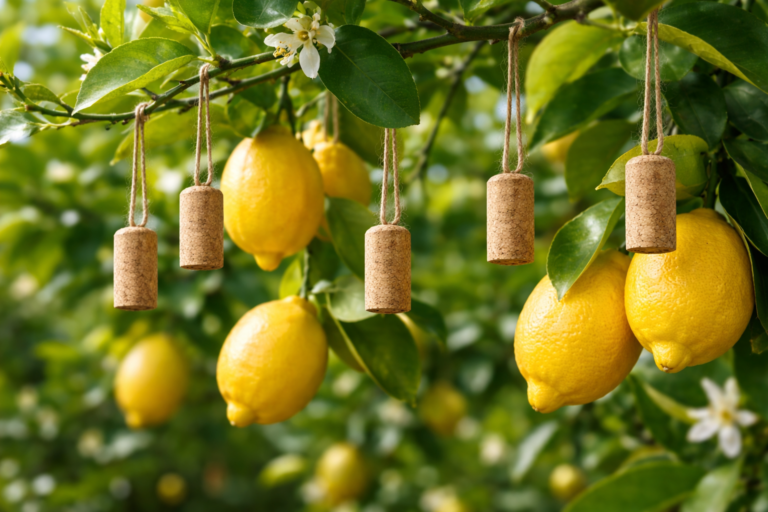
If you’ve ever spotted Hang cork stoppers on lemon branches, you might have wondered whether it’s decoration, tradition, or something more practical. Surprisingly, this unusual gardening trick is gaining popularity worldwide as a low-cost, eco-friendly solution for protecting citrus trees.
From Mediterranean orchards to urban balconies, gardeners are rediscovering this simple hack for pest control, plant health, and sustainable gardening. In this article, we explore the science, logic, benefits, and practical application behind this trend.
What Is The Cork-on-Lemon-Tree Trick?
The method involves hanging natural cork stoppers on lemon tree branches using string or twine. These corks swing freely with the wind, creating movement, sound, and subtle disturbances around the tree.
Although it may look like a quirky DIY idea, it serves a functional role in protecting lemon trees from pests and environmental stress.
Key Facts About Cork Stoppers on Lemon Trees
| Aspect | Details |
|---|---|
| Primary Purpose | Natural pest deterrent |
| Materials Used | Natural cork, string or twine |
| Cost | Almost free (recycled corks) |
| Target Pests | Ants, aphids, snails, birds, wasps |
| Additional Benefits | Moisture regulation, soil aeration |
| Popular Regions | Mediterranean, Europe, urban gardening spaces |
| Maintenance | Check every 2–4 weeks |
| Eco-Friendly Level | High (recycled, chemical-free method) |
Why Gardeners Hang Cork Stoppers on Lemon Branches
1. Natural Pest Control Without Chemicals
One of the main reasons gardeners use corks is to reduce pest activity without pesticides. Lemon trees attract insects such as aphids, ants, scale insects, and snails, which can damage leaves and fruit.
The movement of corks in the wind creates vibrations and visual disturbances, making branches less attractive for insects to settle on.
This turns the tree into a dynamic environment that disrupts pest behavior.
2. Creates A Multi-Sensory Deterrent
Corks don’t just move—they can also produce light tapping sounds and reflect light. These small sensory signals can discourage:
- Birds from pecking fruits
- Wasps from settling near ripe lemons
- Crawling insects from forming pathways
Some gardeners even enhance this effect by adding garlic or citrus oil to corks, turning them into mild scent repellents.
3. Acts As A Physical Barrier
Hanging corks create a moving obstacle course on branches, making it harder for pests to climb and settle.
This is especially useful for ants and crawling insects, which rely on stable pathways to reach leaves and fruit.
4. Helps Maintain Soil Moisture And Root Health
Cork is naturally porous and breathable, which means it can:
- Absorb small amounts of water
- Release moisture slowly
- Improve airflow in soil
When used around the base of the tree, cork pieces can help prevent waterlogging and reduce root rot risks.
5. Supports Eco-Friendly Gardening
Modern gardeners are moving away from chemicals toward sustainable gardening practices.
Cork is:
- Biodegradable
- Recyclable
- Non-toxic
Using cork stoppers transforms waste into a functional gardening tool, aligning with environmentally conscious trends.
How To Hang Cork Stoppers Correctly
Step-By-Step Guide
- Collect natural cork stoppers (avoid synthetic ones)
- Pierce a hole through each cork
- Thread a string or twine through the hole
- Tie loosely onto branches
- Space them evenly across the tree
Best Practices
- Use 2–3 corks per string
- Keep spacing around 30–40 cm between corks
- Ensure corks hang freely without damaging bark
- Avoid overloading small trees
Does This Method Really Work?
The cork method is not a miracle solution, but it is effective as part of an integrated approach.
Gardeners report:
- Reduced insect presence
- Less fruit damage
- Healthier foliage
However, it works best when combined with:
- Regular pruning
- Proper watering
- Manual pest removal
Advantages And Limitations
Advantages
- Cost-effective (recycled materials)
- Chemical-free pest control
- Easy to implement
- Improves soil conditions
- Safe for pets and humans
Limitations
- Not effective for severe infestations
- Requires regular monitoring
- Results may vary depending on environment
Future Of This Gardening Trend
As sustainable gardening becomes more important, techniques like this are expected to grow.
In the future, we may see:
- Wider adoption in urban gardening
- Combination with other natural pest control methods
- Integration into eco-friendly landscaping practices
The cork method represents a shift toward low-impact, nature-inspired solutions.
Conclusion
Hanging cork stoppers on lemon branches may look unusual, but it is a practical, eco-friendly gardening technique rooted in real benefits.
By combining movement, sound, and natural material properties, corks help deter pests, support soil health, and reduce reliance on chemicals. While not a standalone solution, it is a valuable addition to any gardener’s toolkit. As gardening continues to evolve, simple innovations like this prove that sometimes, the best solutions are also the simplest.