
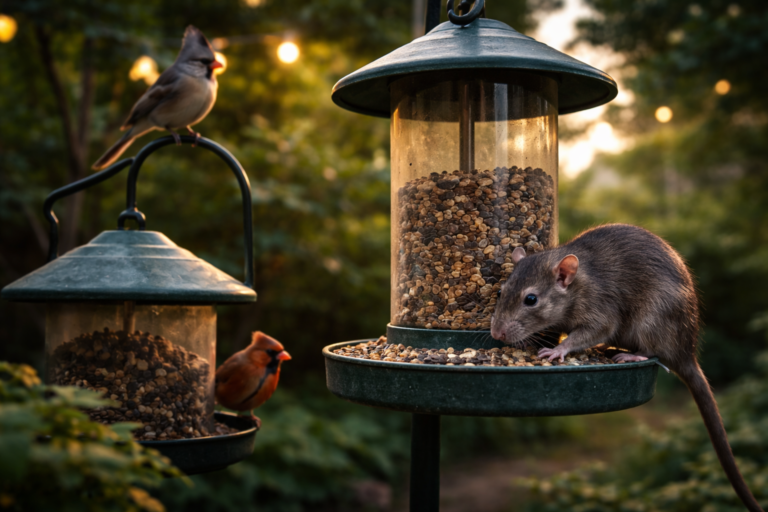
Feeding wild birds can be a joyful way to connect with nature, but it often attracts more than just songbirds. If you’re noticing chewed bags of seed, smear marks on feeders, or rodents scurrying beneath your lawn at dusk, it’s likely rats are taking advantage of an easy food source. Here’s how to stop rats stealing your bird seed without giving up your feathered visitors.
Why rats love bird seed
Bird seed is calorie-dense, easy to eat, and often left accessible on the ground or in loose trays. A few reasons rats are drawn to feeders:
- Seed mixes (especially those with sunflower, corn, and peanuts) are high in fat and carbohydrates.
- Spilled seed under feeders creates a buffet that’s easy to access.
- Feeders mounted on trees, decks, or poles provide cover and climbing routes.
- Unsealed storage bags or bins attract rodents into sheds and garages.
Understanding these factors helps you target the weak points in your feeding setup.
Signs you have a rat problem
Look for these common signs:
- Chewed seed bags or feeder components.
- Droppings beneath feeding areas (small, dark pellets).
- Tracks in loose soil or mulch around feeders.
- Late-night rustling or squeaking sounds near the feeding station.
- Missing seed despite normal feeding activity by birds.
If the signs are present, act quickly—rats reproduce fast and problems can escalate.
Simple, effective prevention steps
You don’t need harsh chemicals to reduce rodent visits. Start with these practical steps:
- Store seed in metal or heavy-duty plastic containers with tight lids. Cardboard and thin plastic are easy for rats to chew through.
- Clean up spilled seed daily. Use a broom, leaf blower, or rake to remove debris under feeders.
- Use seed trays sparingly. If your feeder has a tray, check it regularly and remove accumulated seed husks.
- Move feeders at least 10–12 feet away from fences, sheds, or low branches that give rats easy access.
- Trim vegetation and remove brush piles near feeders to reduce hiding spots and cover for rodents.
These small habits go a long way toward breaking the easy-food cycle.
Upgrade your feeders and mounting
Investing in rodent-resistant equipment pays off. Consider these options:
- Pole-mounted feeders with baffles: A cone- or cylinder-shaped baffle prevents climbing animals from reaching the feeder from below.
- Weight-sensitive or squirrel-proof feeders: Some designs close ports when a heavy animal (like a rat) lands.
- Caged feeders: A wire cage around the feeder lets small songbirds in but keeps larger rodents away.
- Hang feeders from thin wires rather than hooks attached to trees or pergolas—wires are harder for rats to climb.
A few dollars in hardware can drastically reduce unwanted visitors.
Choose seeds that attract birds but not rodents
Not all bird food is equally appealing to rats. Switch or supplement your offerings:
- Use safflower seed instead of black oil sunflower; many birds enjoy it but rats and squirrels often avoid it.
- Offer nyjer (thistle) in a tube feeder for finches—it’s small and contained.
- Avoid loose seed mixes with corn and peanuts unless you can ensure no spillage.
- Consider feeding suet in winter only; suet attracts rodents in warm months.
Changing seed type won’t eliminate rodents completely but can reduce the reward that brought them in.
When to escalate: trapping and professional help
If prevention fails and you have an active infestation, take stronger steps:
- Use live traps or snap traps placed along rat runways, baited with peanut butter or bacon. Follow local regulations and safety guidelines.
- Avoid leaving poisoned bait where pets or children might access it; poisoning also risks secondary effects on wildlife.
- If the infestation is large or persistent, consult a licensed pest control professional who can assess and apply targeted solutions.
Safety and humane practices should guide your approach.
Keep feeding birds—just do it smartly
You don’t have to stop feeding birds to stop feeding rats. By storing seed securely, cleaning up spills, upgrading feeders, and choosing less-appealing seed types, you can enjoy backyard birds without unknowingly hosting a rodent buffet. Small changes today prevent a far bigger problem tomorrow.